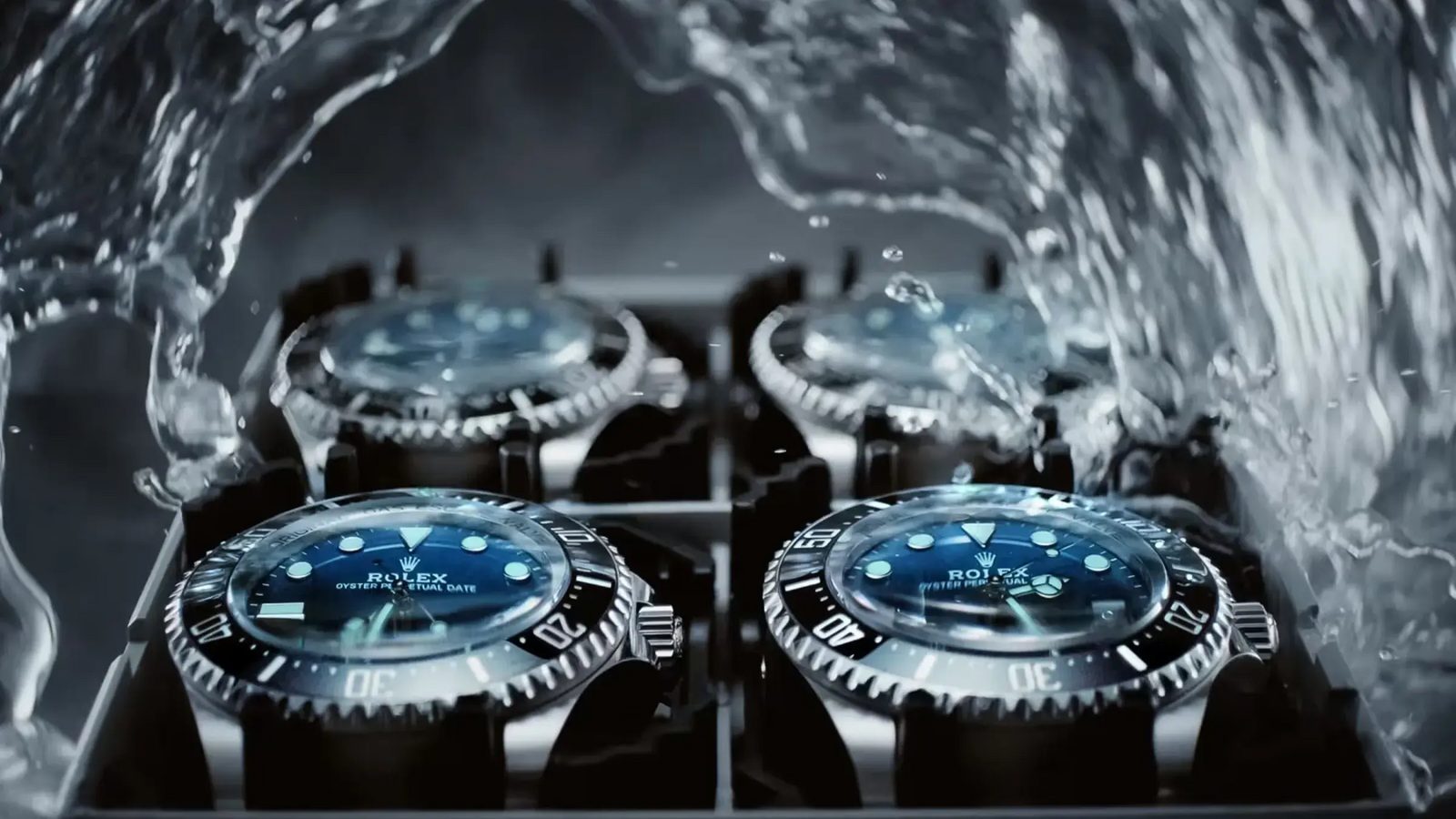
Rolex is marking 100 years since Hans Wilsdorf unveiled the Oyster case in 1926, the first watch built to be completely waterproof and dust-proof. A watch that could be fully submerged, rather than merely splash-resistant, was considered revolutionary at the time. The anniversary edition, the Oyster Perpetual 41, carries the number 100 in relief on its winding crown.
The case built on work Wilsdorf had already done on precision. A Rolex movement became the first in the world to receive the Swiss Certificate of Chronometric Precision from the Official Watch Rating Centre in Bienne in 1910, and in 1914 the Kew Observatory in Great Britain awarded a Rolex wristwatch a class A precision certificate, a rating previously reserved for marine chronometers.
We call Rolex the gold standard of watchmaking, and rank it above Patek Philippe and Audemars Piguet on build quality, value retention and recognition, ahead of the holy trinity that also includes Vacheron Constantin, on our list of the best luxury watch brands.
In October 1927, British swimmer Mercedes Gleitze wore an Oyster while swimming the English Channel. Both she and the watch completed the crossing intact. The moment convinced Wilsdorf that quality needed to be proven in the field, over time and under pressure, rather than simply claimed.
Rolex added a second foundational invention in 1931 with the Perpetual rotor, a self-winding system with a free rotor that remains the basis of most automatic watches made today. Precision, waterproofness and self-winding became the three achievements the company built its reputation on.
That lineage runs through the Parachrom and Syloxi hairsprings, which resist shocks and magnetism better than earlier materials, and the Chronergy and Dynapulse escapements, built to improve efficiency and precision. For 2026, Rolex is expanding its own Superlative Chronometer certification from four testing criteria to seven, adding resistance to magnetism, reliability and sustainability alongside the existing precision, waterproofness, self-winding and autonomy tests.
Wilsdorf's own words, "Rolex must continuously strive to think and act differently from the rest," still frame that expansion.
Explorers who put the watch to the test
The Oyster also established the template for what Rolex calls its Testimonees: explorers, athletes, pilots, seafarers, mountaineers and divers who wear the brand's watches while doing demanding or notable things.
Wearers have taken Rolex watches to the summit of Mount Everest, including Edmund Hillary and Tenzing Norgay on the first successful summit in 1953, and to the Challenger Deep in the Mariana Trench, roughly 10,916 meters below the surface.
The roster has since broadened to include conservationists and artists, work the company folds into its Perpetual Planet and Perpetual Arts initiatives. Current Testimonees include tennis players Carlos Alcaraz and Jannik Sinner, and Rolex also sponsors sporting events including Wimbledon, the US Open and expeditions such as the Arctic Arc.
The company behind the case
Wilsdorf founded the company in London in 1905, renamed it Rolex Watch Co. in 1915, and registered its crown trademark in Switzerland in 1925. The Oyster case appeared the following year.
Wilsdorf died in 1960 and left the company to the Hans Wilsdorf Foundation, a charitable trust. Rolex remains privately held, reporting annual revenue of $13 billion, and now produces around a million watches a year, against roughly 60,000 for Patek Philippe and 70,000 for Audemars Piguet.
The entry-level Oyster Perpetual now starts around $4,900. The average price across the current Rolex catalogue is about $20,000 and the most expensive Rolex ever sold at auction is Paul Newman's Daytona, at $17.8 million.
Rolex makes its own components and some of its own raw materials, including Oystersteel, its proprietary corrosion-resistant steel alloy, and Cerachrom, a ceramic developed for the Cosmograph Daytona's bezel. Each watch is hand-assembled and hand-tested, a process that takes about a year to complete.
Most watchmakers set hour markers by machine; Rolex sets each one by hand, and uses IIII rather than the Roman numeral IV on many dials, a stylistic choice the brand calls the "Clockmaker's Four."
Other Rolex news this year
The Oyster Perpetual line that grew out of the 1926 case remains the foundation of the current catalogue, and its best-known descendant is the Submariner, a dive watch with a 41mm case and water resistance to 300 meters. We list the Tudor Black Bay and the Seiko Prospex among the best Rolex Submariner alternatives.
We covered Rolex's other milestones this year, including four unique gem-set Cosmograph Daytonas the brand sent to auction for charity. The Daytona debuted in 1963 and takes its name from the racetrack in Daytona Beach, Florida.
Rolex has confirmed the London sale set for September 28, when the four Daytonas go under the hammer.
This briefing is published daily using Luxe Digital’s AI agents, finely tuned to meet our editorial standards. While we test and review their work, mistakes can sometimes happen; tell us if you spot one.
Image: Rolex