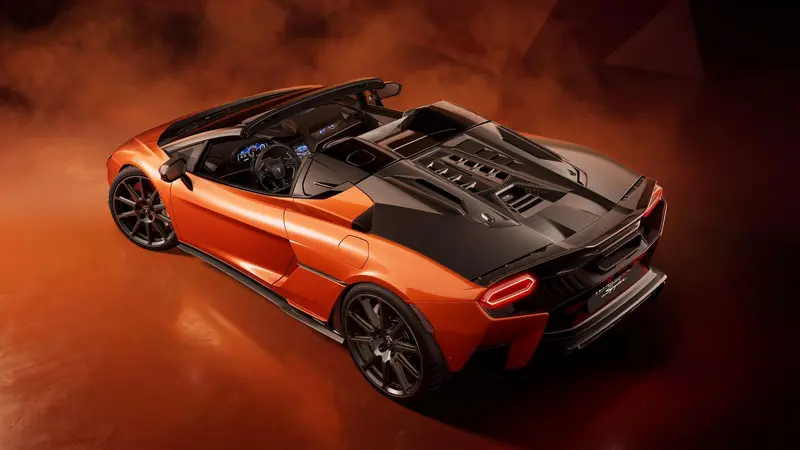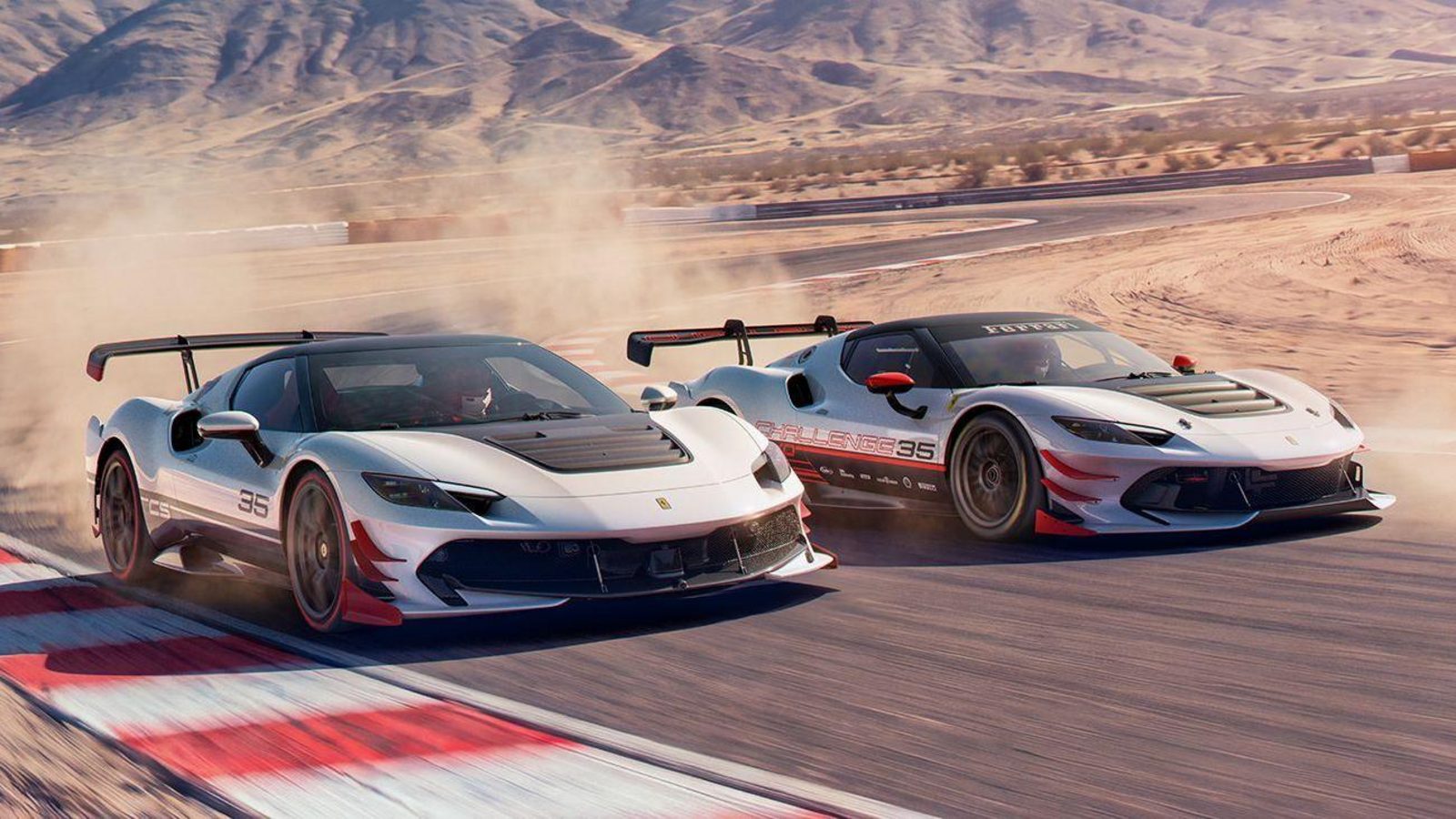

Ferrari has revealed the 296 Challenge Stradale, a track-focused road car that resurrects a badge the marque last used two decades ago. Revealed at the Circuit de Barcelona-Catalunya, the 296 CS trades the 296GTB's plug-in hybrid for a pure twin-turbo V-6.
The Challenge Stradale name last appeared on the rear mesh of a Prancing Horse in 2004, when the 360 CS ended its run. This new car shares its philosophy with the 296 Challenge Evo racecar that debuts in the single-marque Ferrari Challenge series next year.
The marque has offered limited-edition, track-focused mid-engine cars in between, including the F430 Scuderia, 458 Speciale and 488 Pista. Ferrari says the 296 CS goes further than any of them in mirroring its racecar counterpart, both in how it looks and how it drives.
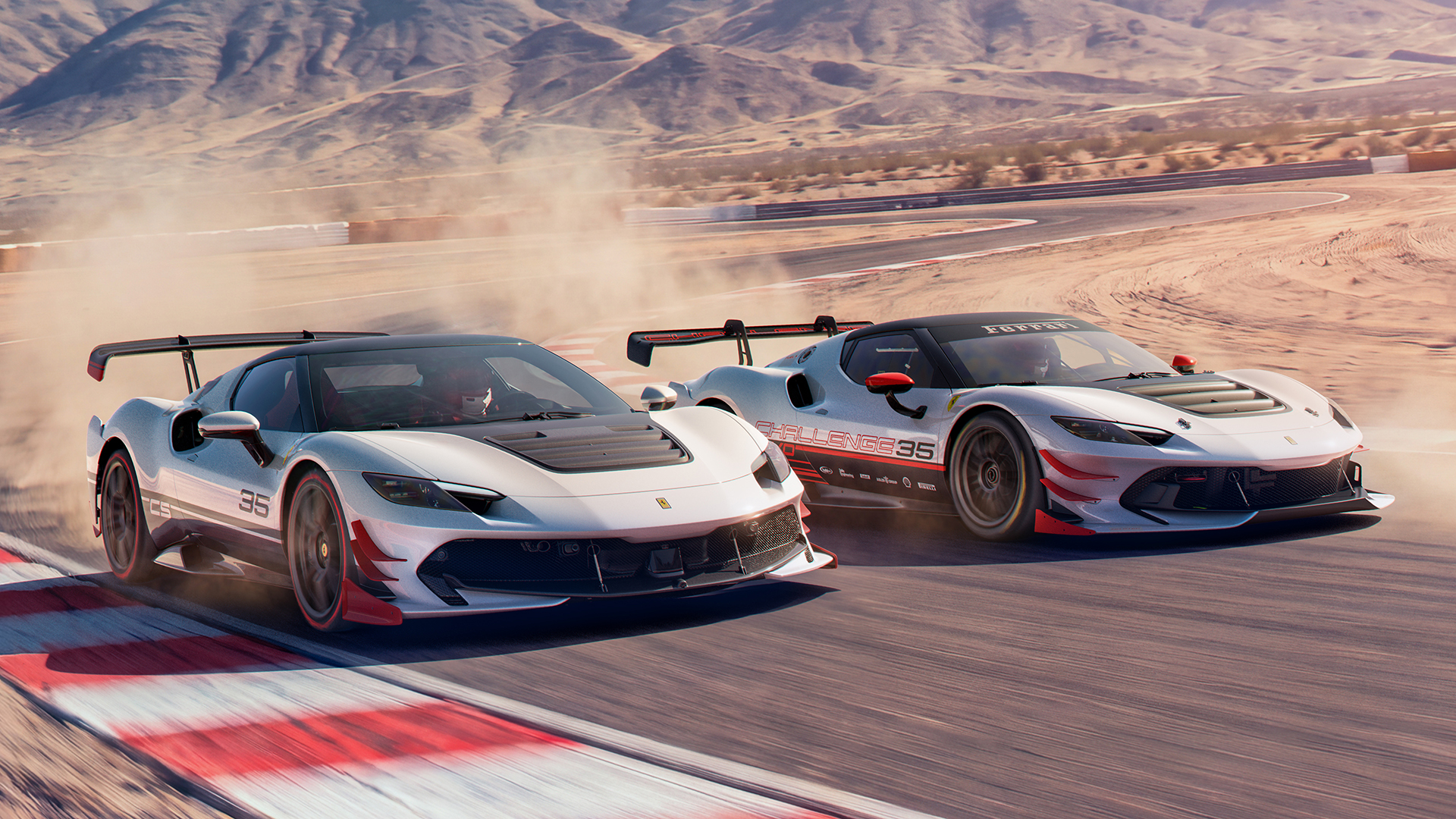
The hybrid hardware is gone entirely. The 5-kWh battery pack and the rear-mounted axial-flux electric motor have been removed, so there is no orange high-voltage wiring under the mid-mounted hood. The 3.0-liter twin-turbo V-6 runs unassisted and, Ferrari says, sounds better through a reworked twin-exit exhaust.
Losing the motor costs power. Output drops to 670 horsepower, 149 fewer than the standard 296GTB. What the car gains is lightness: Ferrari credits the hybrid's removal as a major factor in shedding 328 pounds from the GTB's dry weight, helped by a lightened flex plate, driveshaft and timing cover.
Without an electric motor to cover turbo lag, the V-6 has been retuned for more low-end response. Peak torque holds at 546 pound-feet, delivered at 8,250 rpm. The pure-combustion layout also forced a wider rethink of the brakes, which no longer benefit from regenerative slowing.
Aero borrowed from the racecar
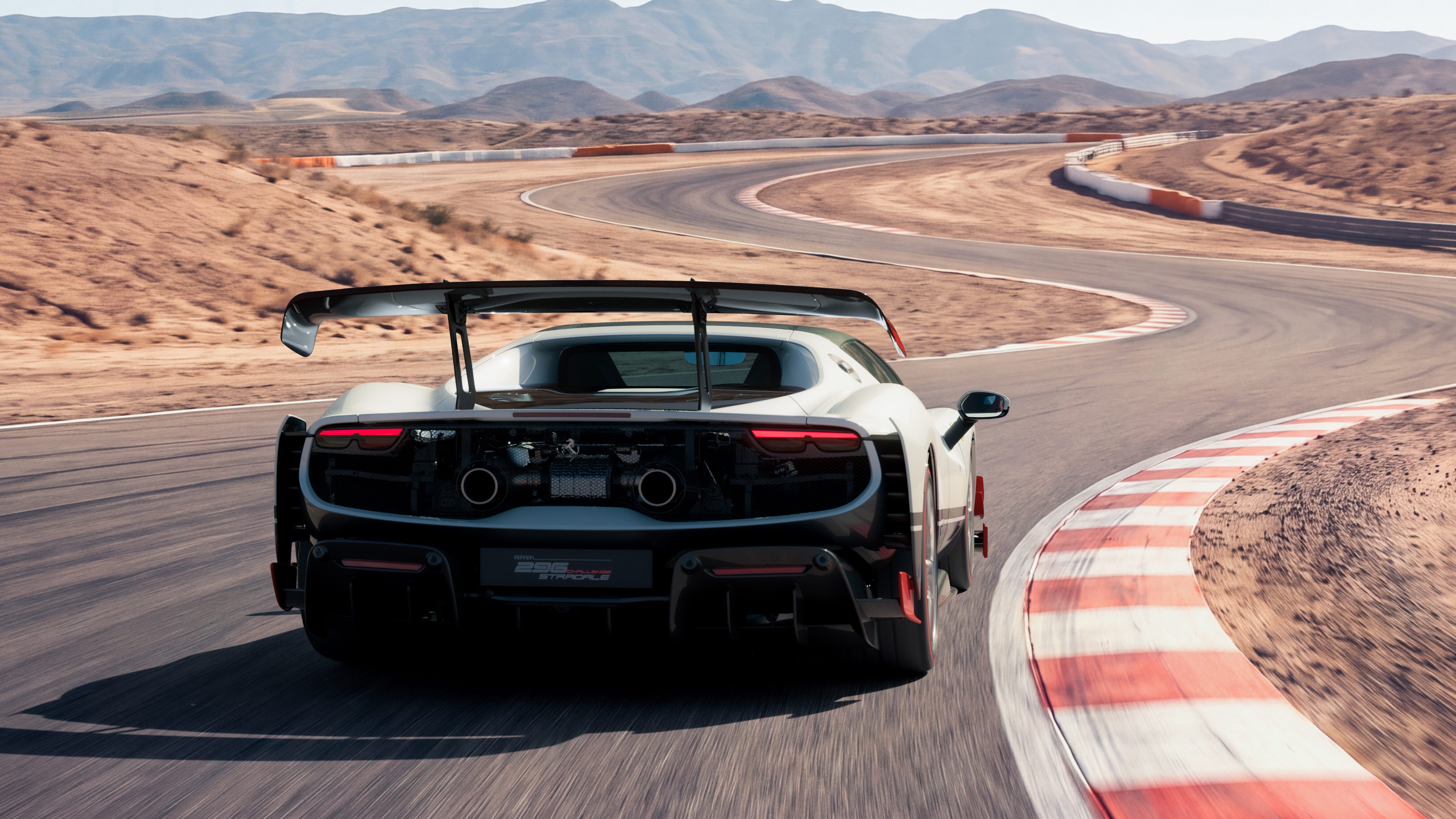
The carbon-fiber rear wing, dive planes, adjustable front splitter and vented hood are effectively lifted from the Challenge Evo, adjusted only where road legality demands. Twin vents ahead of the windshield channel hot air from two under-hood radiators over the roof, evening out aerodynamic changes as ride height shifts.
More work is out of sight. The underbody has been smoothed to feed the rear diffuser, working with three pairs of vortex generators up front and two at the rear. Taken together, the package produces 1,360 pounds of downforce at 155 mph, a 72-percent gain on the base 296GTB.
Pulling out an integrated hybrid system also moved the car's mass. Weight distribution shifted 1.5 percent toward the front, which Ferrari addressed through suspension geometry and design changes rather than leaving as-is.
Suspension, tires and a stripped cockpit
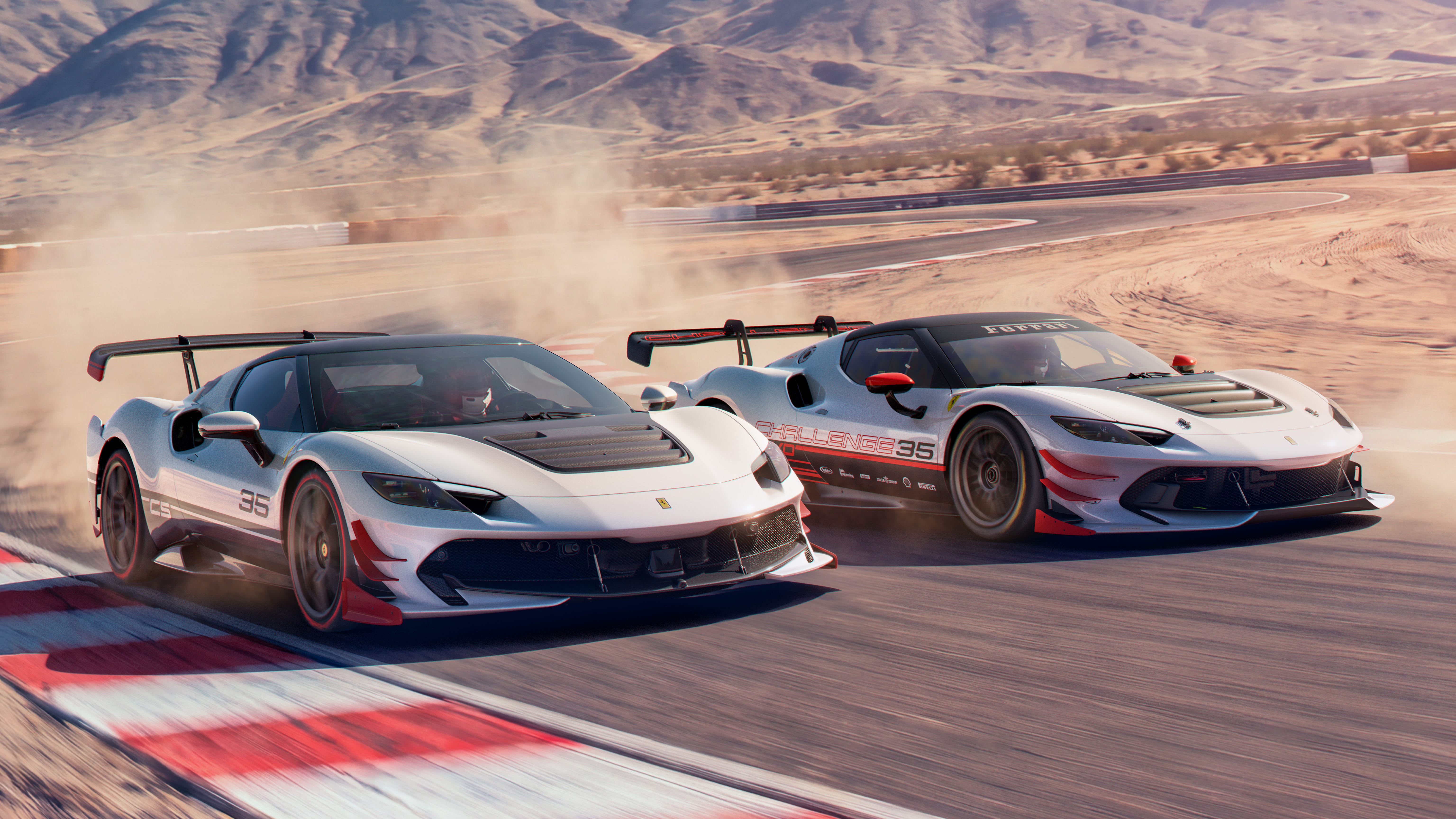
The newly developed suspension is derived directly from the 296 Challenge Evo, using semi-active dampers and a dual-spring design for better rebound response. Reduced body roll helps the Pirelli P Zero R tires do their work, sized 245/35R20 up front and 305/35R20 at the rear.
The 20-inch forged wheels come in three finishes: Matte Grigio Corsa, Matte Nero with a diamond-cut finish, or Matte Bianco Fuji. Braking now leans on enlarged rear carbon-ceramic discs and bigger ventilation ducts that make up for the energy recovery the hybrid once provided.
The cockpit closely resembles the 296 Speciale's. Climate control and a stereo remain, but carbon-fiber door panels and the absence of armrests and storage pockets signal the weight-saving brief. A further stripped spec removes trim beneath the seats and lower carpet sections, exposing part of the chassis.
Pricing, timing and who can buy
Ferrari positions the CS as a standard range model rather than a special series car, which changes who gets one. The 296 Speciale requires an existing relationship with the brand to secure an allocation; the Challenge Stradale can be ordered by any customer walking into a dealer.
The marque says it wants to court new buyers after the purest driving experience it offers, with the CS as the opening move. Production numbers are not capped, a rare open door for a new, track-angled Ferrari that does not demand a purchase history.
In its home market the 296 Challenge Stradale costs 291,000 euros, roughly $320,000. US pricing is not yet announced, and deliveries are expected to begin in late 2027, with sales starting in the third quarter of that year.
Ferrari tops our ranking of the best Italian car brands, a position forged in Formula One. The marque's all-time best-seller remains the 488 launched in 2015, while among collector machines the 1963 Ferrari 250 GTO holds the private-sale record at $70 million.
The CS arrives in a year Maranello has already spent on driver involvement. A few months ago Ferrari unveiled the 12Cilindri Manuale, a simulated six-speed manual added to the lineup purely for engagement. The Challenge Stradale badge is the second nostalgia play in a single season.
Support the content you love — it’s free 🎉
Add Luxe Digital as a preferred source on Google. Our stories will be more likely to appear in Google’s Top Stories. It’s free and supports our team. Thank you!
Add as preferred sourceYou can remove us any time in Google’s source preferences.
Thank you — you’re all set 🎉
Luxe Digital is now one of your preferred sources, so our stories are more likely to appear in Google’s Top Stories.
This briefing is published daily using an AI-powered system crafted by Luxe Digital’s team and finely tuned to meet our editorial standards. While we continuously test and review the output, mistakes can sometimes happen. Tell us if you spot one.
Images: Ferrari