
Cartier has added a jewelry category to the talent award it has run since 1995, renaming the program the Cartier Talents of Tomorrow Prize. What began as the Cartier Watchmaking Prize for Talents of Tomorrow now has a second discipline, with a gong for jewelers next to the established watchmaking award.
From this year the program will recognize three winners in each discipline, judged on technical skill and creative daring. That doubles the number of winners the maison names each year, and it is the first structural change to the contest since its founding three decades ago.
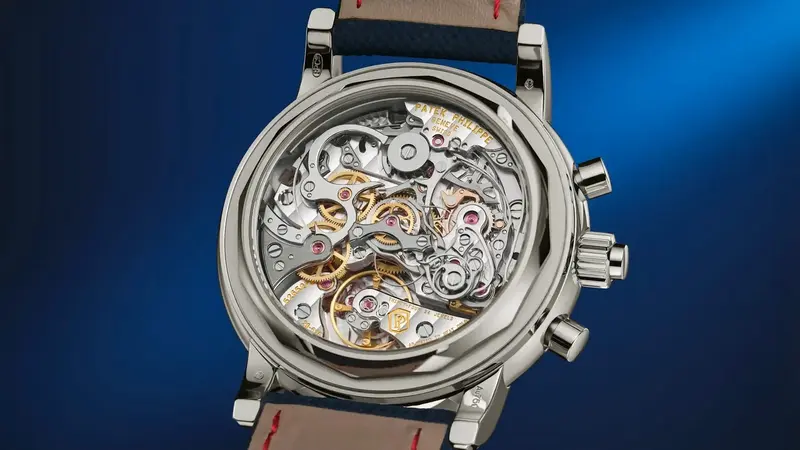
The theme for this edition is "Cartier's Wild Fauna," a nod to the animal imagery that runs through the house's designs, from panthers and tigers to crocodiles. Watchmaking entrants are asked to reinterpret the in-house self-winding automatic 1847 MC movement through that lens.
Jewelry candidates face a narrower prompt: translate an animal's presence into a brooch. Both briefs push applicants toward the fauna language Cartier has long worked into its jewelry, and the jewelry commission lands on the side of the house where the motif is most at home.
Watchmaking students and apprentices may apply from Switzerland, France, Belgium and Germany, and, as of this edition, Sweden, Denmark and Finland join that list. The northern expansion is new, widening the pool for the movement-reinterpretation brief to seven countries.
To enter the jewelry category, students must be based in France, Italy or Switzerland and have finished at least two years of training focused on jewelry. The eligibility bar is higher on the jewelry side, reflecting a discipline where the house wants proven benchwork before it awards a prize.
Cartier itself is best known to our readers for its watches: our buying guide prices the Santos, the Tank and the Panthère across their retail range. The jewelry addition folds the maison's other great strength into a contest that had, until now, celebrated only its horology.
Eight finalists in each category receive three months and up to 80 hours to develop their projects, with individual guidance from a mentor outside Cartier. Each must submit finished work alongside a logbook of sketches, photographs and development milestones, a record of the making as well as the made.
The watchmaking jury draws on independent master watchmaker Kari Voutilainen, Pascal Ravessoud of the Fondation de la Haute Horlogerie, Nathalie Marielloni of the Musée International d'Horlogerie, vintage-watch expert Roy Davidoff and Pascale Lepeu, director of the Cartier Collection.
Jewelers will present to Alexa Abitbol, director of the Cartier high jewelry manufacture; François Curiel, chairman of Christie's Europe; Mathieu Rousset-Perrier, heritage curator at the Musée des Arts Décoratifs; Laurent Laroche, CEO of the Cristofol high jewelry atelier; and journalist Hervé Dewintre.
The two juries mix house insiders with outsiders: Curiel chairs Christie's Europe, and Rousset-Perrier curates heritage at a decorative-arts museum. For a student submitting a brooch, that is a panel drawn from the institutions that judge and collect the trade's work.
Presenter and watchmaking expert Eléonor Picciotto will host the ceremonies where the first winners under the new name are revealed next spring. No venue or date is given, and the maison has not said whether the two disciplines are celebrated together or separately.
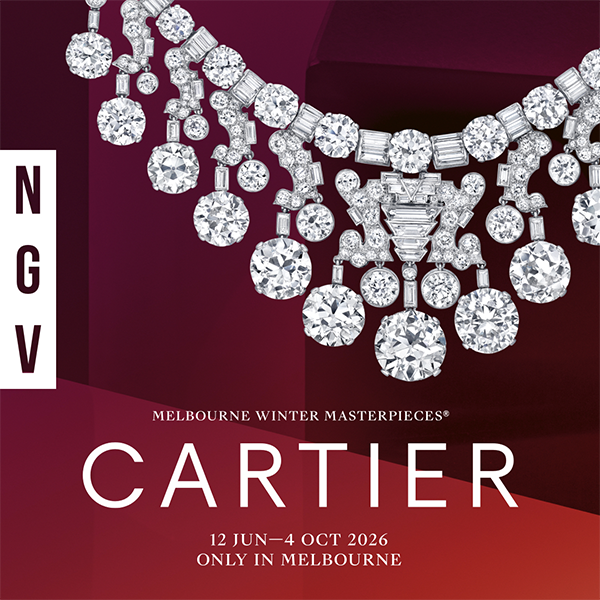
The house's jewelry has long been where its fauna motif lives most freely, and where its prices stretch furthest. Our engagement-ring ranking counts a 10.48-carat Cartier diamond among the costliest ever given, the ring Prince Rainier III bought Grace Kelly in 1956 for roughly $4 million.
That stone remains with the House of Grimaldi in Monaco, and it is first on our inflation-adjusted list at around $46 million in today's money. A talent prize that asks young jewelers to work animals into brooches draws on the same visual language that stone helped make famous.
Applications open Thursday and close November 30, so the window is short and the brief demanding. The mentor outside Cartier is a deliberate choice: finalists are shaped by hands beyond the maison's workshop before their work ever reaches the jury.
What changes and what doesn't
The 1847 MC movement remains the watchmaking brief's anchor, carrying the contest's technical core into its jewelry-expanded era. Its self-winding architecture is what every watchmaking entrant must reinterpret, unchanged even as the program grows a second discipline beside it.
What shifts is who can enter and what they make. Each craft now has its own panel of five judges.
Support the content you love — it’s free 🎉
Add Luxe Digital as a preferred source on Google. Our stories will be more likely to appear in Google’s Top Stories. It’s free and supports our team. Thank you!
Add as preferred sourceYou can remove us any time in Google’s source preferences.
Thank you — you’re all set 🎉
Luxe Digital is now one of your preferred sources, so our stories are more likely to appear in Google’s Top Stories.
Sources
This briefing is published daily using an AI-powered system crafted by Luxe Digital’s team and finely tuned to meet our editorial standards. While we continuously test and review the output, mistakes can sometimes happen. Tell us if you spot one.
Image: Cartier