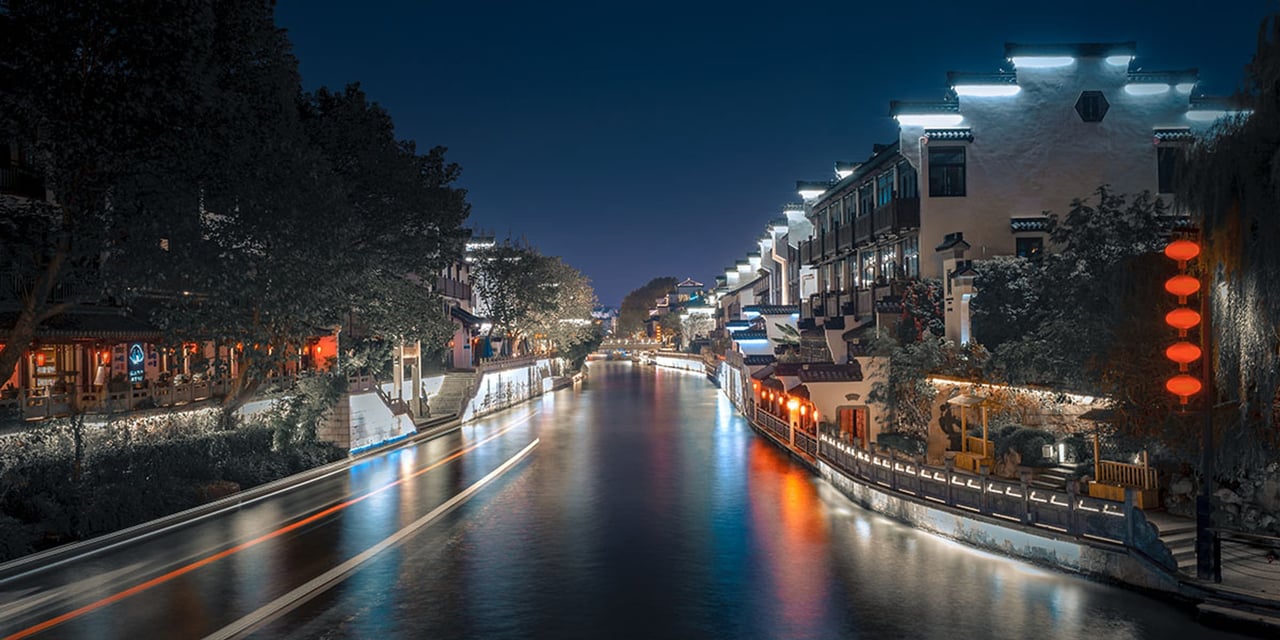
Quick: which Chinese city has the country’s top-selling luxury mall? If you said Beijing, you’re a year behind. Nanjing’s Deji Plaza booked more than 24.5 billion yuan in 2024 and edged past Beijing SKP.
It gets stranger from there. The average luxury shopper in a second-tier city spent 253,800 yuan in 2024, up 22%, while the average first-tier shopper spent 250,200 yuan, down 4%. In the same stretch, Tiffany & Co, Dolce & Gabbana, Ferragamo and Loewe closed stores in Kunming, Lanzhou, Taiyuan and Guiyang.
So the cities below Beijing and Shanghai are winning and losing at the same time. Mainland China’s luxury market fell 18 to 20% in 2024 and a further 3 to 5% in 2025, and a brand in a shrinking market has to choose where it stays.
Here is the current tier list, city by city, and what it now tells you about where luxury sells.
How we built this: the tiers come from Yicai’s 2025 ranking, the latest edition with a ranked list. Market figures come from Bain, Reuters and the brands’ own results.
Western reports often call Yicai’s new first-tier cities “tier 2”. That is why Reuters calls Nanjing a second-tier city and Yicai does not.
What are China’s city tiers?
China’s city tiers are an informal ranking, not an official one. The government does not publish or recognize a list of city tiers, so media groups and research firms draw their own, and their lists differ.
This guide uses the list from Yicai’s New First-tier Cities Institute. It ranks 337 cities at prefecture level and above. It scores each city on five measures: how concentrated its commercial resources are, how much it works as a hub, how active its residents are, how competitive its new economy is, and its future potential.
That makes it useful for a retailer. A city’s tier on Yicai’s list reflects its commercial pull as well as its size.
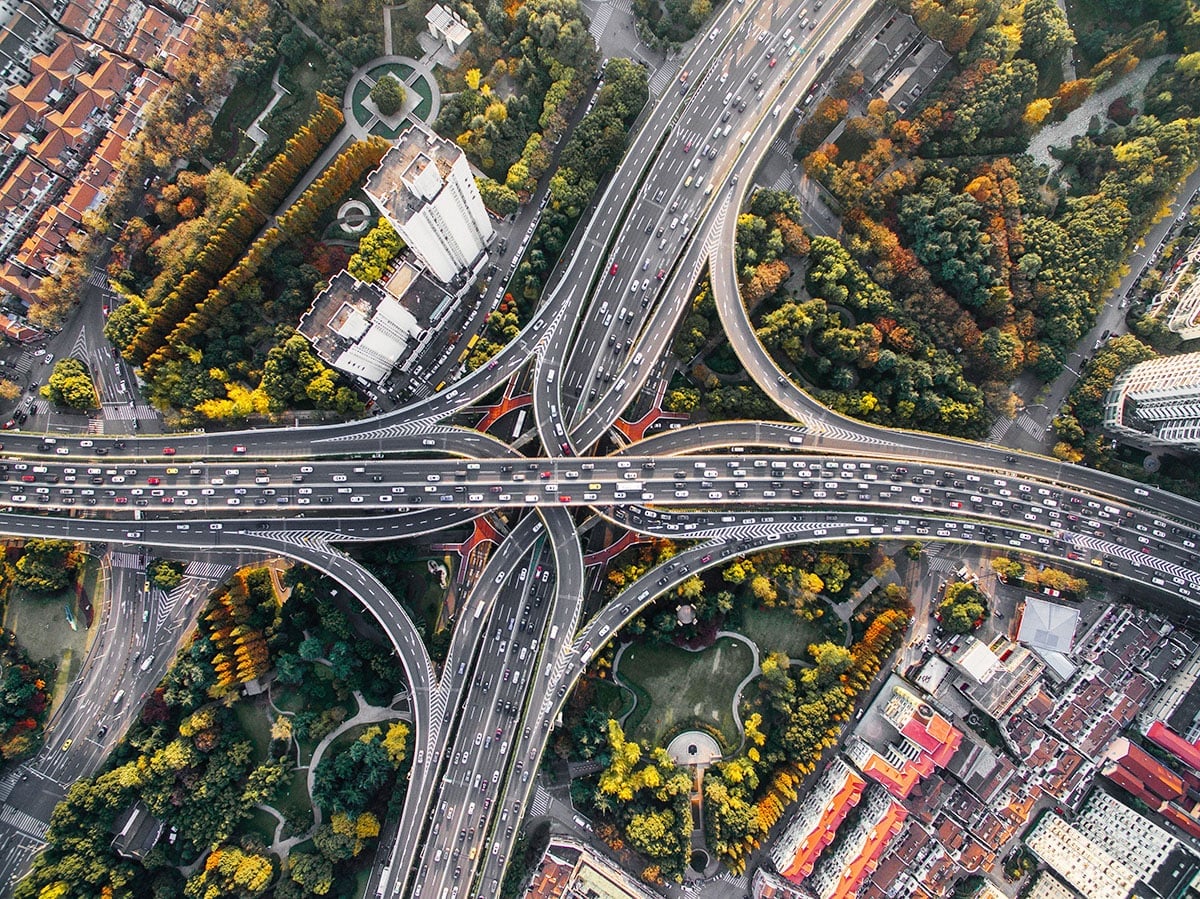
Yicai’s 2025 ranking sorts the 337 cities into six bands:
| Tier | Number of cities | Overall rank | Examples |
|---|---|---|---|
| Tier 1 | 4 | 1 to 4 | Shanghai, Beijing, Shenzhen, Guangzhou |
| New first-tier | 15 | 5 to 19 | Chengdu, Hangzhou, Chongqing, Nanjing |
| Tier 2 | 30 | 20 to 49 | Jinan, Wuxi, Kunming, Xiamen |
| Tier 3 | 70 | 50 to 119 | Urumqi, Lanzhou, Haikou, Sanya |
| Tier 4 | 90 | 120 to 209 | Zaozhuang, Yibin, Kaifeng, Beihai |
| Tier 5 | 128 | 210 to 337 | Xinzhou, Panjin, Dandong, Lijiang |
Yicai published its next edition on May 28, 2026, and this time it gave trends rather than a ranking. The 2025 list is therefore the latest ranked one, and it is the one this guide uses throughout.
If you only need population, that is a different question with a different source: the national census. The seventh was taken in 2020.
Which are China’s tier 1 cities?
China’s tier 1 cities are Shanghai, Beijing, Shenzhen and Guangzhou, in that order on Yicai’s 2025 ranking.
They are also where brands are still putting money into new space. Louis Vuitton expanded in Shanghai, and Gucci and Balenciaga opened at K11 in Guangzhou. In Beijing, SKP booked 22.2 billion yuan in 2024.
But the shoppers here are spending less each. The average luxury shopper in a first-tier city spent 250,200 yuan in 2024, down 4%, according to MDRi figures reported by Reuters. And SKP, for all its billions, finished the year behind a mall in Nanjing.
Which are the new first-tier cities?
The new first-tier cities are the 15 that Yicai ranks just below the big four. In rank order for 2025:
- Chengdu
- Hangzhou
- Chongqing
- Wuhan
- Suzhou
- Xi’an
- Nanjing
- Changsha
- Zhengzhou
- Tianjin
- Hefei
- Qingdao
- Dongguan
- Ningbo
- Foshan
Hefei rose to 11th from 15th, the biggest jump of the year and its best place in the ranking’s ten years.
Most of the naming confusion comes from this band. Western reports often fold these cities into tier 2, so when you read that shoppers in “second-tier cities” now outspend those in tier 1, the cities doing the spending include Nanjing, Wuhan, Changsha and Hangzhou. On Yicai’s list, all four are new first-tier.
Nanjing shows why the band matters. The city has 9.5 million people, and its Deji Plaza booked more than 24.5 billion yuan in 2024, against 22.2 billion at Beijing SKP. It was the first time Deji came out on top. Zino Helmlinger of CBRE told Reuters that Deji has the highest luxury sales density in China.
The spending figures in our opening come from the same Reuters report. The average luxury shopper in what Reuters calls second-tier cities spent 253,800 yuan in 2024, up 22%. Keep the definition in mind when you quote it.
Which are China’s tier 2 cities?
China’s tier 2 cities are the 30 that Yicai ranks from 20th to 49th overall. Here is the 2025 list in rank order:
| 1 to 10 | 11 to 20 | 21 to 30 |
|---|---|---|
| Jinan | Jinhua | Huizhou |
| Wuxi | Quanzhou | Taiyuan |
| Shenyang | Nanning | Yantai |
| Kunming | Changchun | Linyi |
| Fuzhou | Changzhou | Baoding |
| Xiamen | Nanchang | Taizhou (Zhejiang) |
| Wenzhou | Nantong | Shaoxing |
| Shijiazhuang | Guiyang | Zhuhai |
| Dalian | Jiaxing | Luoyang |
| Harbin | Xuzhou | Weifang |
The Taizhou on this list is the one in Zhejiang. Its namesake in Jiangsu is third-tier, 66th overall.
Kunming is 4th of the 30 and 23rd overall. It is also one of the cities brands have been leaving. Between them, Tiffany & Co, Dolce & Gabbana, Ferragamo and Loewe closed stores in Kunming, Lanzhou, Taiyuan and Guiyang. Three of those four cities are in this band. Cartier left Guiyang’s Lixing Center in April 2025.
So a tier 2 city has commercial pull on Yicai’s five measures. What the label cannot tell you is whether a city has a mall that luxury shoppers already travel to. Xiamen and Guiyang share a band.
Which are China’s third-tier cities?
China’s third-tier cities are the 70 that Yicai ranks from 50th to 119th. They include Urumqi, Lanzhou, Zhongshan, Haikou, Yangzhou, Tangshan, Wuhu, Hohhot, Yinchuan, Guilin, Weihai and Sanya.
Below them come 90 fourth-tier cities, ranked 120th to 209th, led by Zaozhuang, Yibin and Yulin in Shaanxi. The 128 fifth-tier cities, ranked 210th to 337th, start with Xinzhou, Panjin and Ili, and include Lijiang and Zhangjiajie. Beihai, in Guangxi, is fourth-tier.
A correction, for readers who remember an older version of this page. It put Ningbo and Qingdao in tier 1, and Sanya, Hohhot, Lanzhou and Beihai in tier 2, then listed Hohhot and Lanzhou in tier 3 as well. It also credited the tiers to the central government. No government publishes such a list. On Yicai’s 2025 list, Ningbo and Qingdao are new first-tier, Hohhot, Lanzhou and Sanya are third-tier, and Beihai is fourth-tier.
Lanzhou is the third-tier name on the closure list above. It is a reminder that a store in a smaller city is a bet on local shoppers spending at home.
How far has China’s luxury market fallen?
Mainland China’s personal luxury market fell 18 to 20% in 2024, back to 2020 levels, according to Bain. It fell a further 3 to 5% in 2025, with signs of recovery from the third quarter.
Not every category fell at the same speed. Bain’s figures for 2025:
| Category | Change in 2025 |
|---|---|
| Beauty | Up 4 to 7% |
| Jewelry | Down 0 to 5% |
| Fashion | Down 5 to 8% |
| Leather goods | Down 8 to 11% |
| Watches | Down 14 to 17% |
Beauty was the one category that grew. For a brand weighing a smaller city, that matters: a lipstick counter and a watch boutique are now two very different bets.
Where the money gets spent is moving too. In 2025, 65% of Chinese luxury spending happened inside mainland China and 35% abroad, down from 40% abroad in 2024, on Bain’s figures. Bain puts the shift down to currency moves that narrowed the price gap between China and abroad. The share spent abroad is the story of affluent Chinese tourists and where they shop.
Bain and Altagamma also found Chinese buyers turning to local, more accessible brands and to experiences. The wider market is not growing to cover the gap. Luxury consumers worldwide fell from about 400 million in 2022 to about 340 million in 2025, and global personal luxury goods sales came to about €358 billion in 2025, flat at constant exchange rates. China accounts for roughly a quarter of global luxury spending.
There are early signs of a turn. Bain expects modest growth in China in 2026, and LVMH’s Asia region, excluding Japan, grew 7% organically in the first quarter of 2026. In its half-year results on July 27, LVMH reported “strong growth” there again, without a figure for the quarter.
Where luxury brands are opening, and where they are leaving
Brands are opening in tier 1 malls and closing in tier 2 and 3 cities, but the top-selling mall of 2024 is in neither group.
| City | Yicai 2025 tier | What happened |
|---|---|---|
| Shanghai | Tier 1 | Louis Vuitton expanded |
| Guangzhou | Tier 1 | Gucci and Balenciaga opened at K11 |
| Beijing | Tier 1 | SKP booked 22.2 billion yuan in 2024 |
| Nanjing | New first-tier | Deji Plaza booked more than 24.5 billion yuan in 2024, ahead of SKP |
| Kunming | Tier 2 | Store closures |
| Taiyuan | Tier 2 | Store closures |
| Guiyang | Tier 2 | Store closures; Cartier left the Lixing Center in April 2025 |
| Lanzhou | Tier 3 | Store closures |
The openings are in tier 1 and the closures in tiers 2 and 3. If that were the whole story, the tier label would be a fine guide. Nanjing breaks it. A new first-tier city of 9.5 million people now has the mall with the highest luxury sales density in China, according to CBRE’s Zino Helmlinger, and it outsold the capital’s flagship mall.
The spending figures point the same way. In 2024, the average luxury shopper in the cities Reuters calls second-tier, Nanjing among them, spent 253,800 yuan, up 22%. The average first-tier shopper spent 250,200 yuan, down 4%.
So the tier tells you about a city’s commercial pull, and the mall tells you where the luxury money actually lands. Since the 2024 slowdown, the second has been the better guide.
How to choose your next Chinese city
Start from the mall, and treat the tier as a filter rather than a plan. Here is what that looks like in practice.
Find the mall before the city
Look for the mall shoppers already travel to, then check which houses have stayed in it through two falling years. Deji Plaza did not need a tier 1 address to outsell Beijing SKP. It needed the sales density CBRE describes, in a city of 9.5 million.
Keep the flagship where the openings are
The expansion money is still going to Shanghai and Guangzhou: Louis Vuitton in Shanghai, Gucci and Balenciaga at K11. The big houses are keeping their showcase stores in tier 1, and we would too. A second store in a smaller city is a different decision, and it should be judged on its mall.
Plan for WeChat in every tier
Weixin and WeChat had 1.418 billion combined monthly active users at the end of 2025. At that scale, it is how you reach shoppers in every tier, including the cities where you have no store. Our guide to WeChat for luxury brands covers how the houses use it.
Know what lower-tier shoppers buy
Shoppers in lower-tier cities prefer classic, recognizable luxury brands and are more receptive to promotions and discounts, according to a 2024 report by Daxue Consulting and VO2 Asia Pacific. Shoppers in higher-tier cities, who account for 53% of spending in the same report, are more open to niche labels and less sensitive to price. That is a pull toward discounting in the smaller cities. A brand that follows it too far can cheapen its name in the larger ones.
With buyers drifting toward local labels and experiences, the brands that hold their place will be the ones that give shoppers a reason beyond the logo. As Florine Eppe Beauloye, Co-Founder and CEO of mOOnshot digital, writes in her book Shine:
“Luxury is now about inclusivity and this authentic connection between the brand values and the consumers’ own personal stories.”
Price in counterfeits
Global trade in counterfeit goods was worth $467 billion in 2021, 2.3% of world imports, according to the OECD. That figure covers all goods, luxury included. China accounted for 45% of reported counterfeit seizures in the same year.
Fakes are one way a brand’s name gets diluted. Spreading into too many cities is the other. Every store in a city that cannot support it is a small discount on the brand’s image everywhere else.
Watch the secondhand market
China’s secondhand luxury market grew 15 to 20% in 2025 and is still under 10% of the primary market, according to Bain. It is small, but it is growing while the primary market shrinks. Our report on luxury resale sets out the ways a brand can take part.
Luxury tier list: brand tiers and city tiers
A luxury tier list usually ranks brands. This page ranks cities. The two meet in the mall, where the brands a mall signs decide which shoppers make the trip, and the shoppers decide which brands stay.
If you came here for the brand ranking, our list of the most popular luxury brands ranks the houses by their pull online. Read the two together and you have both halves of the question: which brand, and which mall.
Our advice
Before you pick a tier, pick the mall. Find the one in the region that shoppers already travel to, check which houses have stayed through two falling years, and only then look up the city’s tier. The tier will tell you whether the city has commercial pull. Deji Plaza is the reminder that it cannot tell you where the money goes.
Sources
- Chinese city tier system, Wikipedia.
- Chengdu, Hangzhou, 13 others rank as new first-tier Chinese cities in 2025, Yicai Global, May 28, 2025.
- Yicai 2025 city ranking, band counts, Sina Finance, May 28, 2025.
- Yicai 2025 second- and third-tier city lists, as reprinted by Sohu, 2025.
- Yicai 2025 ranking, second- to fifth-tier cities in rank order, as reprinted by Huanghe News on Tencent News, May 29, 2025.
- Yicai 2025 ranking, full table with ranks and provinces, Maigoo, May 29, 2025.
- Kunming’s rank in the 2025 Yicai list, Jiemian, 2025.
- Yicai’s Rising Lab ditches city attractiveness ranking to focus on key trends of China’s urban development, Yicai Global, May 28, 2026.
- 2020 Chinese census, Wikipedia.
- China Luxury Report, Bain & Company, January 2025.
- China’s personal luxury market contracts 3 to 5% in 2025 but shows signs of recovery, Bain & Company, January 29, 2026.
- Global luxury stays resilient despite economic headwinds and shifting consumer trends that reshape market, Bain & Company and Altagamma, November 20, 2025.
- First-class goods in second-tier cities as luxury goes local in China, by Casey Hall, Reuters, January 28, 2026.
- Luxury brands exit China’s lower-tier cities, CPP-Luxury, August 11, 2025.
- LVMH first-quarter 2026 revenue presentation, LVMH, April 13, 2026.
- Accelerating growth in the second quarter, solid first-half results, LVMH, July 27, 2026.
- A careful comeback: China’s luxury market poised for continued recovery in 2026, by Alexander Wei, Luxury Society, February 9, 2026.
- Tencent 2025 annual results, Tencent, March 18, 2026.
- Mapping Global Trade in Fakes 2025, OECD, 2025.
- China’s luxury market in 2024, Daxue Consulting and VO2 Asia Pacific, 2024.
- Shine: Digital Craftsmanship for Modern Luxury Brands, by Florine Eppe Beauloye.
Cover photo by Kenneth Yang.
Frequently asked questions
Is Chengdu a Tier 1 or 2 city?
Is Chongqing a Tier 2 city?
What are tier 4 cities in China?
What is a third tier city in China?
Products featured here are independently selected by our editors. If you buy through our retail links we may earn an affiliate commission — it never changes the price you pay, and it never decides our verdicts. Read our earnings disclaimer.