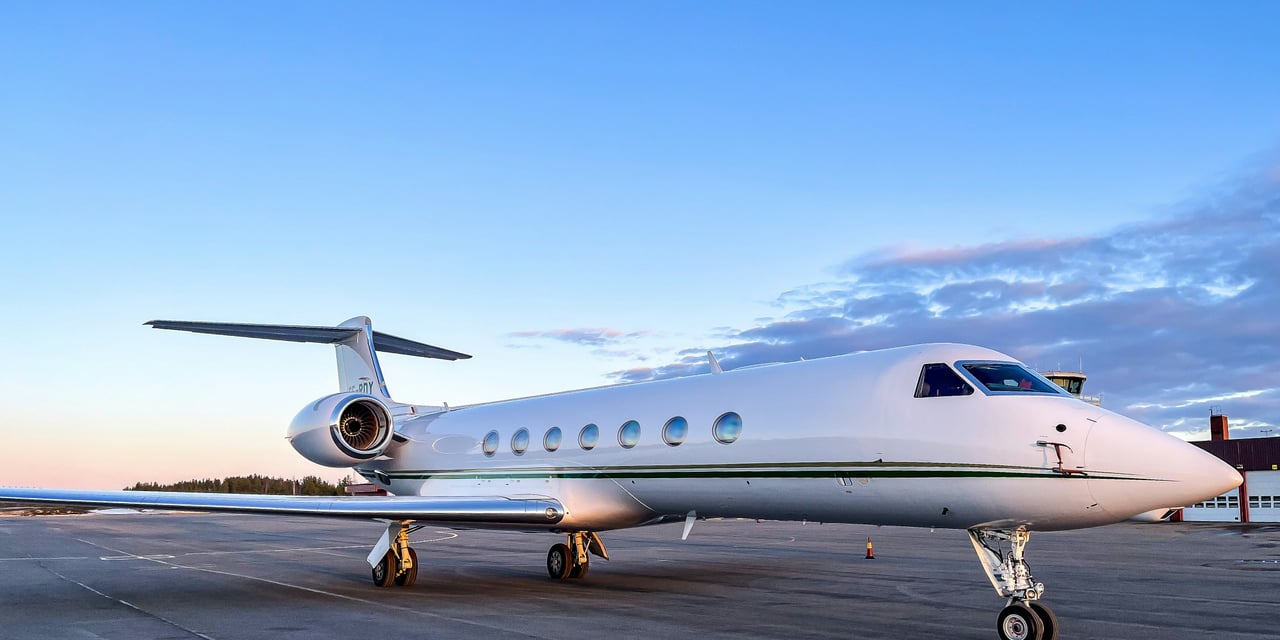
Flying private no longer means buying a jet. For anyone flying more than a handful of times a year but nowhere near enough to justify a $20 million aircraft and the crew to run it, four programs dominate the middle ground: NetJets, Flexjet, Wheels Up and VistaJet. All four sell you guaranteed access to a private cabin without the full cost of ownership. None of them, despite the shorthand, is quite the same kind of “membership.”
That is the first thing to get straight, because it decides everything about the price. These four programs run on three genuinely different models. NetJets and Flexjet are fractional operators: you either buy a share of a specific aircraft or prepay a block of hours on a card. Wheels Up is a deposit-funded membership: you fund an account and fly against it at capped or market rates. VistaJet is a subscription: you commit to a minimum number of hours a year at a fixed rate, and own nothing at all.
The hard part is that private aviation guards its numbers. Most operators quote privately, so a lot of what circulates online is stale or invented. Below we have separated what is genuinely published from what is a broker estimate, and dated every figure we could. Where a rate is quote-only, we say so rather than making one up.
Private jet membership at a glance
| Program | How it works | To get in | You commit to | Published light-jet rate |
|---|---|---|---|---|
| NetJets | Fractional share, lease or 25-hour card | Share from ~$500,000, or a 25-hour card | Share term ~5 years; card 25 hours | $8,600/hr (Card275, Jan 2025) |
| Flexjet | Fractional share, lease or 25-hour card | Share from ~$600,000, or a 25-hour card | Share up to 5 years; card 25 hours | ~$7,937/hr (Flexjet 25, 2026) |
| Wheels Up | Deposit-funded membership or pay-as-you-go charter | $0 (Charter) or $8,500/yr + $100,000 deposit | None on Charter; deposit spend-down | From ~$7,395/hr (capped, 2026) |
| VistaJet | Fixed-rate hourly subscription (no ownership) | Multi-year Program contract | 50+ hours/year, 3-year term | Quote-only (est. $15,000/hr+) |
Read that table as a map of trade-offs, not a ranking. The cheapest door in (Wheels Up Charter) buys the least certainty; the biggest commitment (VistaJet) buys the most consistent product. Here is how each one actually works.
NetJets
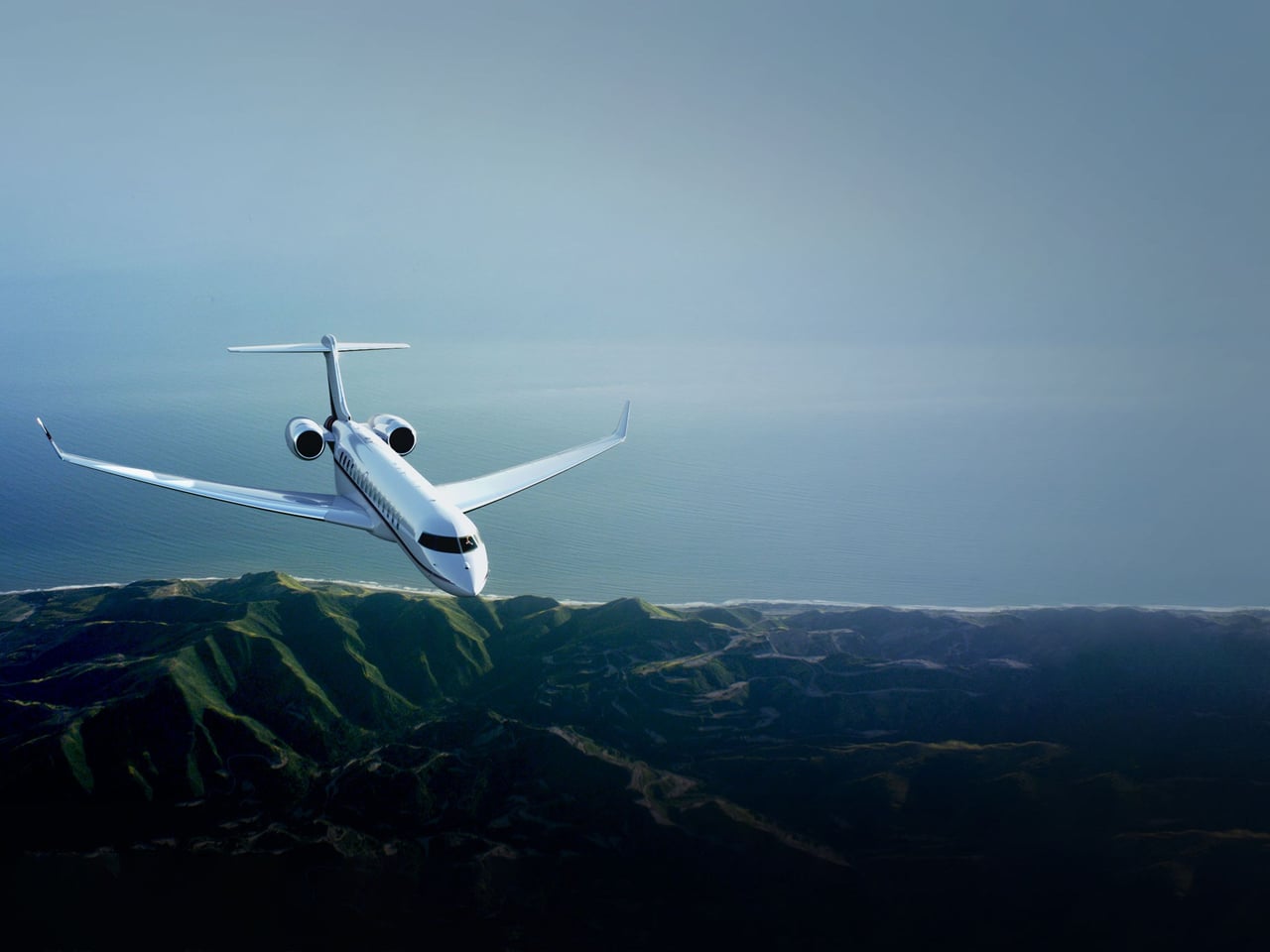
The original and the largest. Owned by Berkshire Hathaway and flying a fleet of around 850 aircraft in 2026, NetJets built the fractional-ownership model and still sets the benchmark. You buy in three ways: a fractional share (a real asset, roughly 50 flight hours a year for the smallest 1/16 share, on about a five-year term), a lease, or the low-commitment NetJets Card at 25 prepaid hours.
The card is the only rate NetJets publishes with any precision. In January 2025 it reset its card pricing and put a Phenom 300 light jet on the Card275 program at $8,600 per occupied hour, or $215,000 for 25 hours, with the 7.5% federal excise tax included. Fractional share prices are quote-only, estimated by brokers at $500,000 to $850,000 up front for a light jet plus a monthly management fee and an hourly rate. We break the full structure down in our dedicated NetJets cost guide.
| Model | Fractional share, lease, 25-hour card |
|---|---|
| Owner | Berkshire Hathaway |
| Fleet | ~850 aircraft (Cessna, Bombardier, Embraer) |
| Best-verified rate | $8,600/hr light-jet card (Jan 2025) |
| Minimum commitment | 25 hours (card) to ~5 years (share) |
Flexjet
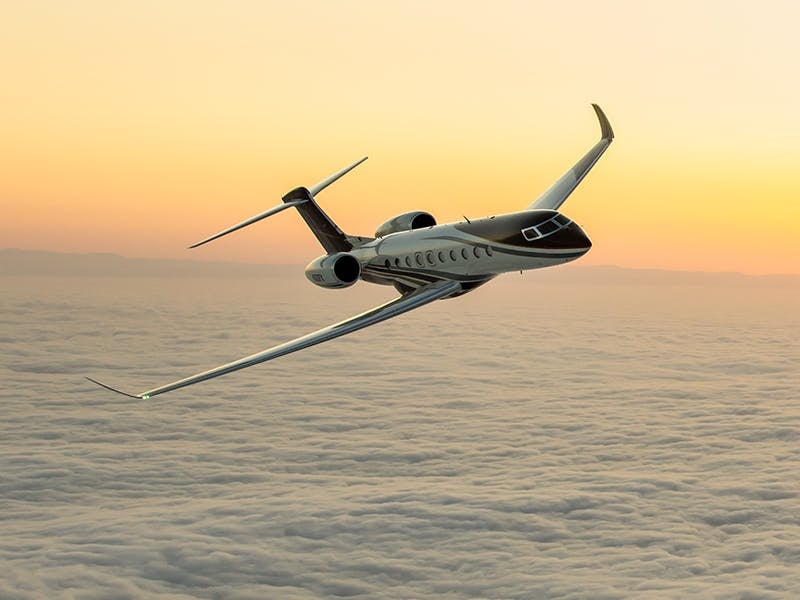
Flexjet is the closest structural rival to NetJets, and increasingly its most ambitious. It sells the same three products, a fractional share, a lease, and the Flexjet 25 card, and differentiates on the experience: its Red Label program assigns a dedicated flight crew to a single aircraft and fits out cabins through its bespoke LXi Cabin Collection, on what it markets as the youngest fractional fleet in the industry. Flexjet does not publish a Red Label surcharge, so treat any “Red Label costs more” claim you see elsewhere with caution.
The one well-sourced Flexjet figure is its card. Private Jet Card Comparisons put the Flexjet 25 card on a Phenom 300 at roughly $7,937 per occupied hour in 2026, around $198,425 for the 25-hour minimum before fuel and tax. Fractional shares start near $600,000 for a light jet by broker estimates, with a 1/16 share buying 50 hours a year on a term of up to five years. Flexjet has momentum behind it: in July 2025 it raised $800 million from an investor group led by L Catterton (the private-equity firm backed by LVMH’s Bernard Arnault), one of the largest equity investments private aviation has seen.
| Model | Fractional share, lease, 25-hour card |
|---|---|
| Owner | Directional Aviation (Kenn Ricci); L Catterton minority stake |
| Fleet | ~340 aircraft (Embraer, Bombardier, Gulfstream) |
| Best-verified rate | ~$7,937/hr light-jet card (2026) |
| Minimum commitment | 25 hours (card) to 5 years (share) |
Wheels Up
Wheels Up is the program that changed the most, and the one where old numbers will mislead you badly. After a near-collapse in 2023, it was rescued by a Delta Air Lines-led investor group (Delta now holds around 36%, the wider group about 95%) and rebuilt its entire pricing model. The old membership structure, a roughly $17,500 initiation fee and annual dues, is gone. Do not trust any 2026 guide still quoting it.
Today there are effectively three doors. Charter is pay-as-you-go with no membership fee, earning flight credit as you spend. Membership costs $8,500 a year and requires a minimum $100,000 flight-fund deposit, holding capped rates (a light jet starts around $7,395 an occupied hour) until the fund runs down. Signature, launched in September 2025, is the premium tier: deposits from $200,000 to $1 million, a $500 monthly fee, and published fixed hourly rates, with a Phenom 300 running $8,695 to $9,295 an hour and a Challenger 300 at $12,695 to $13,495, cheaper as your deposit rises. The Delta tie-in is real value: Signature members get SkyMiles Diamond Medallion status and up to 20% off select Delta fares.
One 2026 change to note: Wheels Up moved its King Air turboprops from capped to dynamic, market-based pricing on January 1, 2026, so the lowest guaranteed rates now sit on its modernized Phenom 300 and Challenger 300 jets.
| Model | Deposit-funded membership or pay-as-you-go charter |
|---|---|
| Owner | Delta-led investor group (Delta ~36%) |
| Fleet | Consolidating to Phenom 300 + Challenger 300 core, plus King Air |
| Best-verified rate | From ~$7,395/hr capped light jet (2026); Signature fixed tables published |
| Minimum commitment | None (Charter) to 5 years (Signature) |
VistaJet
VistaJet is the outlier, and for some travelers the most appealing precisely because it strips out ownership entirely. There is no share to buy and no aircraft assigned to you. You subscribe to its Program, commit to a minimum number of hours a year at a fixed hourly rate, and any one of its silver-and-red Bombardier jets fills your trip, a “free-floating” fleet of around 360 aircraft flying the same livery and the same cabin worldwide.
The core Program starts at 50 flight hours a year on a three-year term; a smaller tier, VJ25, covers 25 to 49 hours a year. VistaJet does not publish rates, and its deposit or membership fee is not disclosed, so anyone quoting you a hard VistaJet price is guessing. The credible broker estimates put its Challenger 350 near $15,000 an occupied hour and its large-cabin Global fleet between $18,000 and $25,000, but these are third-party figures, not VistaJet’s own. What the subscription does include is notable: carbon offsetting as standard, and no positioning fees for members. The catch, flagged by ratings agency Moody’s, is that VistaJet passes fuel-price volatility through to customers, so “fixed” has an asterisk.
| Model | Fixed-rate hourly subscription (no ownership) |
|---|---|
| Owner | Vista Global (Thomas Flohr) |
| Fleet | ~360 all-Bombardier jets (Challenger, Global) |
| Best-verified rate | Quote-only (brokers estimate $15,000/hr+) |
| Minimum commitment | 50+ hours/year, 3-year term (25+ on VJ25) |
Which private jet membership is right for you
The decision comes down to two questions: how many hours you fly a year, and how much certainty you are willing to pay for.
- Under 25 hours a year: you almost certainly do not need a membership. Pay-as-you-go, like Wheels Up Charter or on-demand charter through one of the best private jet companies, keeps you off the hook for deposits and dues.
- 25 to 50 hours: a jet card is the sweet spot. The NetJets Card and Flexjet 25 give you a known light-jet rate without a capital purchase, and Wheels Up membership does the same with capped rates against a deposit.
- 50 to 100 hours: this is where a fractional share, or a VistaJet subscription, starts to earn its commitment. You get guaranteed availability and a rate that beats ad-hoc booking, in exchange for locking up capital or signing a multi-year contract.
- Consistent global, large-cabin flying: VistaJet’s case is strongest here. One fleet, one standard, one call, anywhere, if you can meet the hours and the term.
If cabin size and outright spectacle are what you are chasing rather than a program, the most expensive private jets show what the top of private aviation actually looks like. And if you are still weighing whether private is worth it over a first-rate commercial cabin, the best business-class airlines close more of the comfort gap than the price gap suggests.
What “membership” really costs beyond the rate
No published rate is the whole bill. Whichever program you choose, budget for the extras that quotes tend to bury.
- Federal excise tax. A 7.5% federal excise tax applies to jet-card and charter-style flying on US domestic legs. NetJets and others often quote card rates with it included, so read whether a rate is “tax included” or not. Genuine fractional flying is taxed differently, through a federal fuel surtax rather than the 7.5%.
- Fuel surcharges. Almost every program adjusts for jet-fuel prices on top of the base rate. Even VistaJet’s “fixed” subscription passes fuel volatility through.
- Peak days. Cards and memberships carry designated peak or blackout days, often dozens a year, with surcharges and longer notice requirements. If you fly holidays, this matters.
- Positioning and international fees. Empty repositioning legs, international handling, customs and de-icing land on the final invoice, not the headline rate.
The honest summary: the four programs are not really competing on a single number, because there barely is one. They are competing on how you want to hold the cost, as an asset you buy and sell (NetJets, Flexjet), a balance you draw down (Wheels Up), or a subscription you commit to (VistaJet). Match the structure to how you actually fly, then negotiate the rate, because for three of the four, the published figure is only ever a starting point.
Frequently asked questions about private jet membership
What is the cheapest private jet membership?
Do you own the plane with a private jet membership?
How much does VistaJet cost per hour?
Is a private jet membership worth it?
Products featured here are independently selected by our editors. If you buy through our retail links we may earn an affiliate commission — it never changes the price you pay, and it never decides our verdicts. Read our earnings disclaimer.