Airports aren’t just stopovers—they’re the arteries of global travel. Every year, billions of passengers stream through the world’s busiest airports.
Curious about which airports move the most people? We turned to Airports Council International’s (ACI) confirmed 2025 World Airport Traffic Dataset, the final tally ACI released in July 2026.
When you look at the complete picture—both domestic and international travelers—one airport flies above all: Atlanta’s Hartsfield–Jackson (ATL). With 106.3 million passengers in 2025, it remains the busiest airport on earth, even after traffic dipped 1.6% from the year before.
But when it comes to international traffic alone, no one has outshined Dubai International (DXB), the true crossroads of continents. For more than a decade, DXB has held the crown as the world’s busiest international airport. In 2025 it welcomed 95.2 million travelers through its gleaming terminals, the highest annual international passenger total any airport has ever recorded, since nearly every one of DXB’s passengers is flying internationally.
With Dubai closing in on 99.5 million passengers projected for 2026, more airports are poised to join the ultra-exclusive 100 Million Passengers Club, redefining the future flight path of global aviation.
| # | Airport | Annual Passengers |
|---|---|---|
| 1. | Hartsfield–Jackson Atlanta International (ATL), USA | 106.3 million |
| 2. | Dubai International (DXB), UAE | 95.2 million |
| 3. | Tokyo Haneda (HND), Japan | 91.7 million |
| 4. | Dallas Fort Worth International (DFW), USA | 85.7 million |
| 5. | Shanghai Pudong International (PVG), China | 85 million |
| 6. | Chicago O’Hare International (ORD), USA | 84.9 million |
| 7. | London Heathrow (LHR), UK | 84.5 million |
| 8. | Istanbul (IST), Turkey | 84.4 million |
| 9. | Guangzhou Baiyun International (CAN), China | 83.6 million |
| 10. | Denver International (DEN), USA | 82.4 million |
| 11. | Indira Gandhi International (DEL), India | 78.1 million |
1. Hartsfield–Jackson Atlanta International, Georgia, USA—106.3 million passengers
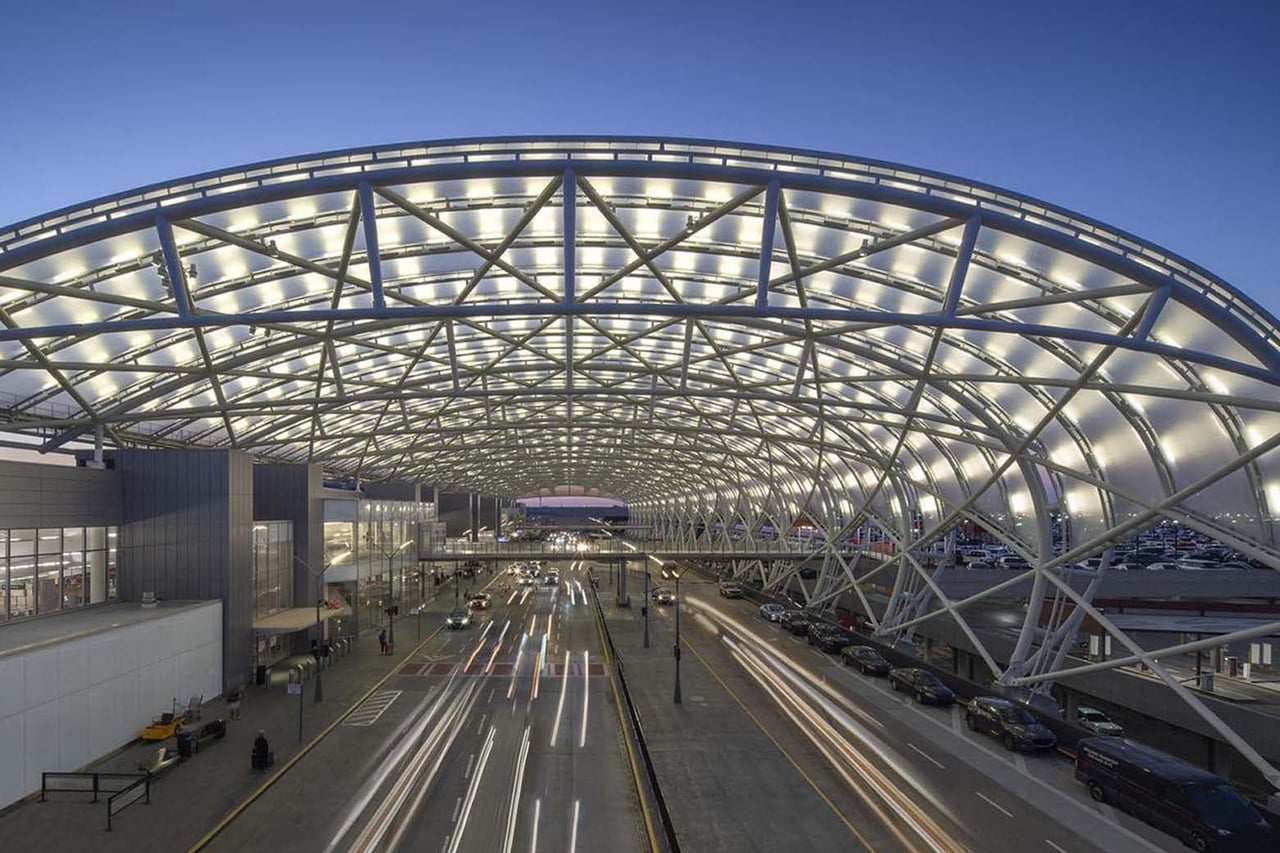
Lit up at night, the red and purple spectacle is impossible to miss from the sky. And even if you’re tired from traveling, the bright LEDs evoke a new sense of excitement.
As the busiest airport in the world for most of the past two decades, Hartsfield-Jackson Atlanta International Airport saw 106.3 million passengers pass through its gates in 2025, still comfortably ahead of the field even with traffic down slightly from the year before. But don’t let that put you off. With modern technologies and efficient systems, the international airport is designed to accommodate a constant flow of international passengers. Over 50 lounges offer complimentary food and drinks. Hundreds of duty-free shops provide the perfect excuse to pack a new wardrobe. And self-driving robot pads make it easier for passengers with limited mobility to navigate the modern facilities.
Its central U.S. location and role as Delta Air Lines’ primary hub make it a top connecting global airport. ATL offers direct flights to over 200 destinations across six continents.
| Annual passengers | 106.3 million |
|---|---|
| Location | Atlanta, Georgia, United States |
| IATA airport code | ATL |
| Runways | 5 |
| Longest runway | 12,390 ft (3776m) |
| Airlines | 20 |
| Destinations | 220 |
| Opened in | 1926 |
2. Dubai International Airport (DXB), UAE — 95.2 million
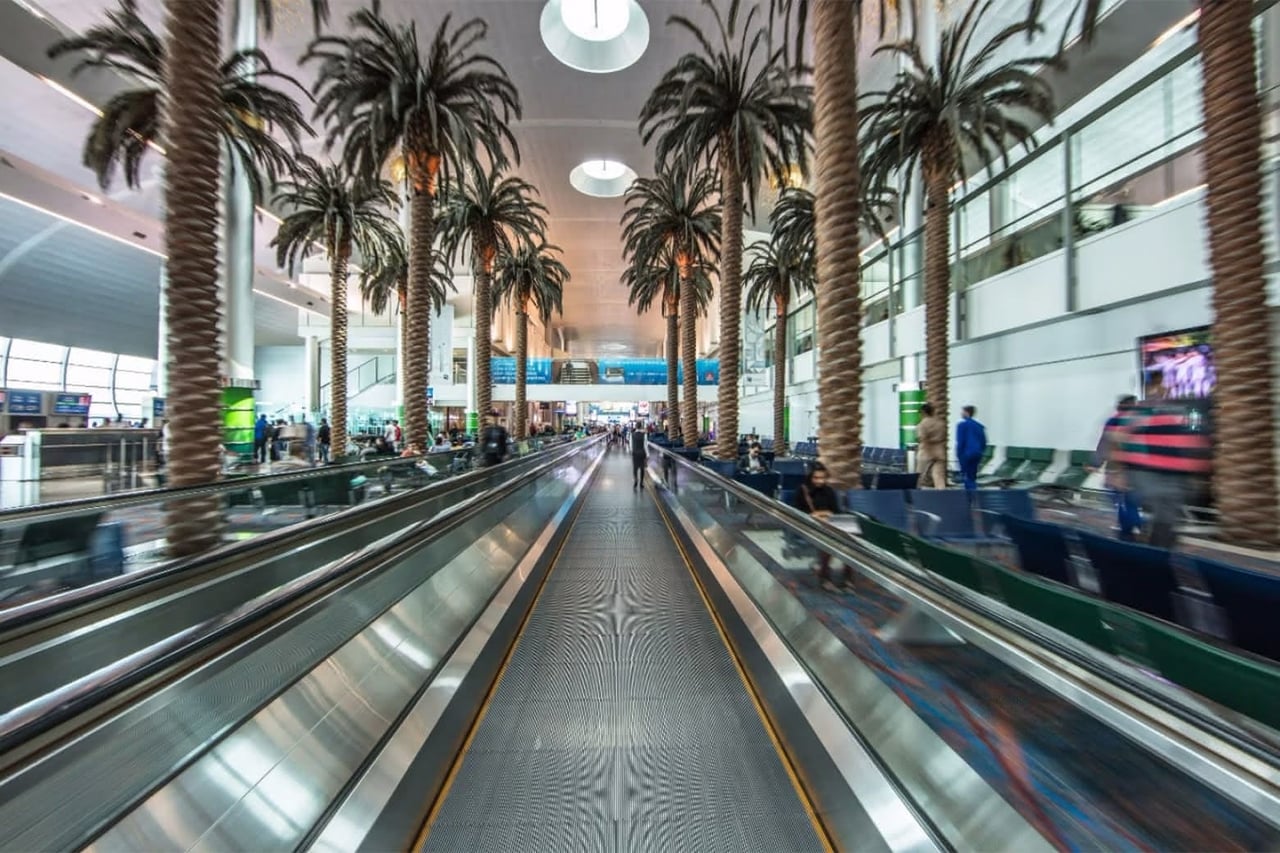
What would any list of superlatives be without Dubai!
Dubai International Airport (DXB) dazzles as the world’s second-busiest airport, welcoming 95.2 million passengers in 2025—its highest traffic ever, and more than the entire population of Germany!
For over a decade, DXB has held the crown as the world’s busiest international airport, outpacing fierce rivals like London Heathrow, Paris Charles de Gaulle, Istanbul, and Doha. Since nearly every passenger who passes through DXB is flying internationally, its 2025 total also stands as the highest annual international passenger traffic any airport has ever recorded.
It’s also among the most connected airports on the planet, linking travelers to 272 destinations in 107 countries, served by 106 airlines, with Emirates and flydubai calling it home.
The airport’s story is as remarkable as its scale. From humble beginnings in 1960, with a single 1,800-meter sand runway, DXB has grown into a marvel of modern aviation, now boasting the capacity to handle 115 million passengers annually—a number it seems destined to reach sooner than later.
| Annual passengers | 95.2 million |
|---|---|
| Location | Dubai, United Arab Emirates |
| IATA airport code | DXB |
| Runways | 2 |
| Longest runway | 14,600 ft (4,450 m) |
| Airlines | 100+ |
| Destinations | 270+ |
| Opened in | 1960 |
3. Tokyo Haneda Airport (HND), Japan — 91.7 million
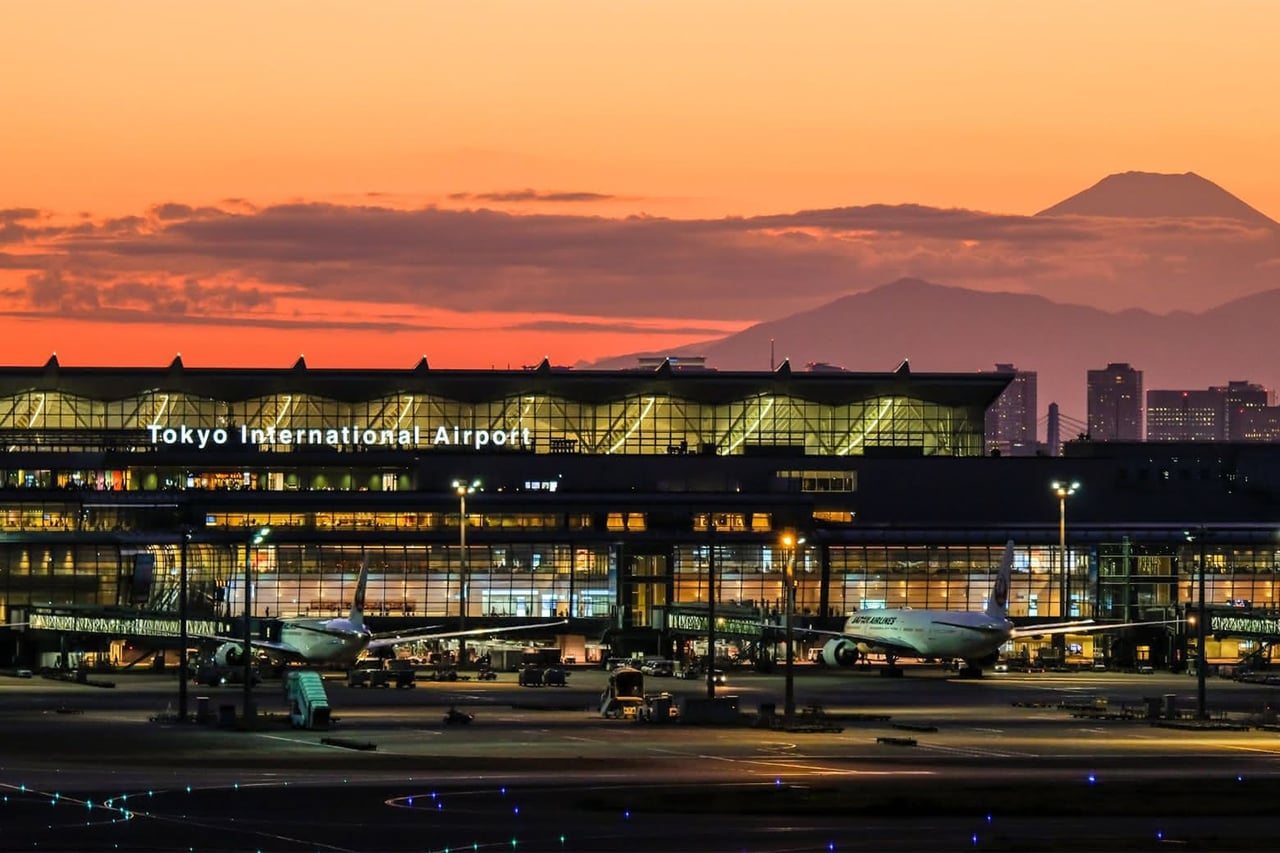
Tokyo is a beating heart of ultramodernity, stitched on a canvas of deep-rooted tradition—and Haneda Airport (HND) embodies that same duality.
Here, travel is as much about the experience as the destination. At Haneda, you can slip into an onsen bath (hot springs) while watching planes take off with Mt. Fuji in the distance, or stroll through Terminal 3’s Edo Ko-ji, a re-creation of a traditional Edo-period street. Prefer pop culture? Head to Tokyo Pop Town in Terminal 2, where you’ll find everything from kawaii souvenirs to matcha cafés.
In 2025, Haneda welcomed 91.7 million passengers, securing its place as Asia’s busiest airport and the world’s third-busiest overall. Located just south of central Tokyo, Haneda serves as Japan’s premier domestic hub while linking to major international cities. Its proximity to the city center, modern facilities, and efficient services consistently earn it a spot among the best airports in the world.
| Annual passengers | 91.7 million |
|---|---|
| Location | Tokyo, Japan |
| IATA airport code | HND |
| Runways | 4 |
| Longest runway | 11,024 ft (3,360 m) |
| Airlines | 40+ |
| Destinations | 100+ |
| Opened in | 1931 |
4. Fort Worth International, Dallas, USA—85.7 million passengers
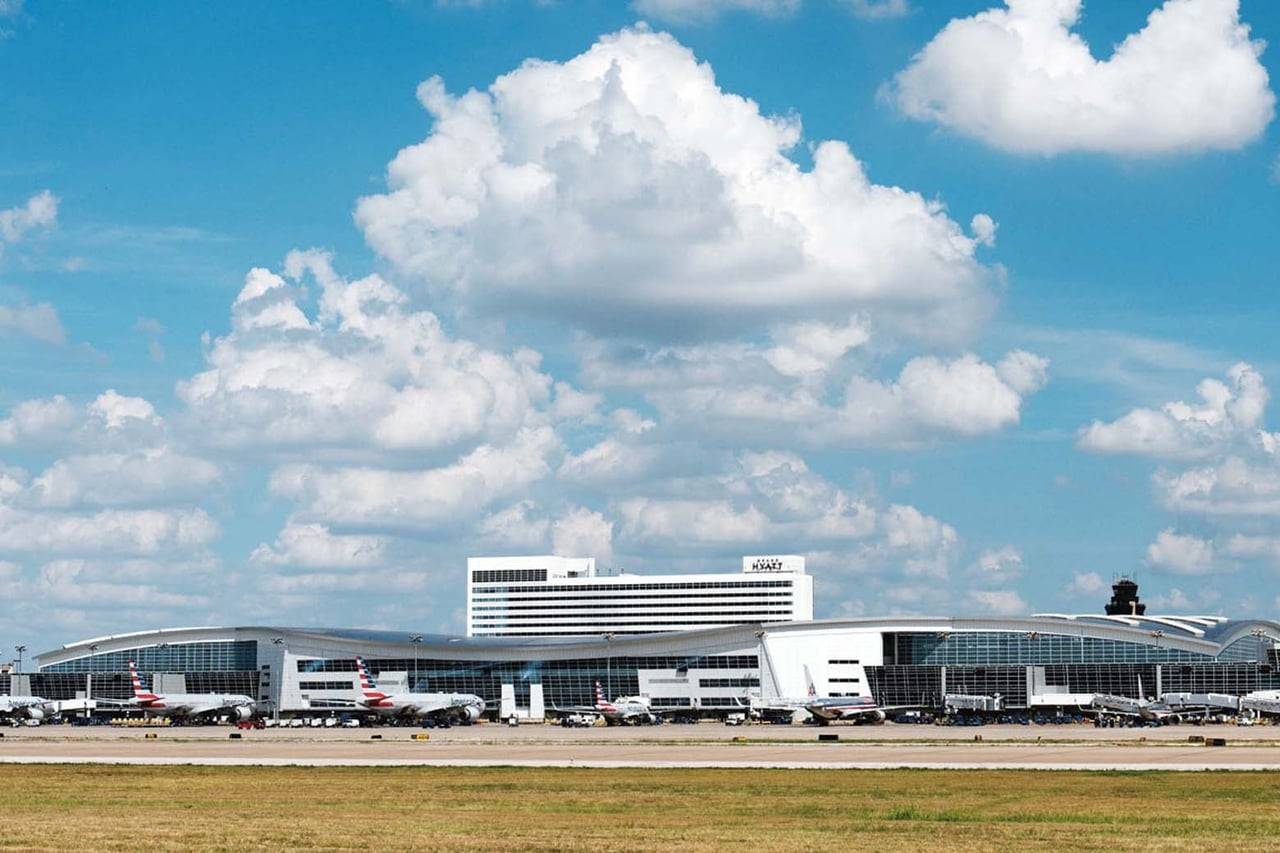
Whether you’ve come to see the Dallas Cowboys or are just passing through, Fort Worth International is one of the busiest airports in the world for good reason. Built in 1973, the iconic airport features five terminals including a luxury terminal with private suites and complimentary gourmet meals prepared by local chefs.
Naturally, if you only have a couple of hours in Texas, you’ll want to make the most of Southern homestyle cooking. Fort Worth International has plenty of eateries that serve up Dallas’ signature barbeque chicken, sandwiches, and frozen yogurt. Eaten yourself into a coma? It’s time to unwind at one of the airport’s many spas.
DFW welcomed 85.7 million passengers in 2025. It also boasts its own post office ZIP Code, 75261, and is nearly the size of Manhattan, making it one of the world’s biggest airports by space as well.
| Annual passengers | 85.7 million |
|---|---|
| Location | Dallas - Fort Worth, Texas, United States |
| IATA airport code | DFW |
| Runways | 7 |
| Longest runway | 13,401 ft (4,085 m) |
| Airlines | 28 |
| Destinations | 260 |
| Opened in | 1973 |
5. Shanghai Pudong International Airport (PVG), China — 85 million
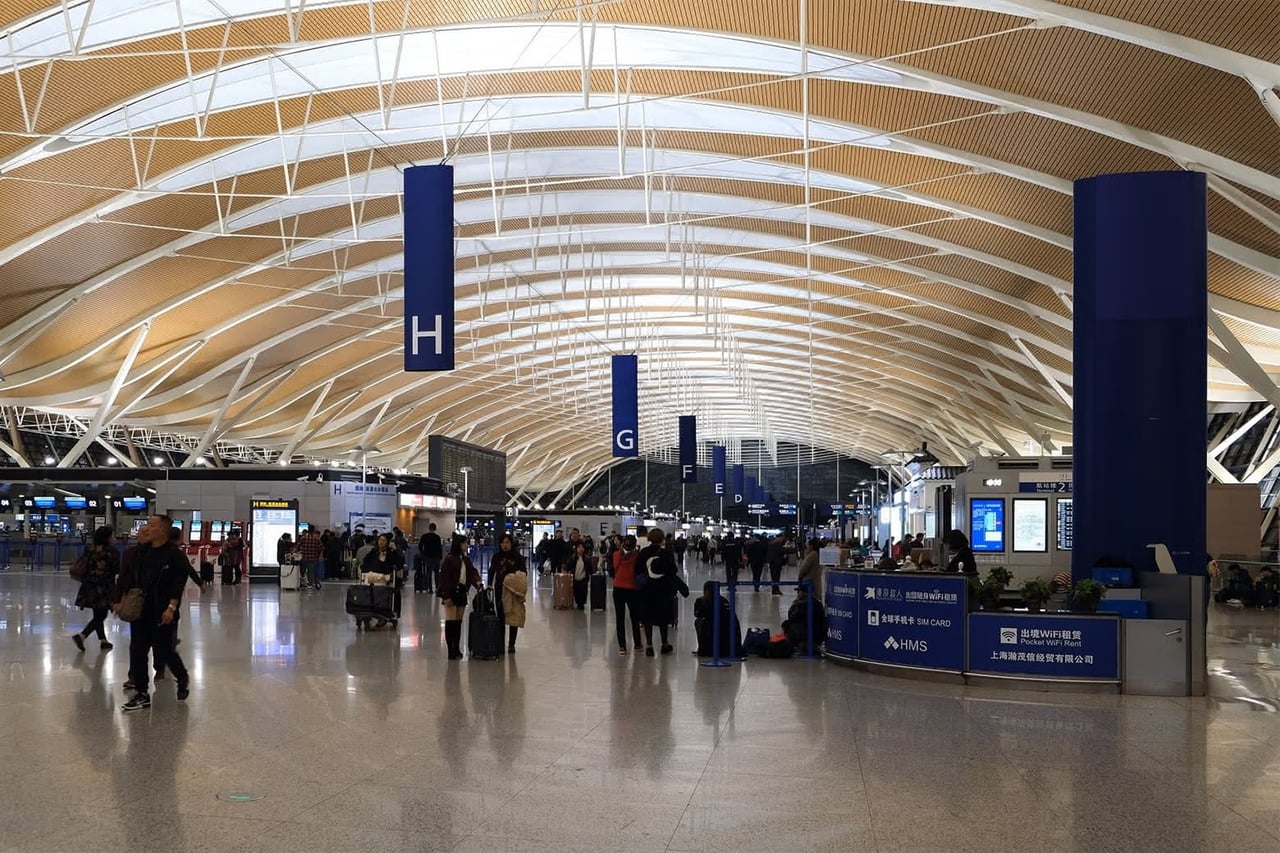
Shanghai Pudong handled 85 million passengers in 2025, up more than 10% on the year before and enough to climb five places into the world’s top five.
Opened in 1999, PVG serves as the primary international hub for Shanghai, while Hongqiao Airport handles most domestic flights.
Pudong is a major base for China Eastern Airlines and plays a vital role in China’s economic and tourism growth.
| Annual passengers | 85 million |
|---|---|
| Location | Shanghai, China |
| IATA airport code | PVG |
| Runways | 5 |
| Longest runway | 13,123 ft (4,000 m) |
| Airlines | 80+ |
| Destinations | 210+ |
| Opened in | 1999 |
6. Chicago O’Hare International Airport (ORD), USA — 84.9 million
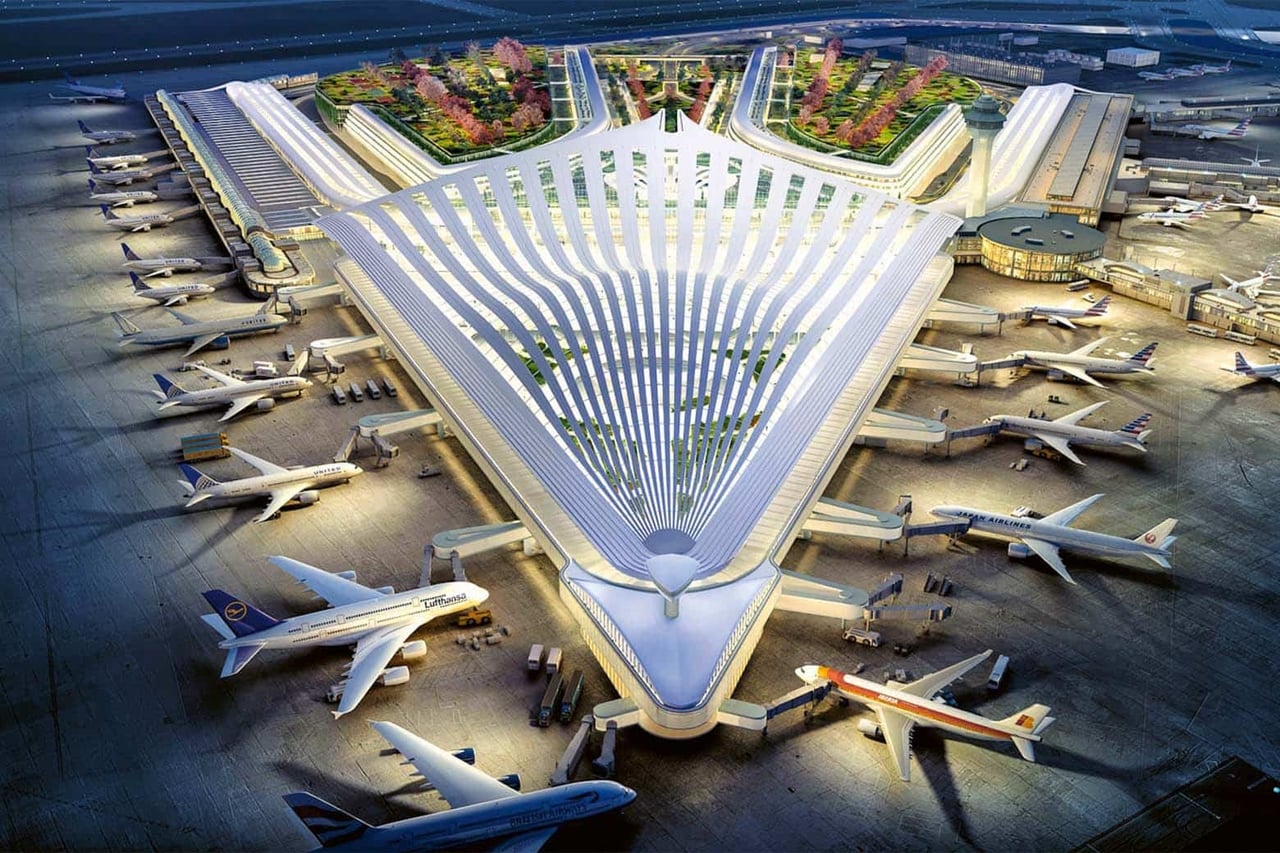
Reflecting a city shaped by lines and movement, Chicago O’Hare International’s tripartite design merges into a single building. Whilst the pronged-shaped architecture references the American city’s unique position along Lake Michigan and the Chicago River.
The Chicago seal also played its part as a muse for the airport design. And “The City in a Garden” is beautifully encapsulated by resplendent florals positioned between clean white infrastructure. The modern facility flaunts four terminals with luxurious amenities such as fine dining restaurants, lounges, spas, shopping centers, and entertainment areas. And with direct flights to over 250 destinations, it’s become the meeting point for 84.9 million passengers in 2025. With eight runways—the most of any major international airport—ORD is a key hub for both United Airlines and American Airlines, offering hundreds of domestic and international connections.
| Annual passengers | 84.9 million |
|---|---|
| Location | Chicago, Illinois, United States |
| IATA airport code | ORD |
| Runways | 8 |
| Longest runway | 13,000 ft (3,962m) |
| Airlines | 45 |
| Destinations | 258 |
| Opened in | 1944 |
7. Heathrow Airport (LHR), United Kingdom — 84.5 million
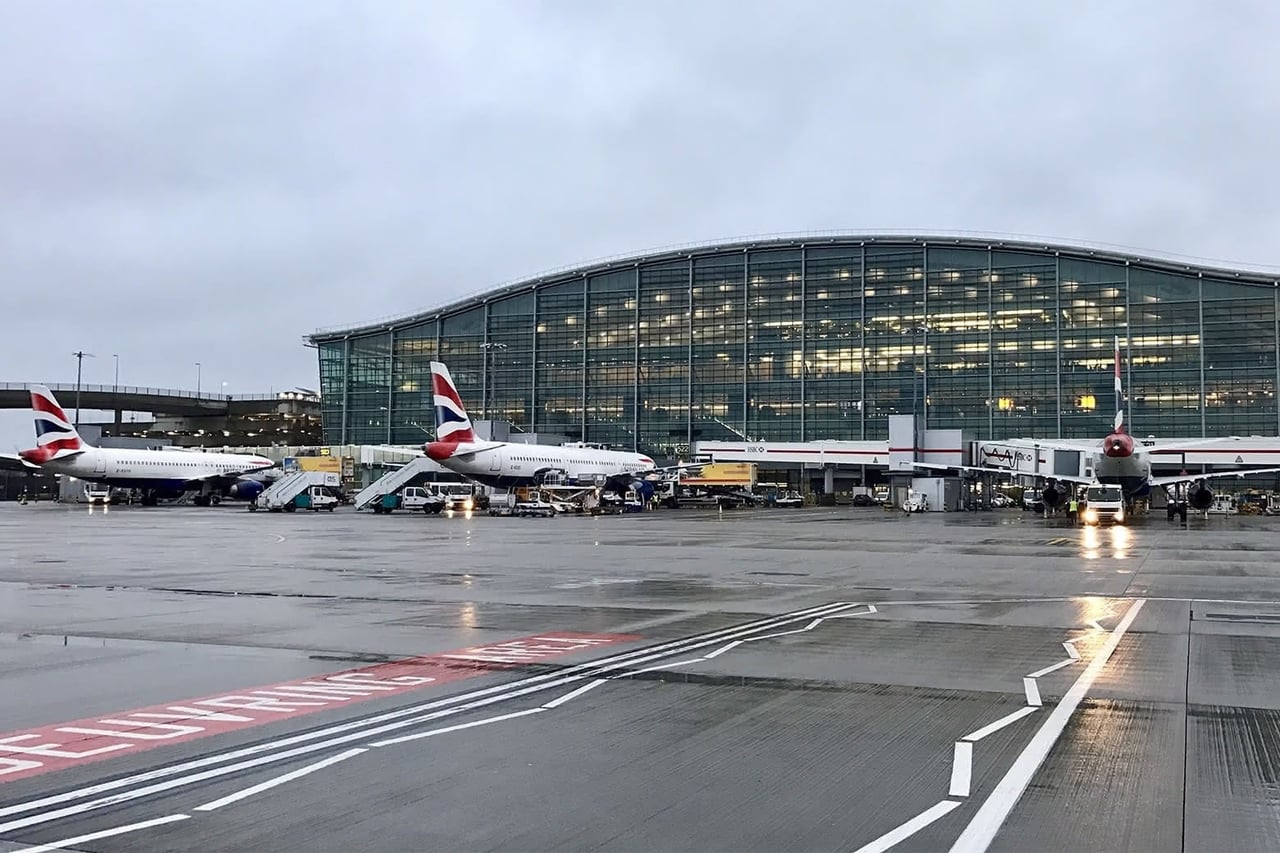
London Heathrow retained its place as Europe’s busiest airport in 2025 with 84.5 million passengers. A critical transatlantic hub, Heathrow connects the UK to over 200 destinations and serves as British Airways’ home base.
Despite having only two runways, LHR manages immense traffic volumes. Its four passenger terminals feature world-class shopping and lounges. Plans for future runway expansion reflect Heathrow’s importance in global aviation and its role as the gateway to Europe.
| Annual passengers | 84.5 million |
|---|---|
| Location | London, United Kingdom |
| IATA airport code | LHR |
| Runways | 2 |
| Longest runway | 12,799 ft (3,901 m) |
| Airlines | 80+ |
| Destinations | 200+ |
| Opened in | 1946 |
8. Istanbul Airport (IST), Turkey — 84.4 million
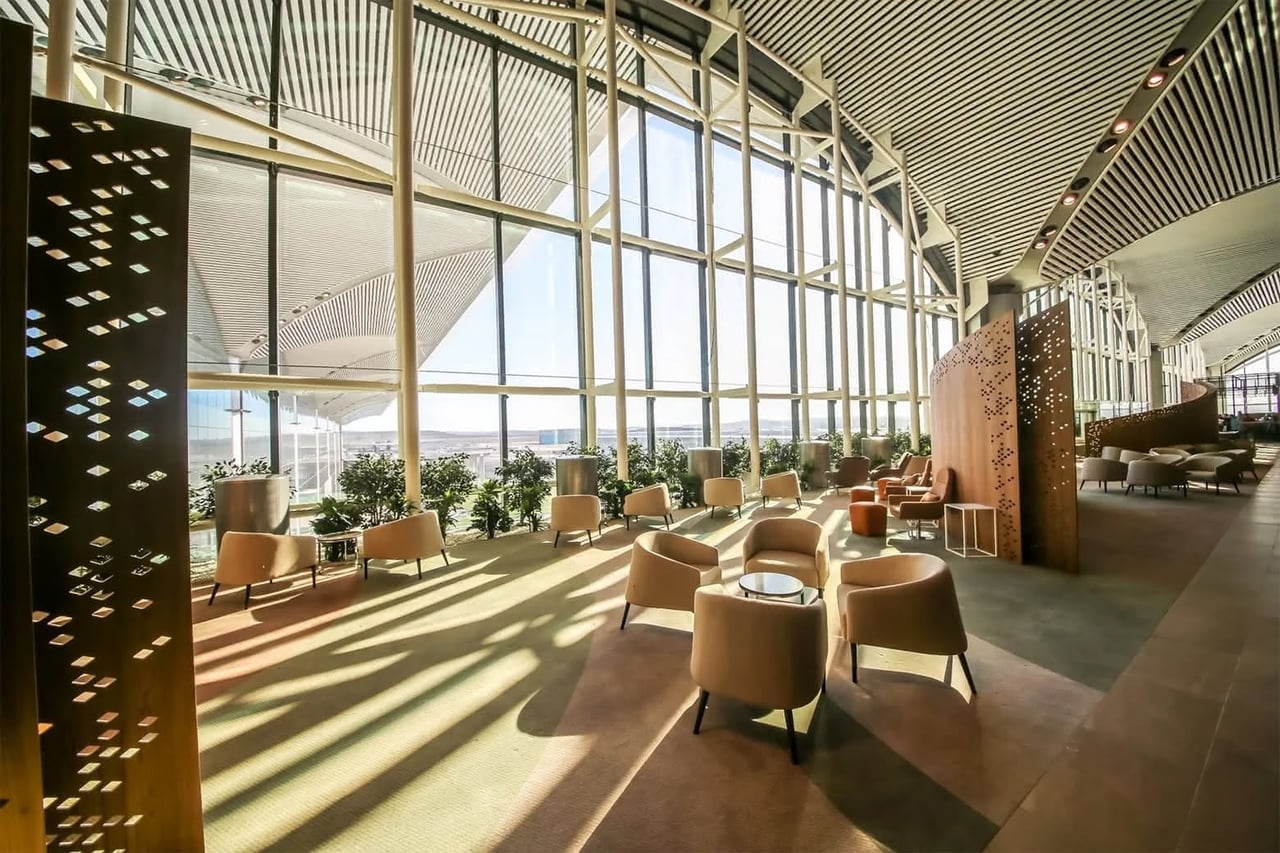
Istanbul Airport ( also known as iGA – Istanbul Grand airport) has quickly risen as one of the busiest airports in the world with 84.4 million passengers in 2025. Opened in 2018, it is one of the world’s newest mega-hubs—and one of the most ambitious. With plans to eventually accommodate up to 200 million travelers annually by 2028, it’s poised to become the largest airport on earth.
Anchored by Turkish Airlines’ global hub, Istanbul connects passengers to more than 300 destinations spanning Europe, Asia, Africa, and the Americas. Its design embraces an “under one roof” philosophy, with a single 1.4 million-square-meter terminal—among the world’s largest—serving both domestic and international flights. Architectural cues nod to the city’s Ottoman heritage, blending tradition with modern efficiency.
| Annual passengers | 84.4 million |
|---|---|
| Location | Istanbul, Turkey |
| IATA airport code | IST |
| Runways | 5 |
| Longest runway | 14,764 ft (4,500 m) |
| Airlines | 99 |
| Destinations | 321 |
| Opened in | 2018 |
9. Guangzhou Baiyun International Airport (CAN), China — 83.6 million
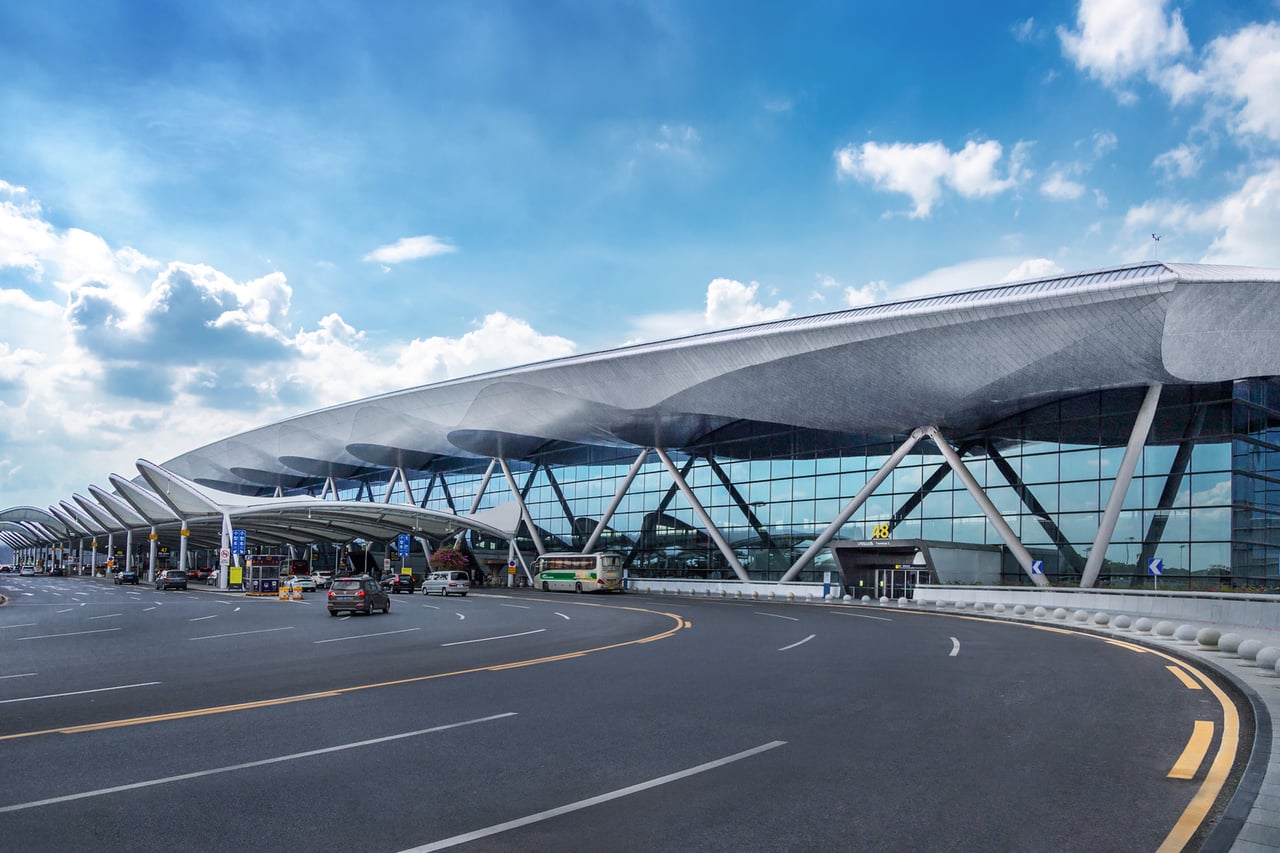
Guangzhou Baiyun International Airport entered the world’s top ten for the first time in 2025, carrying 83.6 million passengers, a jump of nearly 10% on the year before. That makes it mainland China’s busiest gateway after Shanghai Pudong.
China Southern Airlines calls Baiyun home, anchoring flights to over 200 destinations from the airport’s five runways, more commercial runways than all but one other airport in China. Terminal 3, which opened in October 2025, adds the country’s first open-air observation deck and pushes the total complex past 800,000 square meters, among the largest airport terminal footprints anywhere.
Located across the Huadu and Baiyun districts north of the city center, the airport has grown steadily since it opened in 2004, and its Terminal 2 already carries a five-star rating from Skytrax.
| Annual passengers | 83.6 million |
|---|---|
| Location | Guangzhou, Guangdong, China |
| IATA airport code | CAN |
| Runways | 5 |
| Longest runway | 12,467 ft (3,800 m) |
| Destinations | 200+ |
| Opened in | 2004 |
10. Denver International Airport (DEN), Colorado, USA — 82.4 million
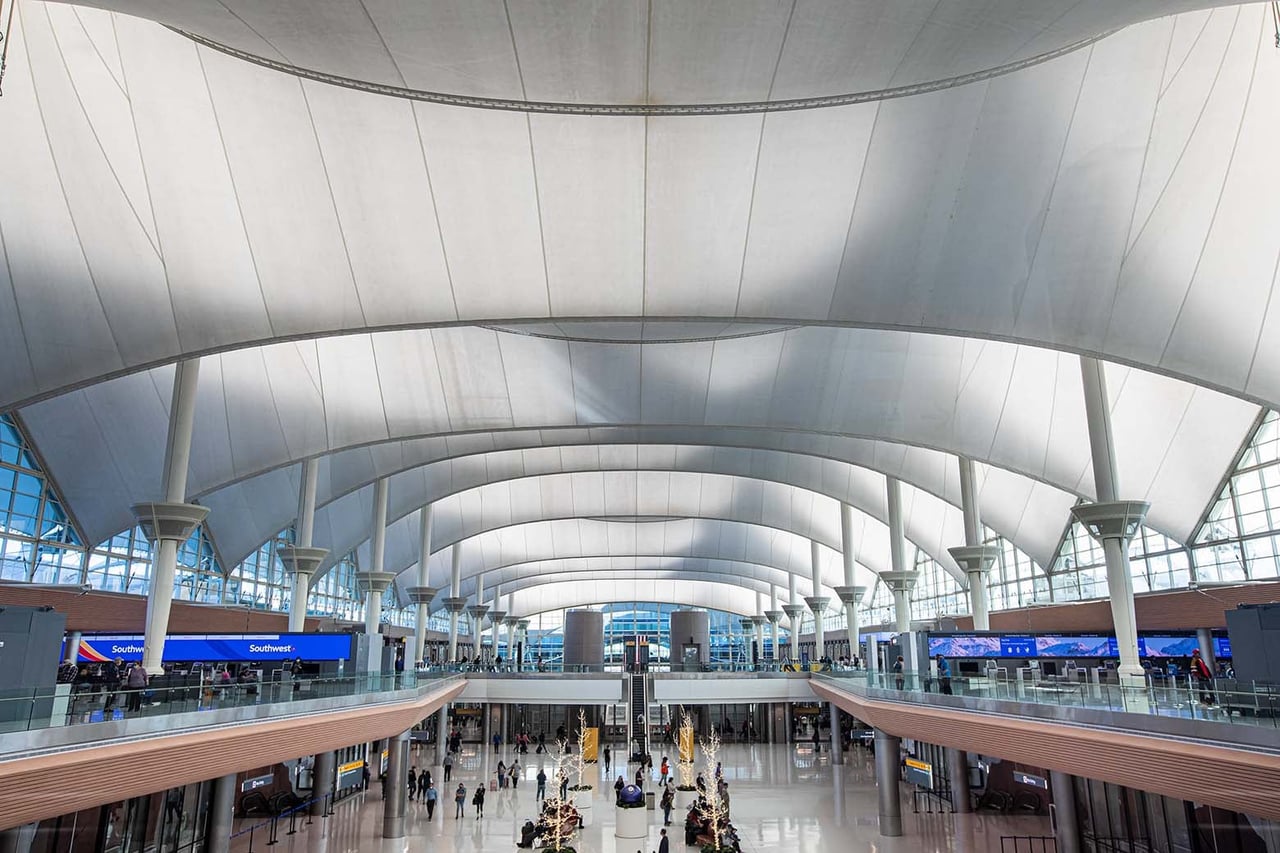
The second biggest airport in the world, Denver International sprawls over 135km2 and sees over 82 million passengers pass through its gates annually.
Known for its vast land area and iconic tent-like terminal roof, the mecca for travel is located in the Rocky Mountain Region. And despite the colossal size and constant hum of people, it’s actually a pleasant airport to spend a layover.
State-of-the-art security systems have been implemented to eliminate long queues. Automated bag check-ins are hassle-free. And modernized terminals are clean and streamlined for efficiency and entertainment. We particularly recommend popping into Root Down—the first local restaurant to expand to the airport. Denver also boasts one of the world’s longest runways, accommodating large aircraft for long-haul international flights.
| Annual passengers | 82.4 million |
|---|---|
| Location | Denver, Colorado, United States |
| IATA airport code | DEN |
| Runways | 6 |
| Longest runway | 16,000 ft (4,800m) |
| Airlines | 25 |
| Destinations | 215 |
| Opened in | 1995 |
11. Indira Gandhi International Airport (DEL), India — 78.1 million
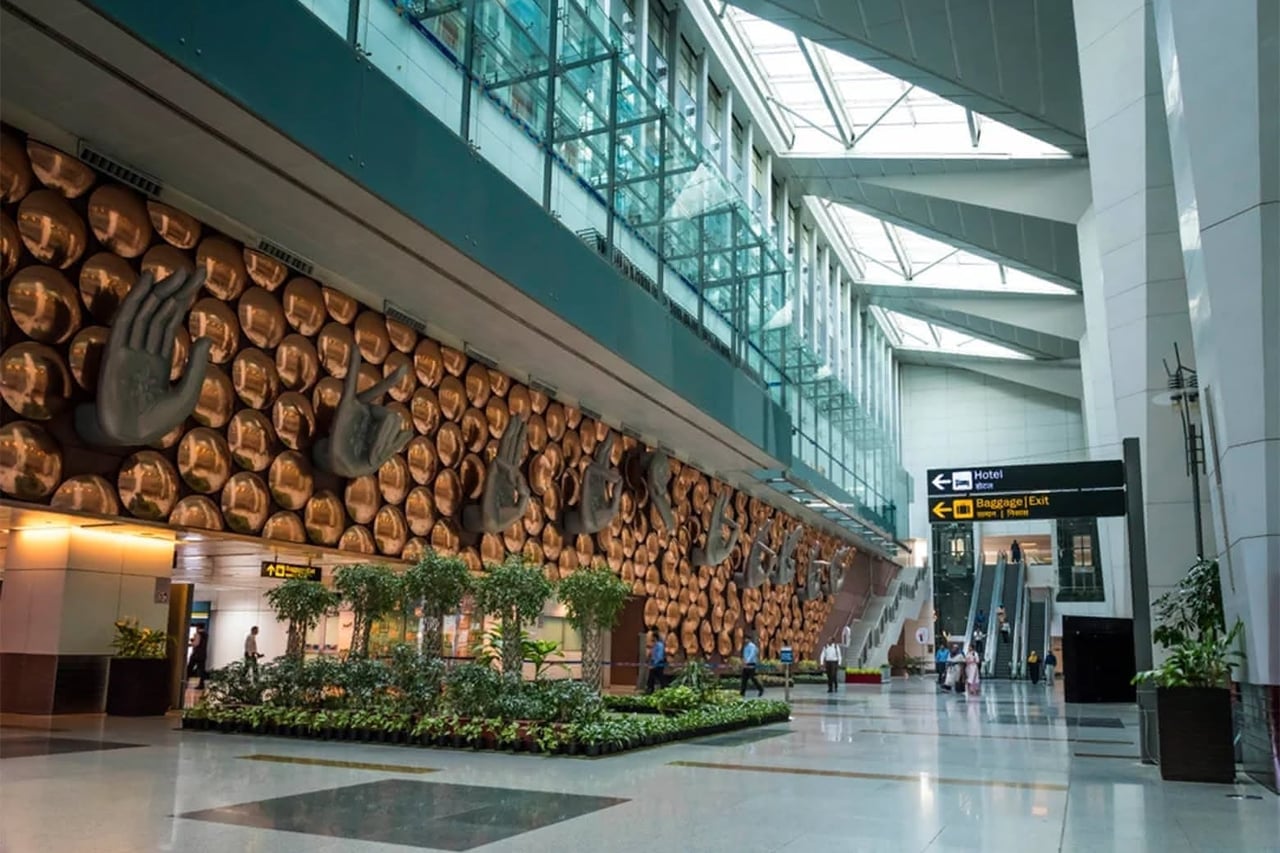
Delhi’s Indira Gandhi Airport welcomed 78.1 million passengers in 2025, becoming South Asia’s busiest airport.
Serving as a hub for Air India and IndiGo, DEL connects India to destinations worldwide. Its modern Terminal 3 and ongoing expansions showcase the country’s booming aviation industry.
Delhi’s location as the capital city enhances its importance as both a domestic and international hub, reflecting India’s rapid rise in global air travel rankings.
| Annual passengers | 78.1 million |
|---|---|
| Location | Delhi, India |
| IATA airport code | DEL |
| Runways | 4 |
| Longest runway | 14,534 ft (4,430 m) |
| Airlines | 60+ |
| Destinations | 160+ |
| Opened in | 1962 |
The busiest airports in the world: Conclusion
Ok, so you can’t hop onto one of the most expensive private jets or charter the world’s largest yachts, but you can determine how and where you spend an unavoidable layover. And whilst the busiest airports may not necessarily scream luxury, there are actually a few advantages of checking into these action-packed hubs.
International airports that are constantly bustling with passengers are likely to have better facilities and plenty to do. Hartsfield-Jackson Atlanta International—the busiest airport in the world—features over 50 luxury lounges, hundreds of high-fashion boutiques and self-driving robot pads. Dallas Fort Worth International includes a luxury terminal complete with private suites and complimentary gourmet meals. And Chicago O’Hare International is inspired by “A City in the Garden”, ornamented with resplendent florals and featuring some of the most serene spa treatments.
All of the world’s busiest airports are designed for hyper-efficiency with cutting-edge technologies. Think: robot assistants, automated check-ins and streamlined security systems. Plus, we think it’s fun to embrace the excited energy of thousands of people from around the world awaiting their next trip.
On board yet?
The top 20 busiest airports of 2025 in annual total passengers:
- Atlanta, USA (ATL) – 106,302,208 passengers
- Dubai, UAE (DXB) – 95,192,160 passengers
- Tokyo, Japan (HND) – 91,679,814 passengers
- Dallas/Fort Worth, USA (DFW) – 85,660,127 passengers
- Shanghai, China (PVG) – 84,994,548 passengers
- Chicago, USA (ORD) – 84,856,018 passengers
- London, UK (LHR) – 84,482,126 passengers
- Istanbul, Turkey (IST) – 84,437,710 passengers
- Guangzhou, China (CAN) – 83,582,952 passengers
- Denver, USA (DEN) – 82,427,962 passengers
- New Delhi, India (DEL) – 78,148,081 passengers
- Incheon, Korea (ICN) – 74,126,912 passengers
- Los Angeles, USA (LAX) – 73,709,594 passengers
- Paris, France (CDG) – 72,029,407 passengers
- Beijing, China (PEK) – 70,742,712 passengers
- Singapore, Singapore (SIN) – 69,982,000 passengers
- Amsterdam, Netherlands (AMS) – 68,771,592 passengers
- Madrid, Spain (MAD) – 68,118,754 passengers
- Shenzhen, China (SZX) – 66,485,213 passengers
- Kuala Lumpur, Malaysia (KUL) – 63,409,501 passengers
Products featured here are independently selected by our editors. If you buy through our retail links we may earn an affiliate commission — it never changes the price you pay, and it never decides our verdicts. Read our earnings disclaimer.