What would it take for a suit, cloth and thread cut and stitched by hand, to cost more than a house? Try 480 diamonds, 240 carats between them, and more than 800 hours of work, sewn into cashmere, wool and silk. Three of them exist.
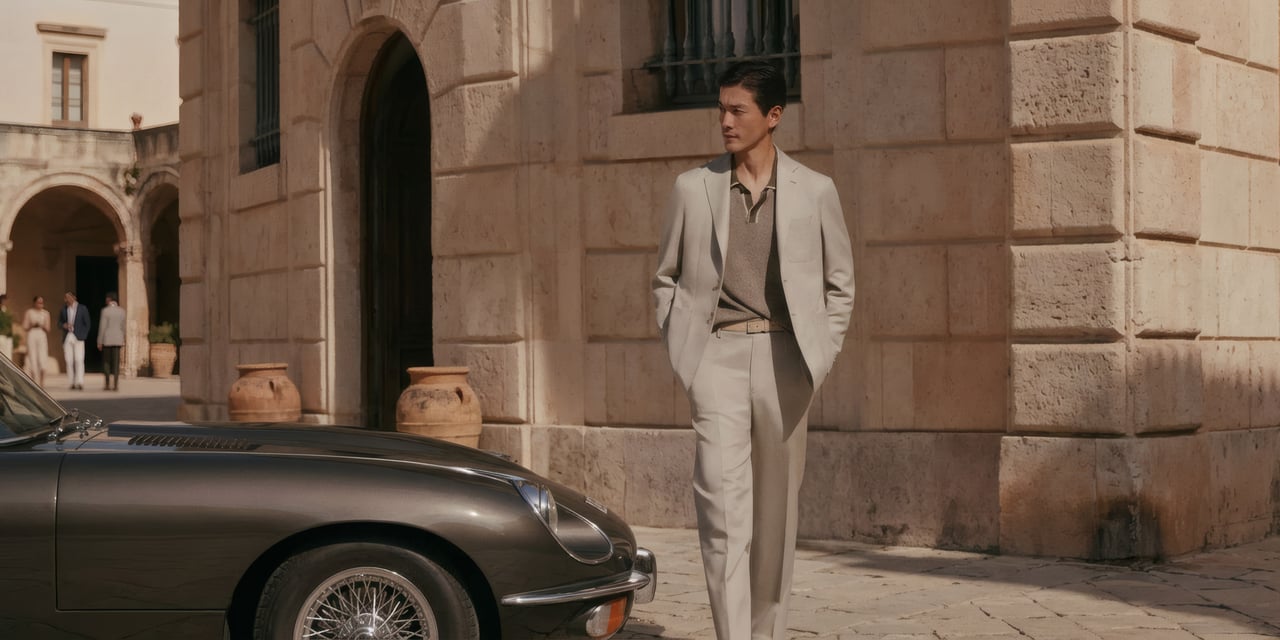
And if in-person excess is more your speed, Bijan on Rodeo Drive calls itself the most expensive menswear shop in the world. A yellow Bugatti sits parked outside the door. A standard suit runs about $25,000; a special order climbs to $50,000.
But the suits a person might actually walk in and order live a little further down the road, with houses like Kiton and Brioni. Kiton needs 50 hours of hand-stitching for one suit, and its bespoke K-50 runs from about $50,000 to $100,000. The most expensive watches in the world follow the identical split, a handful of jeweled stunts at the top and a far more interesting ceiling underneath.
What is the most expensive suit in the world?
The most expensive suit in the world is the Stuart Hughes R. Jewels Diamond Edition, at $892,500. Richard Jewels cut a cashmere, wool and silk suit and Stuart Hughes set it with 480 diamonds, 240 carats in total, over more than 800 hours of work. Three exist.
No buyer has ever paid that price. The Diamond Edition has never gone to auction, so $892,500 is a valuation, not a sale, the same way a concept car carries a sticker nobody actually pays.
A cluster of suits sits just below it, built from the same ingredients: rare cloth, a handful of examples, a number designed to travel. Here are the ones with numbers you can trace to a source.
Alexander Amosu bespoke suit: £70,000
Alexander Amosu’s bespoke commission is the one entry here that actually sold. Guinness credits it as the most valuable suit ever made, at £70,000 (roughly $113,000), paid by a private buyer. The London designer wove the cloth itself from gold thread, Himalayan pashmina, qiviuk and vicuña, closed the jacket with nine 18-carat gold and diamond buttons, and put more than 5,000 stitches and 80 hours into the build. That’s the difference from the Diamond Edition: someone actually wrote the check.
Bijan special order: up to $50,000
A yellow Bugatti sits parked outside Bijan’s Rodeo Drive address, appointment only, and the store calls itself the most expensive menswear shop in the world. A standard suit there runs about $25,000; order a special fabric and the price climbs to $50,000. Nothing about the suit is unusual on its own terms: no diamonds, no gold thread, just cloth, cut and a fitting room with nobody else in it.

Brioni Vanquish II: $43,000
Brioni cut a limited run of 100 suits from Dormeuil’s Vanquish II, a blend of qiviut, vicuña and pashmina that ranks among the most expensive suiting fabrics ever woven, and priced each one at $43,000, stitched with white gold thread. A regular Brioni suit already passes through roughly 220 pairs of hands on its way out of the workshop; the Vanquish II runs that same process on the rarest cloth the house could source. The everyday version of this house shows up again further down the list.
Scabal Diamond Chip: a one-off by construction
Since 2001, Scabal has crushed real diamonds into fragments and woven them straight into Super 150s wool and silk; its Treasure Box collection runs the same trick with 24-carat gold and platinum thread. An ordinary bespoke Scabal suit costs about $4,000 to well past $10,000, but cut from the diamond or gold cloth, every suit becomes a one-off by construction. This is the quiet end of the stunt market: the extravagance sits inside the weave instead of bolted to the lapels.
The most expensive suits you can actually buy
These are the houses at the top of what a person can actually walk in and order, priced from four figures at the entry and into five figures for bespoke. Every number below is a retail price from the maker or an authorized seller, never an auction result, and each link goes straight to the brand’s own page. Browse men’s tailoring here to see the current range across brands, and once you’ve decided to actually spend, our guide to the best suit brands for men picks the right one for your budget.
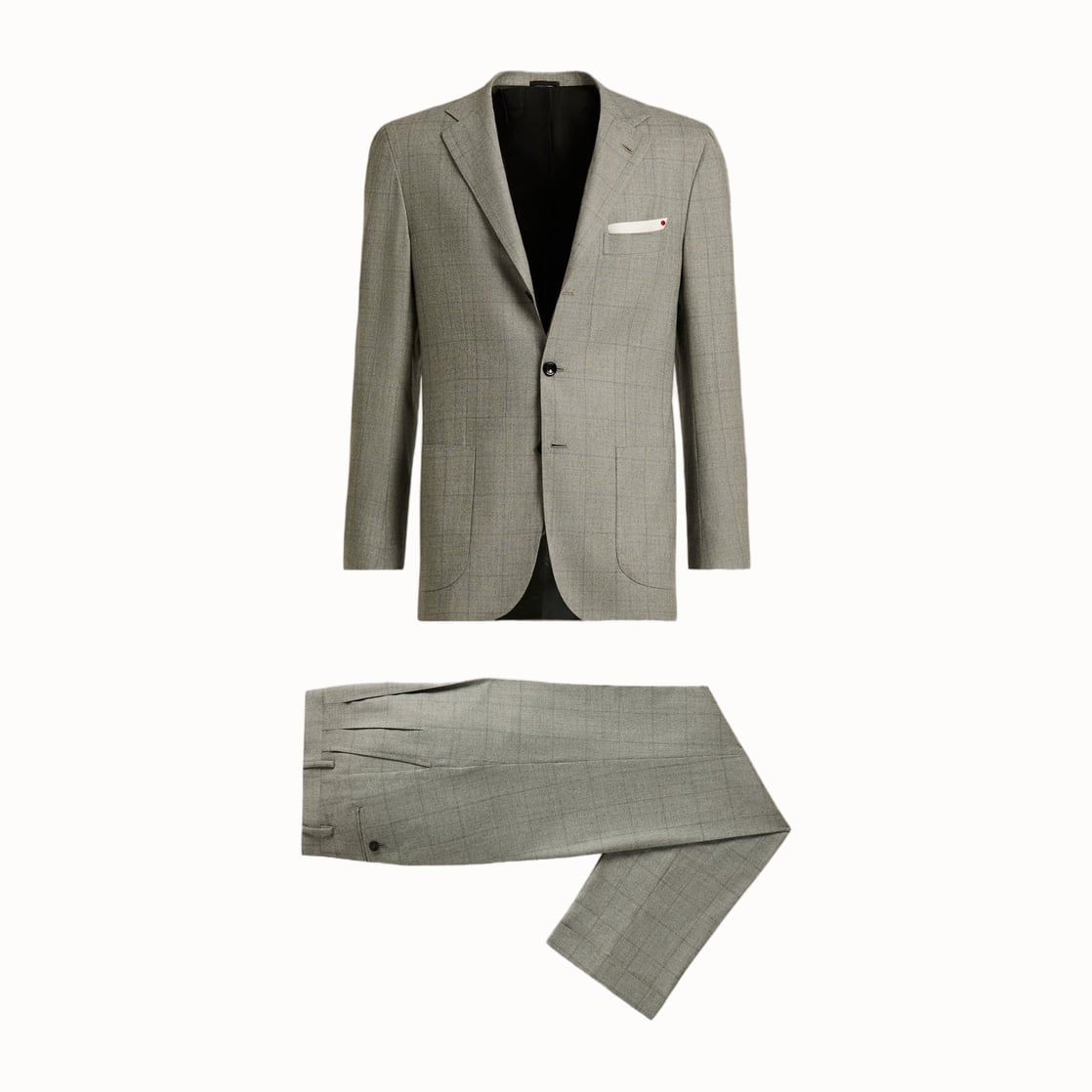
KitonHand-finished Neapolitan tailoring
Kiton builds every suit by hand in Naples, the priciest label you can order.
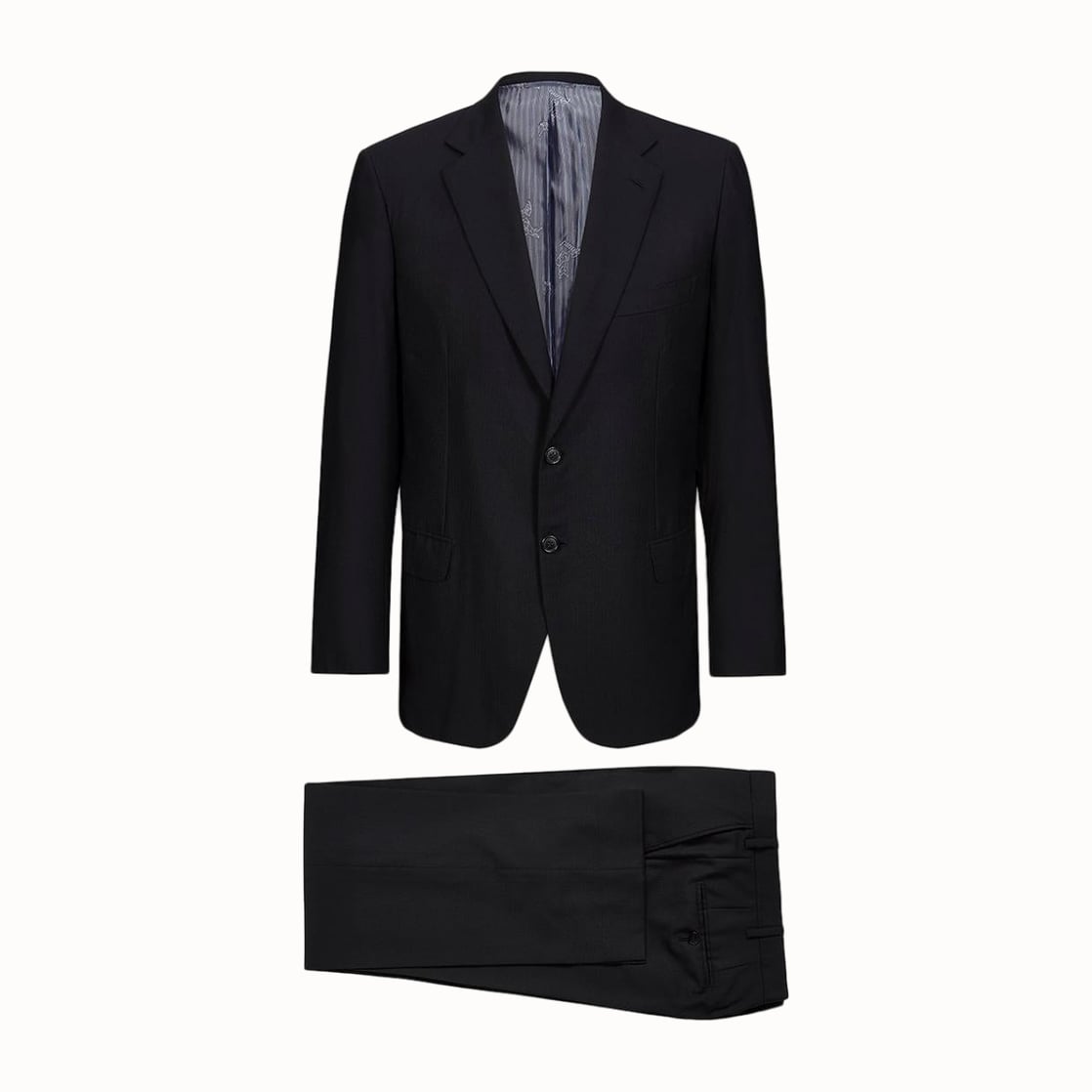
BrioniStructured Roman tailoring
Brioni's Roman cut is sharp through the shoulder and dressed Bond for five films.
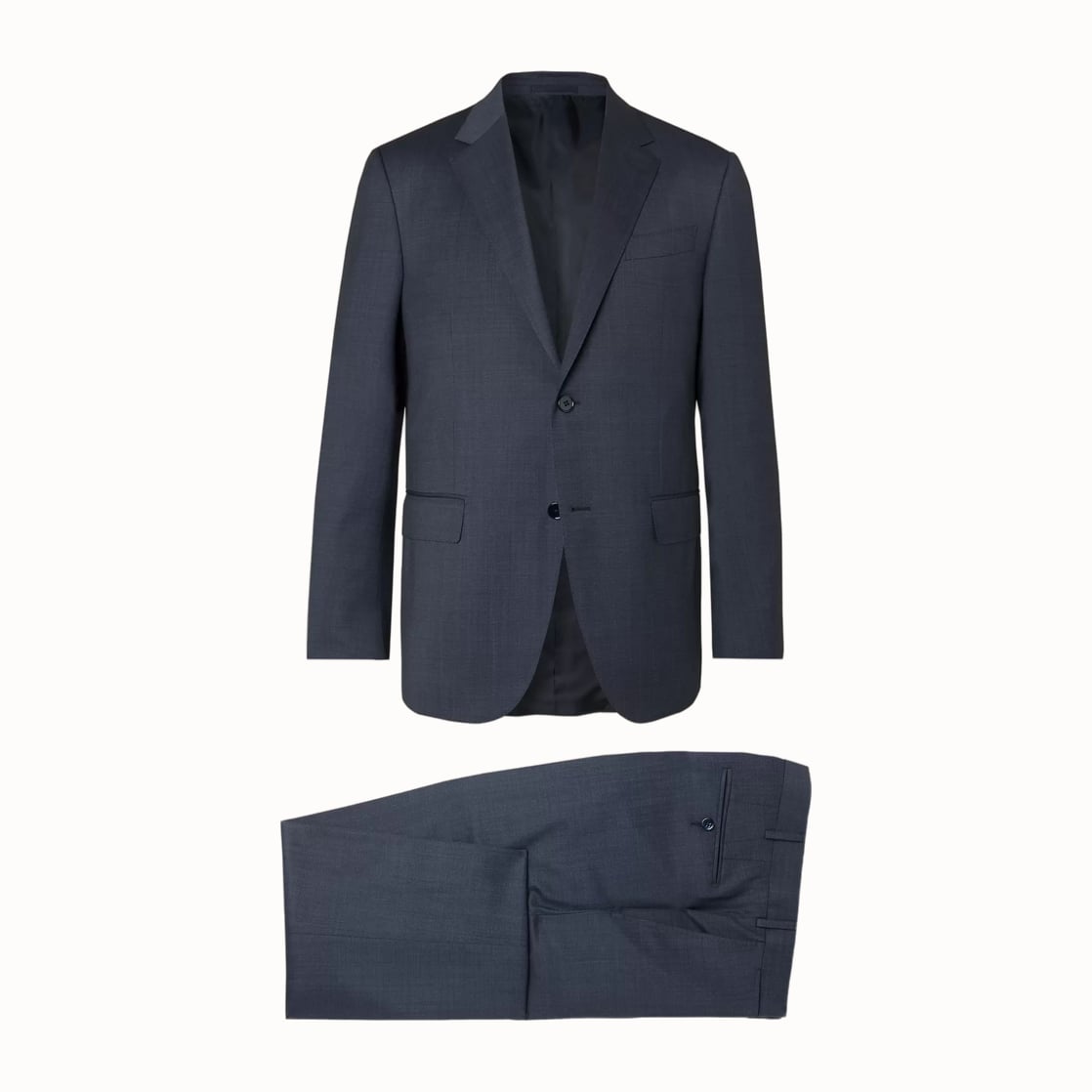
Ermenegildo ZegnaWool suits and formal tailoring
Zegna weaves its own cloth in Trivero, controlling its wool from the sheep forward.
Kiton K-50
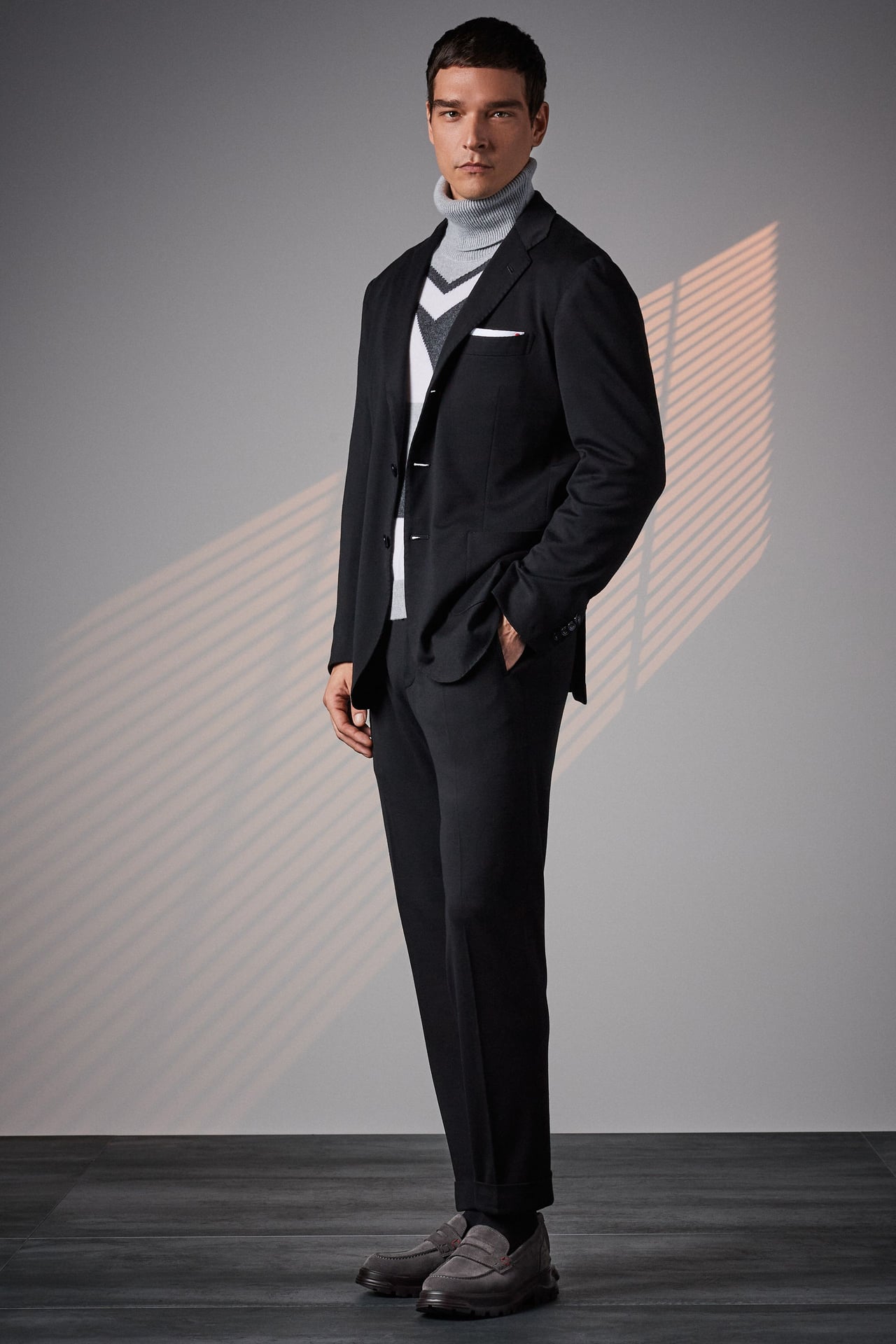
Naples is where Kiton earns its claim to the most expensive suit brand you can order: everything here is built by hand, in the Neapolitan tradition, and the flagship K-50 takes 50 hours of hand-stitching against roughly 25 for an ordinary luxury suit. A ready-to-wear Kiton clears $20,000 without much effort, and the bespoke K-50 runs from about $50,000 to $100,000, with only around 50 made in a year. Order it in the vicuña and silk blend and the finished jacket weighs less than two silk scarves.
Check price: Kiton K-50 at Mytheresaat Mytheresa · Free returns available
Brioni
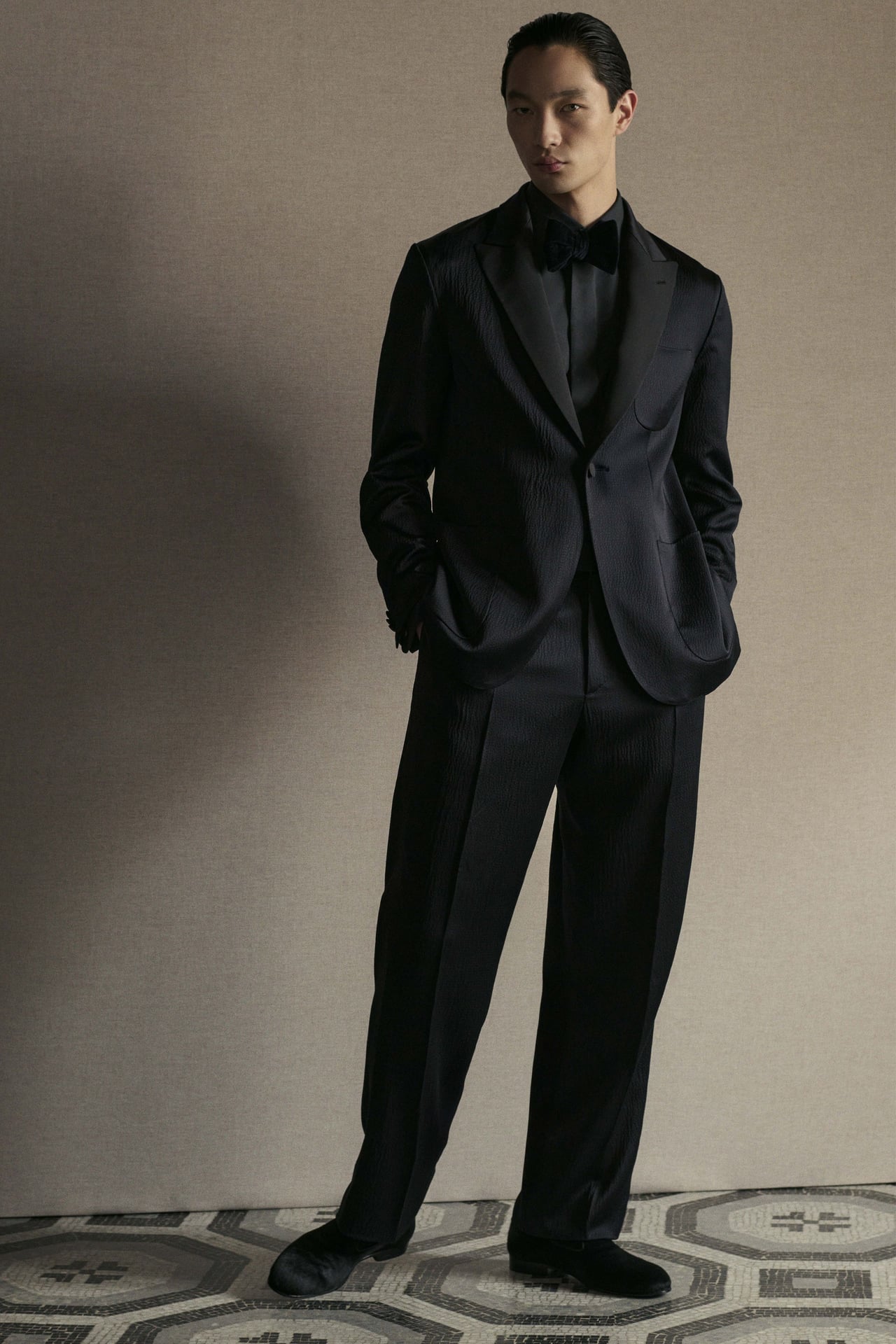
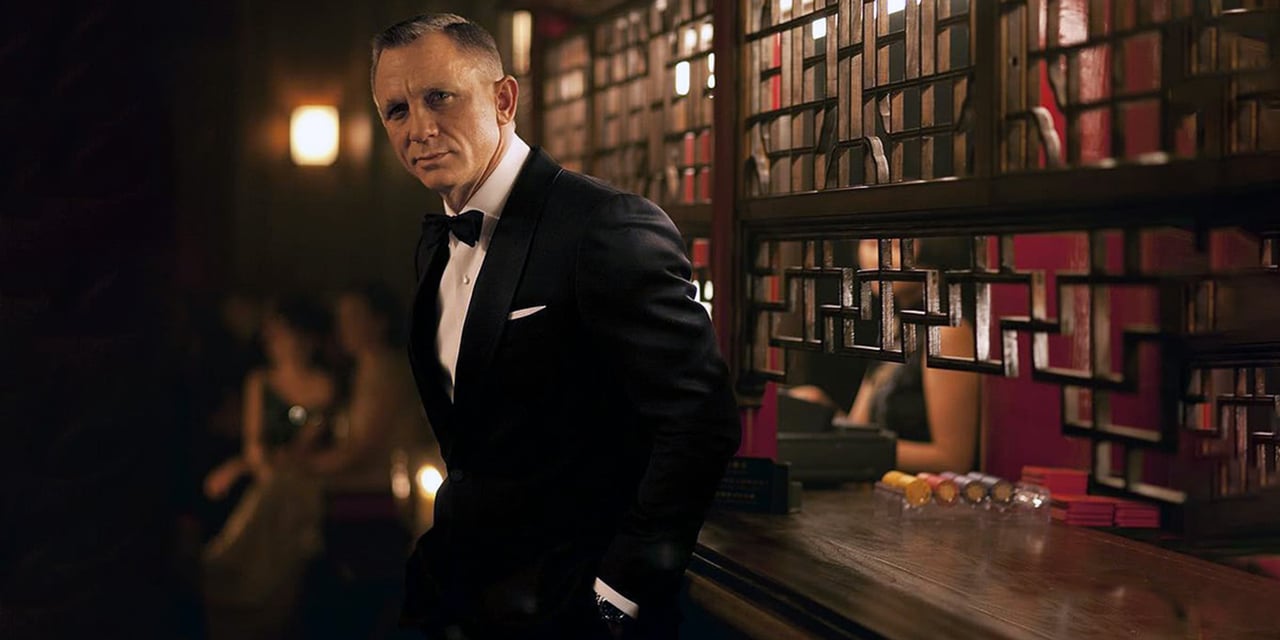
The house that dressed James Bond for five films is Rome’s answer to Kiton’s Neapolitan softness, and its silhouette shows it: structured, formal, sharper through the shoulder. Roughly 220 pairs of hands touch a Brioni suit before it leaves the workshop. Ready-to-wear starts around $6,000, with the made-to-measure and bespoke programs climbing well past that, and the $43,000 Vanquish II covered above is this same house stretched to its limit. The suit most Brioni clients actually wear is the one at the lower number.
Check price: Brioni at Mytheresaat Mytheresa · Express delivery
Ermenegildo Zegna
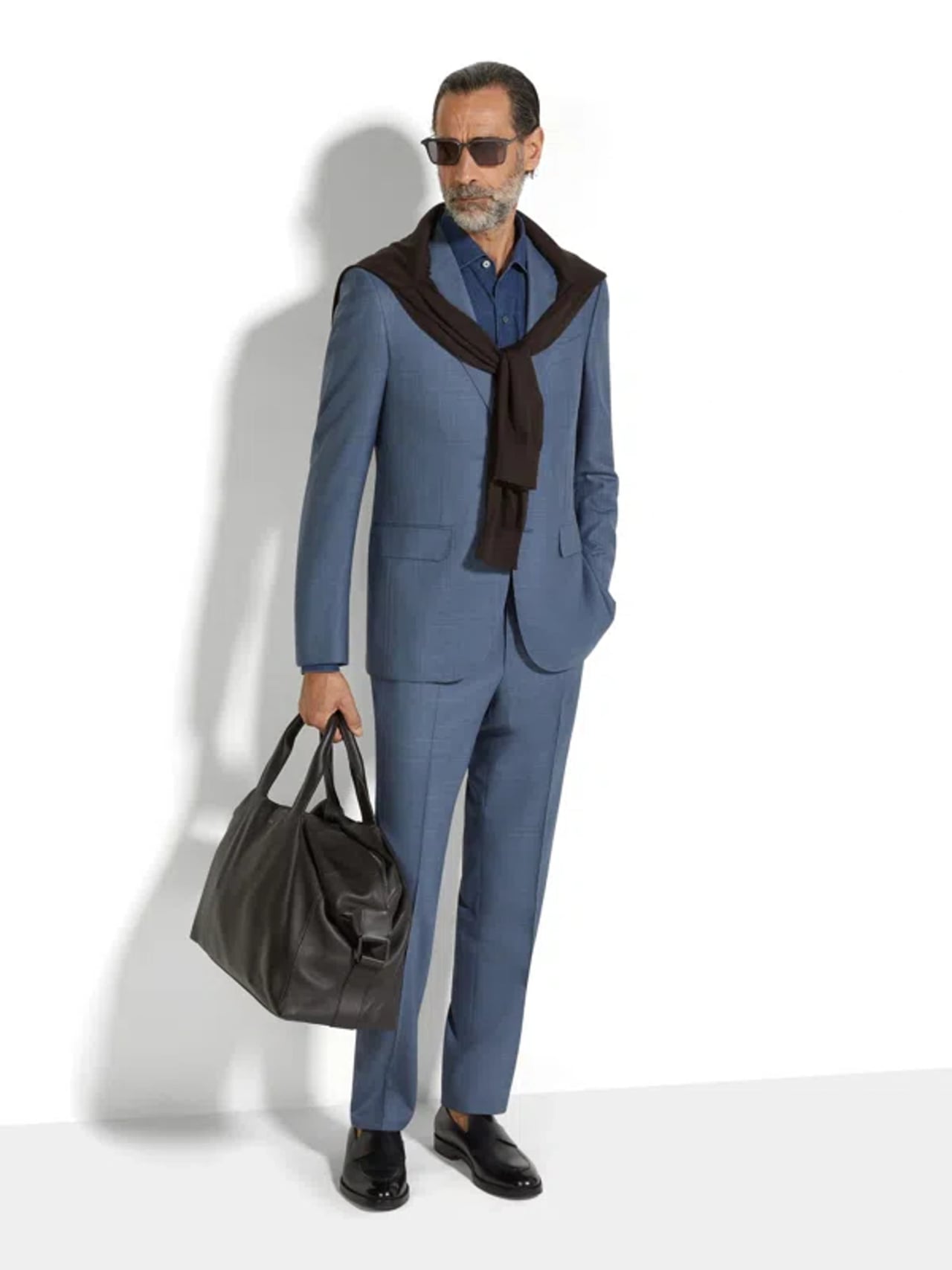
Zegna sits a rung below Kiton and Brioni on price, but it has an advantage neither of them fully shares: Zegna weaves its own cloth in Trivero, controlling the wool from the sheep forward, and that is what makes the suits feel expensive for the money. Ready-to-wear runs $3,000 to $4,000, the Su Misura made-to-measure line starts near $3,995, and the top of the Couture range reaches toward $20,000. Short of a bespoke appointment, it is the most Italian suit money can buy.
Check price: Ermenegildo Zegna at Mytheresaat Mytheresa · Authentic designer pieces
Tom Ford
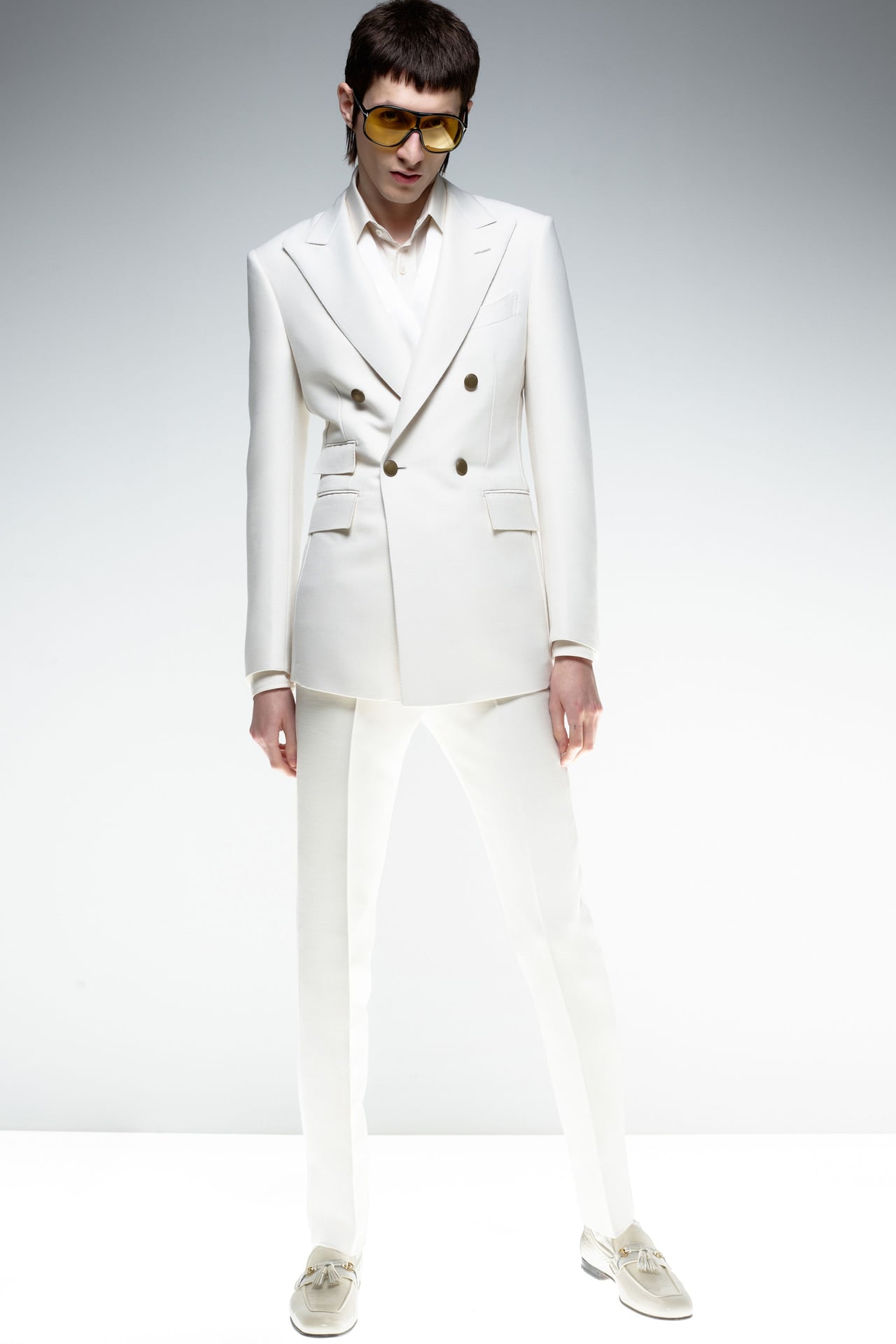
Peak lapel, high armhole, deliberately powerful: Tom Ford cuts the most cinematic suit on this list, built in Zegna’s own factories in Switzerland and Italy. A Tom Ford suit starts around $5,000 to $7,000 at retail before you reach made-to-measure, and no other house cuts quite this shape. The man whose name sits on the label designed it to look exactly like that.
Check price: Tom Ford at Mytheresaat Mytheresa · Trusted by shoppers
Loro Piana
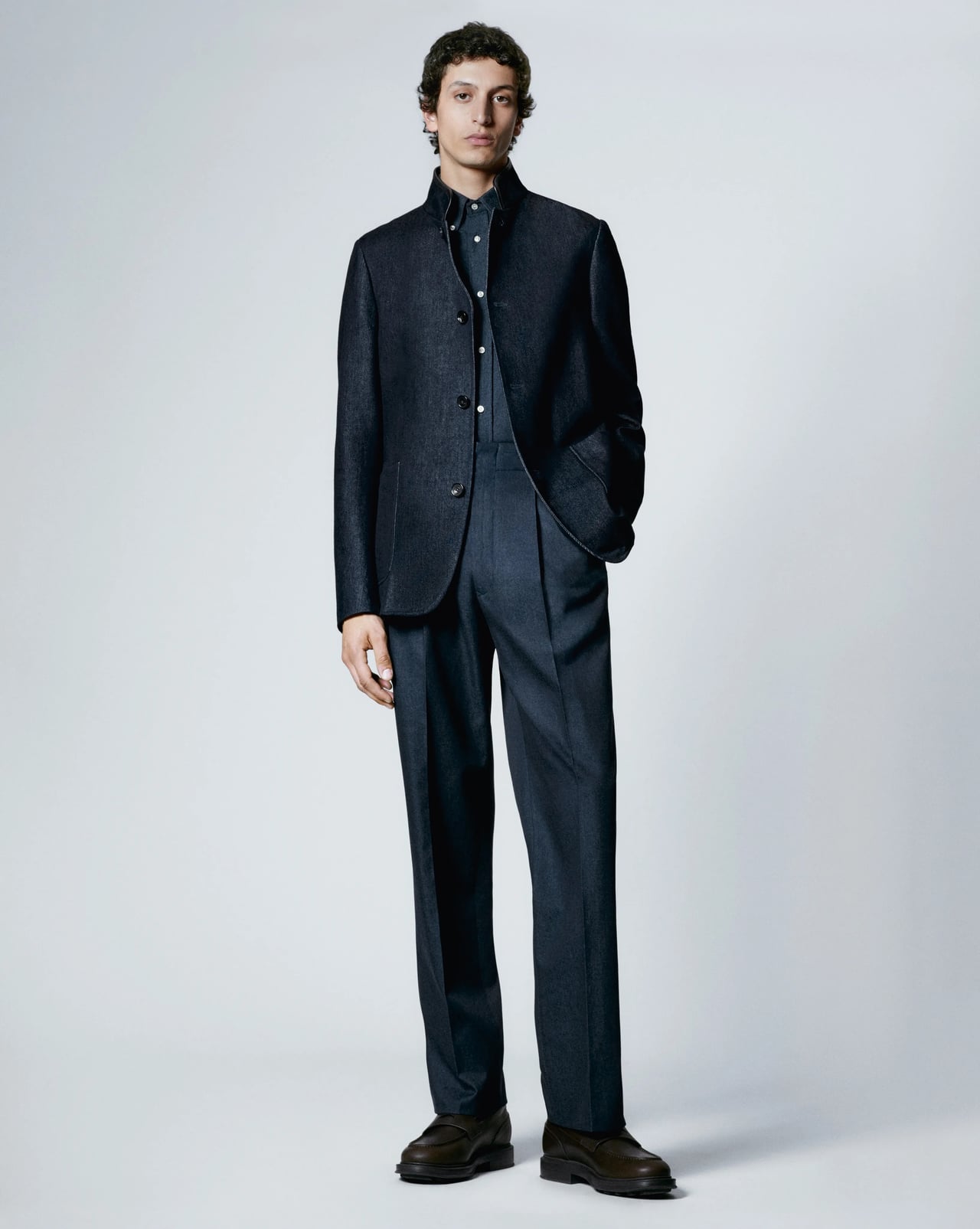
Loro Piana got to suits from the opposite direction: it was one of the world’s great cloth houses first, the source behind much of the vicuña and baby cashmere that ends up sewn into everyone else’s suits, and only later began tailoring under its own name. A Loro Piana suit stays understated to the point of anonymity, built for a buyer who wants the rarest fiber in the wardrobe and no logo announcing it. Ready-to-wear starts in the low thousands, and the vicuña pieces climb far higher, in line with a vicuña coat that can pass $20,000 on its own.
Check price: Loro Piana at Mytheresaat Mytheresa · Great deals every day
Canali
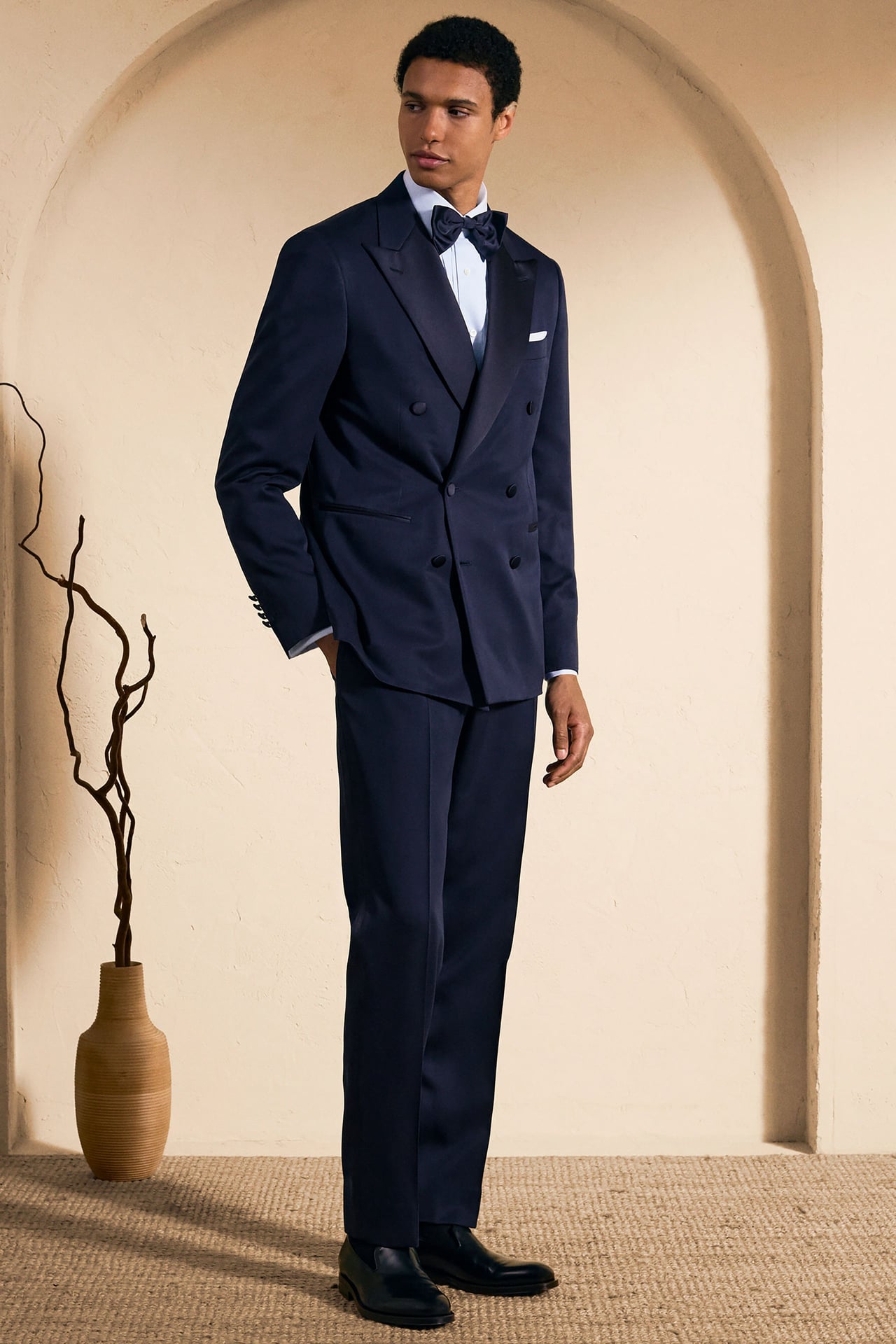
The Lombardy family house behind Canali builds a fully canvassed Italian suit with real hand-finishing, priced nearer $1,800 to $2,500 than the five figures above it, the value play in expensive company. A Canali suit is the entry point into genuine Italian tailoring, not the ceiling, and the made-to-measure program is there when you want to climb higher.
Check price: Canali at Mytheresaat Mytheresa · Competitive prices
Giorgio Armani
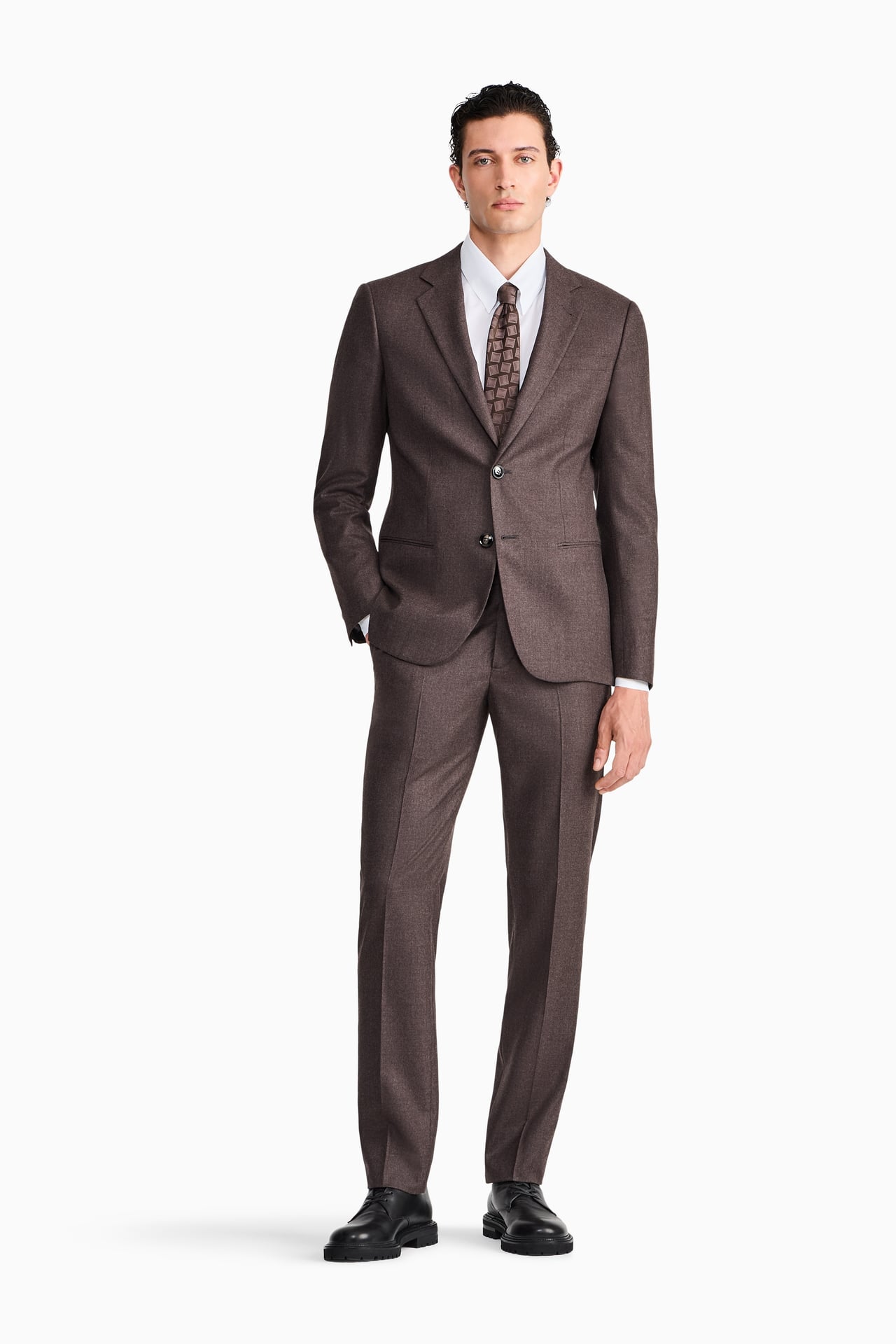
The unstructured jacket made Giorgio Armani’s reputation: a shoulder that draped rather than stood to attention, and that silhouette still defines a Giorgio Armani suit today, the softest shoulder in the room. Ready-to-wear starts around $2,400 and the made-to-measure program near $4,440, priced for the man who wants Italian tailoring to feel like clothing rather than armor.
Check price: Giorgio Armani at Mytheresaat Mytheresa · Fast, reliable delivery
Headed to black tie rather than the office? These same houses cut dinner suits too, and our black tie dress code guide covers exactly what changes; browse tuxedos here when you need the satin lapel instead of the notch.
Savile Row and the bespoke tier
A pattern cut for your body alone, kept on file for next time: that’s what buying on Savile Row actually means. Built from scratch, a bespoke suit here takes 60 to 80 hours of hand work spread across roughly 12 weeks and several fittings. We hold no affiliate relationship with any house on the Row, so this section sells you nothing; it’s here because the Row is the honest top of the market.
Henry Poole & Co is the founding house on the Row, with the best claim to have invented the modern dinner jacket after cutting a short smoking coat for the Prince of Wales in 1865; bespoke there starts around £6,500. Anderson & Sheppard holds the soft drape cut, the English answer to Neapolitan softness, with a two-piece bespoke from about £4,778. Huntsman cuts the structured, one-button silhouette, the sharpest on the Row, from around £4,600.
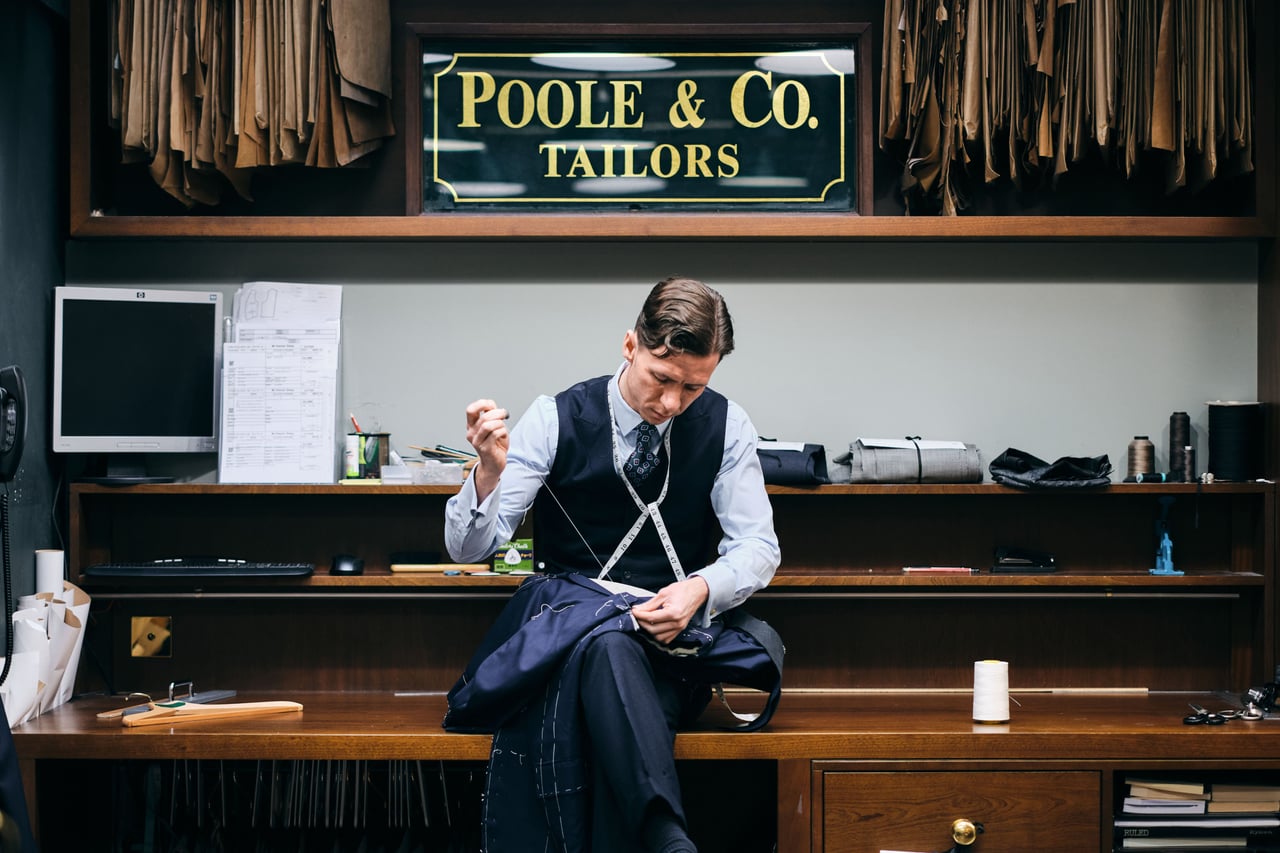
Next to a bespoke Kiton, those numbers look almost modest. Savile Row prices honestly for the labor and the pattern, with no diamonds woven into anything, and what you get is a suit made only for you, by hand, in a shop that has done this for over a century. For the difference between bespoke, made-to-measure and off-the-rack construction, our guide to the types of suits for men breaks down the cut and canvas terms the Row takes for granted.
What makes a suit expensive?
Two things drive the price of a serious suit: the cloth and the hands. Everything past that is detail.
The cloth is where the extreme numbers start. Vicuña, shorn from a wild Andean animal that can only be sheared once every three years, is the most expensive wool on earth and runs roughly $1,800 to $3,000 a yard as bare fabric. Qiviut, the underwool of the musk ox, is rarer still, and blending vicuña, qiviut and pashmina together produces Dormeuil’s Vanquish II, the cloth behind the $43,000 Brioni, priced around £3,000 a metre before anyone even cuts it. That’s why a Vanquish II suit starts in five figures.
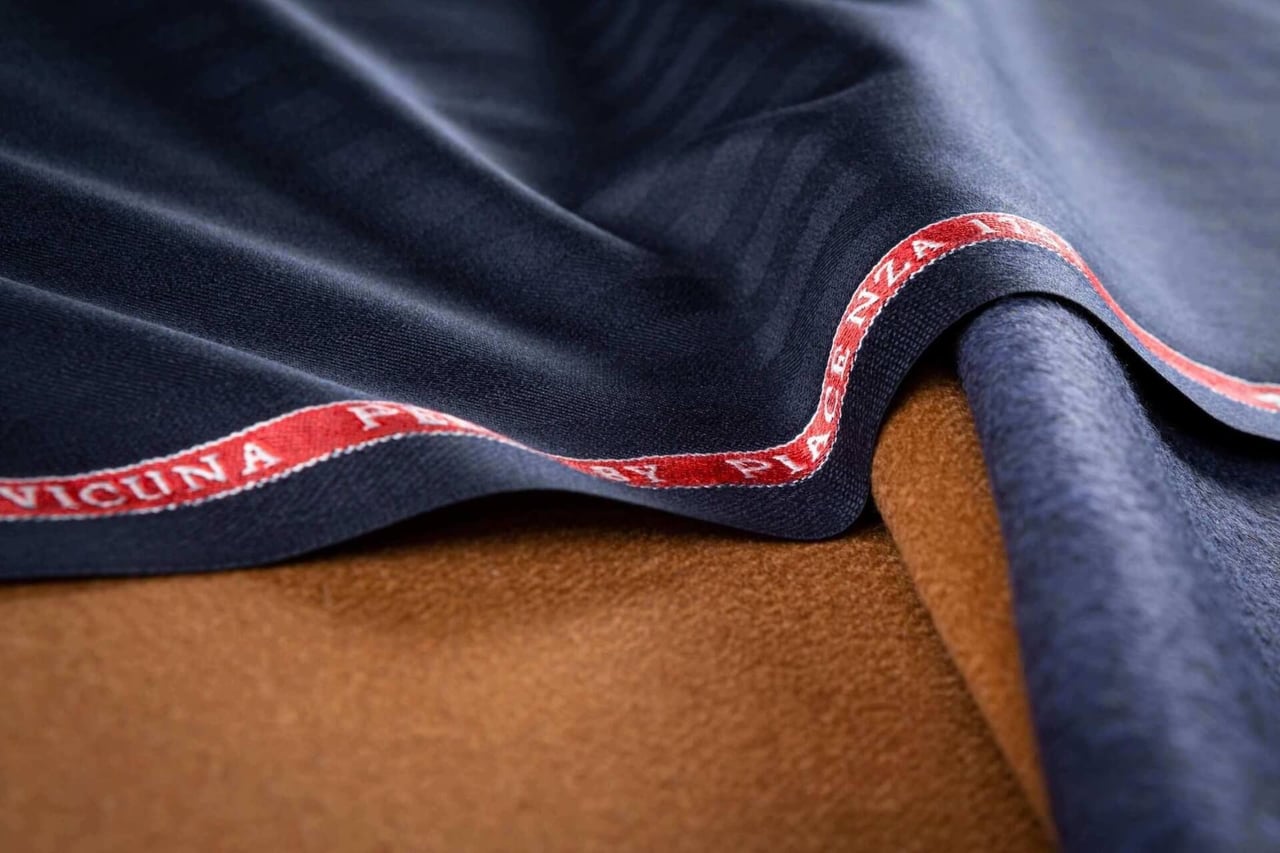
Super numbers measure the same idea from a different angle. Super 100s, 150s, 250s and up track the fineness of the wool fiber, and the higher the number, the finer, softer and more delicate the thread. Finer cloth costs more and drapes better, and it creases faster too. A Kiton cut in Super 250s feels like water in your hands and has to be treated like it.
The hands matter just as much. A fused suit glues the canvas to the cloth, quick and inexpensive to make. A fully canvassed one floats a hand-padded layer of horsehair and wool between cloth and lining, has to be built by a person, and moves with your body for decades; that construction is the actual line between a $300 suit and a $3,000 one. Past that point the money just buys more of the same kind of time: 50 hours of stitching for a Kiton K-50, 220 pairs of hands for a Brioni, 60 to 80 hours for a Savile Row bespoke commission. You are paying, quite literally, for hours.
Is an expensive suit worth it?
Yes, up to a point, and that point arrives earlier than the price list suggests. Trading a fused high-street suit for a fully canvassed one in good wool is the most worthwhile upgrade in menswear: you can see it, feel it, and wear it out over years instead of seasons, for something like $1,500 to $3,000, well under anything marketed as a most-expensive suit.
Past roughly $5,000, the returns get subtle. You’re paying for rarer cloth, more hand-finishing and the last few percent of fit, and all three are real; whether you can perceive them, and whether you care, is the question no price tag answers for you. A diamond-trimmed suit buys a number and a photograph. A bespoke Kiton buys 50 hours of hand-stitching and a bill to match. Somewhere below both, a well-cut Canali or a made-to-measure Zegna gets you nearly all of the quality for a fraction of the drama.
Fit is the one thing money cannot shortcut. A $50,000 suit that doesn’t fit looks worse than a $2,000 one that does, and no cloth on earth fixes a bad shoulder. Spend on the fit first, the cloth second, and the label last. Then pair it with a proper dress shirt, because even the $892,500 Diamond Edition would fail under a bad collar.
Frequently asked questions about the most expensive suits
What is the most expensive suit in the world?
What is the most expensive suit brand?
How much does a Kiton suit cost?
What makes a suit so expensive?
What is the most expensive fabric for a suit?
Products featured here are independently selected by our editors. If you buy through our retail links we may earn an affiliate commission — it never changes the price you pay, and it never decides our verdicts. Read our earnings disclaimer.