The Swatch x Audemars Piguet Royal Pop is built across three separate Swiss facilities, each handling a different piece of the pocket watch before final assembly in southern Switzerland. A recent factory visit traced the process from raw movement components to the finished, brightly colored case.
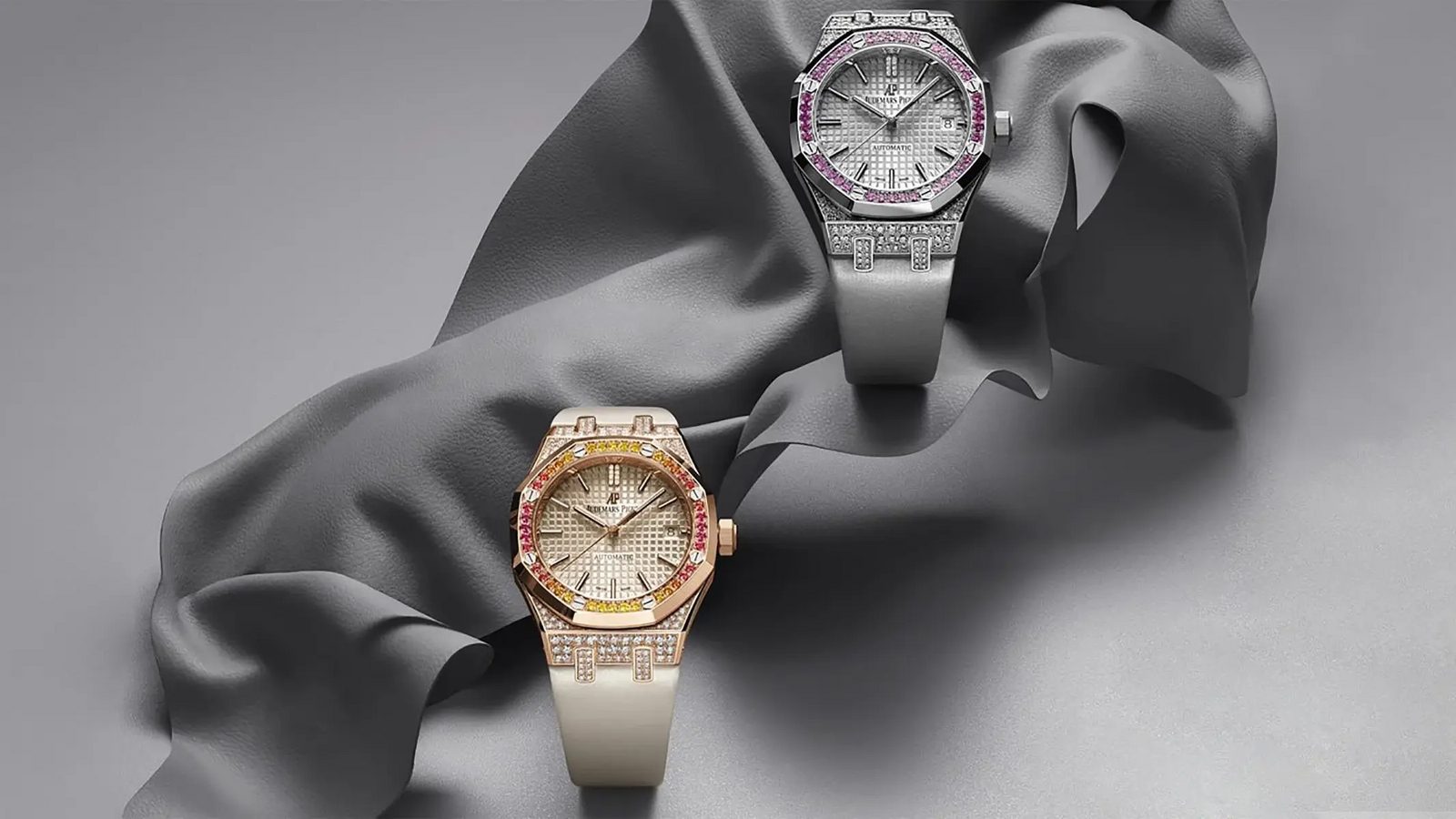
The collaboration pairs Swatch with Audemars Piguet, whose own watches start at around $17,000 and can run past $100,000, a contrast with the mass-produced plastic piece leaving these same lines. The Royal Pop borrows the Royal Oak's octagonal bezel and petite tapisserie dial pattern, reproduced in Swatch's Bioceramic composite rather than metal.
Audemars Piguet has its own history with pocket watches: the brand built the world's slimmest pocket watch caliber in 1925 and the first skeletonized pocket watch in 1934. We named an Audemars Piguet the priciest pick in our guide to the best pocket watches.
Gérald Genta had just 24 hours to design the Royal Oak, and Audemars Piguet unveiled it in 1972 at the Swiss Watch Show. The brand remains family owned, still built at two facilities in Le Brassus, one from its 1875 founding and the other from 2008.
Two new calibers built into an existing line
Production runs through ETA's Sistem51 site in Boncourt, known internally as W35, where two new manually wound calibers were developed for the Royal Pop. One carries a small-seconds subdial with the crown at 3 o'clock, used on the blue Lan Ba and the multi-color OTG ROZ. The other is a two-hander with the crown at 12 o'clock, fitted to the remaining colorways.
The two calibers involve 15 new patents, though most of the engineering changes are hidden inside the movement. The most visible change is a new skeletonized barrel cover, its cutouts revealing the mainspring beneath a layer of UV-printed decoration applied with Ben-Day dots before assembly.
No new machinery was installed to handle the extra variants. Instead, every version of the movement runs on the same production line, with a program entered for each batch that tells the equipment which caliber to build.
A large industrial printer then applies the Pop Art decoration visible through the sapphire caseback, working a tray of 50 movements at a time. Ink is dispensed layer by layer, starting with a white priming coat, and each pass is cured under ultraviolet light before the next is added.
The Bioceramic case and dial come from Grenchen
External components are made an hour away at ETA's W18 facility in Grenchen, back in operation after renovations added a third floor to consolidate other ETA sites under one roof. The site produces the base Bioceramic composite, handles injection molding of cases and crystals, and makes dials for Swatch's collaboration lines, including the MoonSwatch and Scuba Fifty Fathoms.
Swatch defines Bioceramic as two-thirds zirconium oxide ceramic powder and one-third bio-sourced material derived from castor oil. Workers add the components by hand to a hopper feeding a double-screw mixer that heats and blends the material and its pigments, before an extruder forms it into strands that are cooled and broken into pellets.
Smaller parallel production lines in the same room allow the site to prototype new colors quickly, and one undisclosed shade was in development during the visit under a no-photography restriction.
The octagonal Royal Pop bezel emerges from injection molding machines in bright yellow before finishing, alongside more conventional Swatch cases produced on the same equipment. The Royal Pop's own crystals, front and back, are sapphire from a separate supplier rather than the injection-molded plastic used on other Swatch watches.
Plastic crystals made at the Grenchen site pass along a small conveyor into a lightbox for optical inspection before they are vacuumed onto trays, a quality check used throughout the facility alongside manual spot inspections.
A dial mold copied from a Royal Oak
The Royal Pop dial is Bioceramic through and through, injection-molded onto metal support frames and later separated for casing. The negative mold used to form it reproduces the snailed lines of a petite tapisserie pattern normally cut on a rose engine lathe, inverted into the metal tool so the plastic dial comes out looking hand-guilloched.
After molding, the dials receive several coats of lacquer paint, including on the white and rainbow Huit Blanc version being produced during the visit. They then pass along a carousel of pad-printing machines that apply logos, minute markings and Super-LumiNova to the molded-in indices.
A final pad-printed detail, the Royal Pop logo, is added to the sapphire caseback separately. The randomized bezel screw colors on the Huit Blanc version, a detail that drew attention at launch, follow a controlled algorithm designed to avoid repeating patterns rather than pure chance.
Audemars Piguet's own name carries weight beyond the Royal Pop: we count it, alongside Patek Philippe and Vacheron Constantin, in the classic holy trinity of haute horlogerie in our ranking of the best luxury watch brands.
Audemars Piguet's current range includes far rarer work than the Royal Pop borrows its design from. The brand's most expensive watch, a Royal Oak Complication, took 860 hours to make and sold for $869,000. It is one of only three ever built.
Finished movements and components are shipped to a separate ETA facility in southern Switzerland for final assembly, a stage not covered on this visit.
Brands mentioned here are chosen by our editors. If you buy through our retail links we may earn an affiliate commission — it never changes the price you pay, and it never decides what we cover. Read our earnings disclaimer.
This briefing is published daily using Luxe Digital’s AI agents, finely tuned to meet our editorial standards. While we test and review their work, mistakes can sometimes happen; tell us if you spot one.