For 2026, Hublot chief executive Julien Tornare says the Nyon watchmaker has moved from a standard two-year warranty to a 5+5 year framework. He is also ruling out a smaller Small Bang model, describing Hublot's identity as built around impact and presence rather than restraint.
Tornare took over Hublot after runs at Zenith, where he revived Zenith's Defy collection, and TAG Heuer, where he oversaw the TAG Heuer x Kith Formula 1 revival. Both watchmakers are part of LVMH. The group added Hublot to that same stable in 2008, well before Tornare's appointment.
Hublot remains the industry's self-described rebel. Founder Carlo Crocco paired a gold case with a rubber strap in 1980, a combination the watch trade had not seen before, and grew that idea into sports, dress and women's Hublot watches built on the same fusion of materials.
Tornare frames the warranty shift as a declaration of mechanical maturity, built on years of investment in research, quality control and watchmaker training. "We are not just selling a watch," he says, "we are offering a long-term promise of quality and performance."
He says the extension addresses doubts that a brand built on disruptive materials could match traditional houses on long-term reliability. Every component, every movement and every watch now undergoes testing meant to meet that standard, part of what he calls systematic robustness gains across Hublot's production and assembly lines.
What Hublot's research and development team built
Hublot maintains an in-house research and development team, one of the few in the industry that is fully self-sufficient, overseen by watchmaking figure Mathias Buttet. Tornare credits the team, formally called the Confrérie Horlogère and staffed by 30 watchmakers and engineers, with the brand's 2026 novelties.
Among those novelties are cases worked in osmium, the metal Tornare calls the rarest, densest and least abundant stable one in the Earth's crust. Hublot has previously said the metal's micro-geometry resembles a thousand tiny mirrors, an effect distinct from earlier alloys such as Magic Gold that the same research team produced.
The team has also set diamonds directly into synthesized sapphire, an effect shown at Watches and Wonders Geneva that extends work Hublot began when it introduced colored sapphire crystal on the Big Bang Unico. Tornare calls the diamond setting a test of the brand's material science and craftsmanship.
That materials work extends to sport. The Big Bang Unico Novak Djokovic GOAT edition, launched earlier in 2026 to mark the tennis player's career, uses a composite case made from recycled Head tennis rackets and polo shirts, a construction Tornare says was built for lightness and athletic performance.
The Big Bang itself, Hublot's core collection conceived under Jean-Claude Biver, recently passed its 20th anniversary since its 2004 debut. Rather than a retrospective, Hublot answered with the Big Bang Reloaded series at Watches and Wonders Geneva, keeping the original's modular case architecture while updating its ergonomics, materials and in-house Unico movement.
Why there will be no Small Bang
Asked directly whether a smaller, vintage-leaning Hublot is coming as the wider market trends toward downsized dress watches, Tornare rules it out. "We do not create a Small Bang because our identity is about impact and presence," he says, calling Hublot's fine-watchmaking ambitions and its disruptive character symbiotic rather than in conflict.
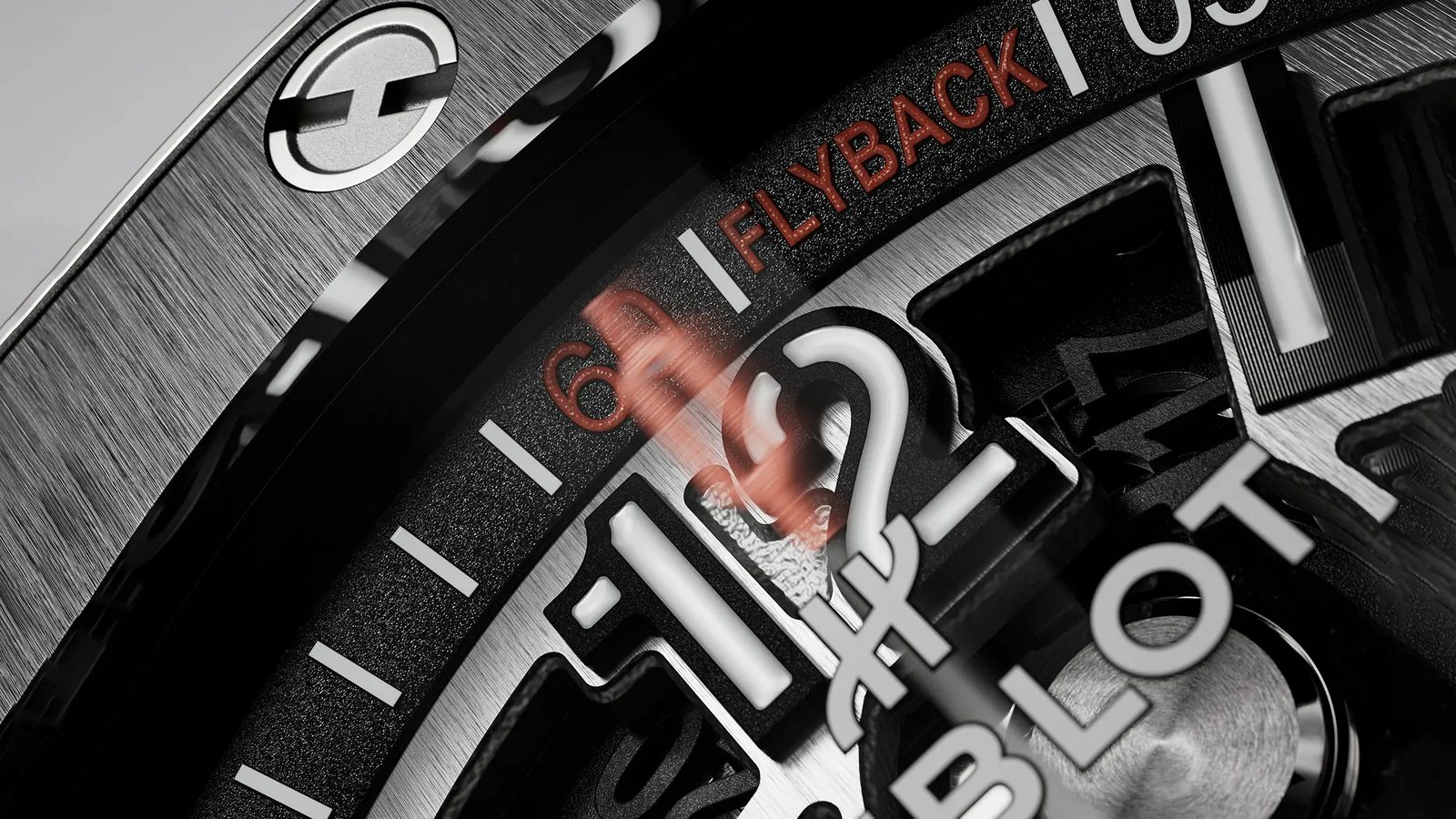
He is equally direct on complications. Hublot's catalogue already runs on in-house Unico flyback chronographs and Meca10 calibres, and Tornare says the brand will not chase perpetual calendars or split-seconds chronographs to satisfy classical purists, preferring to reinterpret complications on its own terms rather than replicate established ones.
Community is the other stated priority. Tornare has revived Hublotista, the brand's owners' club, calling it more than a loyalty programme and describing it instead as a direct channel for feedback. He says he meets Hublotista members personally whenever he travels to a market.
Beyond the watch itself, Tornare points to partnerships across sport, art and pop culture as extensions of Hublot's identity rather than marketing tools. He plans to keep working with top-tier athletes and with artists whose work, he says, blurs the line between timekeeping and artistic expression.
Hublot's Classic Fusion line starts near $6,500, a fraction of the brand's priciest piece, the Black Caviar Bang, nicknamed the Hublot $5 million and set with 1,200 diamonds weighing a combined 140 karats after more than 14 months of work.
We rank Hublot among the best luxury watch brands and call it the most polarizing name on that list, a reputation the in-house Unico caliber that powers the Big Bang and its run of unconventional materials have done as much as anything to earn.
He describes Hublot's longer-term goal as an exploration of advanced materials paired with personalized experiences for collectors, alongside a secondary manufacture reportedly on the horizon. No date or location for that facility has been disclosed, leaving the 5+5 year warranty and the Big Bang Reloaded series as the two concrete markers of his tenure so far.
Brands mentioned here are chosen by our editors. If you buy through our retail links we may earn an affiliate commission — it never changes the price you pay, and it never decides what we cover. Read our earnings disclaimer.
This briefing is published daily using Luxe Digital’s AI agents, finely tuned to meet our editorial standards. While we test and review their work, mistakes can sometimes happen; tell us if you spot one.
Image: Hublot