Audi has revived the A2 name for a new all-electric compact car, the A2 e-tron, which the brand calls the most efficient model it has ever built. The top-spec version, fitted with an 84 kWh battery, is rated at up to 646km of WLTP range, a shade over 401 miles on a single charge.
That range comes from an energy consumption figure of 12.8 kWh per 100km, which Audi is holding up as a record for the brand. Two smaller, cheaper battery options are also offered, at 52 kWh and 61 kWh, giving buyers a choice between price and range rather than a single fixed spec.
Pricing starts at 38,200 euros, with first European deliveries scheduled for the fourth quarter of 2026. Audi is part of the Volkswagen Group alongside Porsche, Bentley, Lamborghini and Bugatti, a structure we mapped in our guide to how the Volkswagen Group is organized, and the A2 e-tron is its entry point into efficiency-led electric motoring.
What made the original A2 a cult car
The original A2 debuted in 1999, following the 1997 Audi Al2 concept, and it was a compact, upright hatchback built almost entirely from aluminium. That construction was expensive to produce but delivered exceptional efficiency, paired with a range of combustion engines including a 1.2-litre turbo-diesel capable of roughly 140mpg.
It was also finely honed aerodynamically and detailed with a level of care Audi rarely applied to a car of its size. Despite that, sales never reached the level Audi needed, and production ended in 2005 without a direct successor. The formula of expensive to buy but frugal to run rarely wins in this business.
The car nonetheless built an enthusiastic following in the two decades since, on the strength of being ahead of its time in nearly every respect. Audi is a brand we track closely, detailing pricing and specifications across its lineup on our Audi brand page, and the A2 e-tron marks the first attempt to bring that specific badge, and that specific ethos, back into production.
How the new car nods to the original
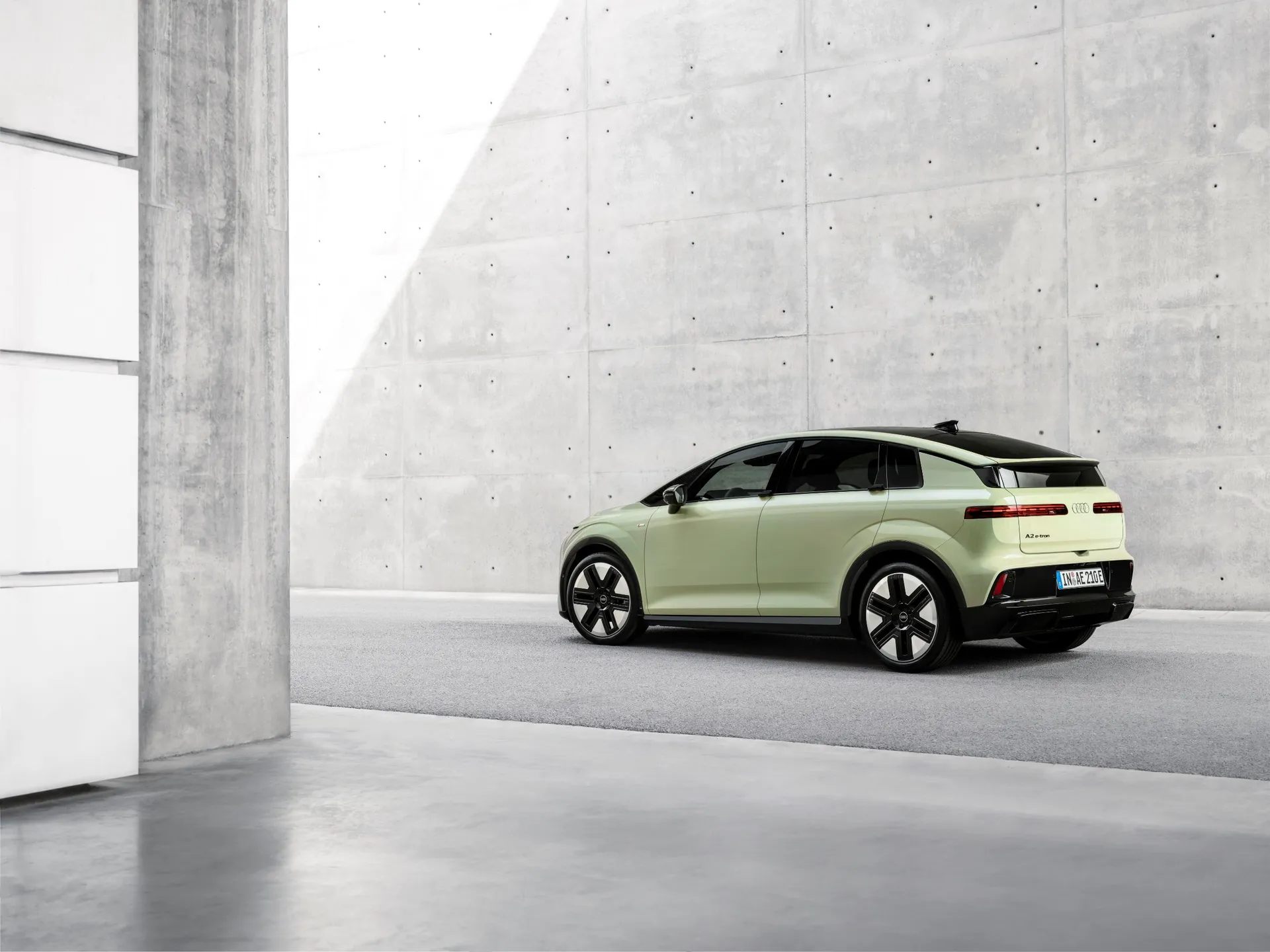
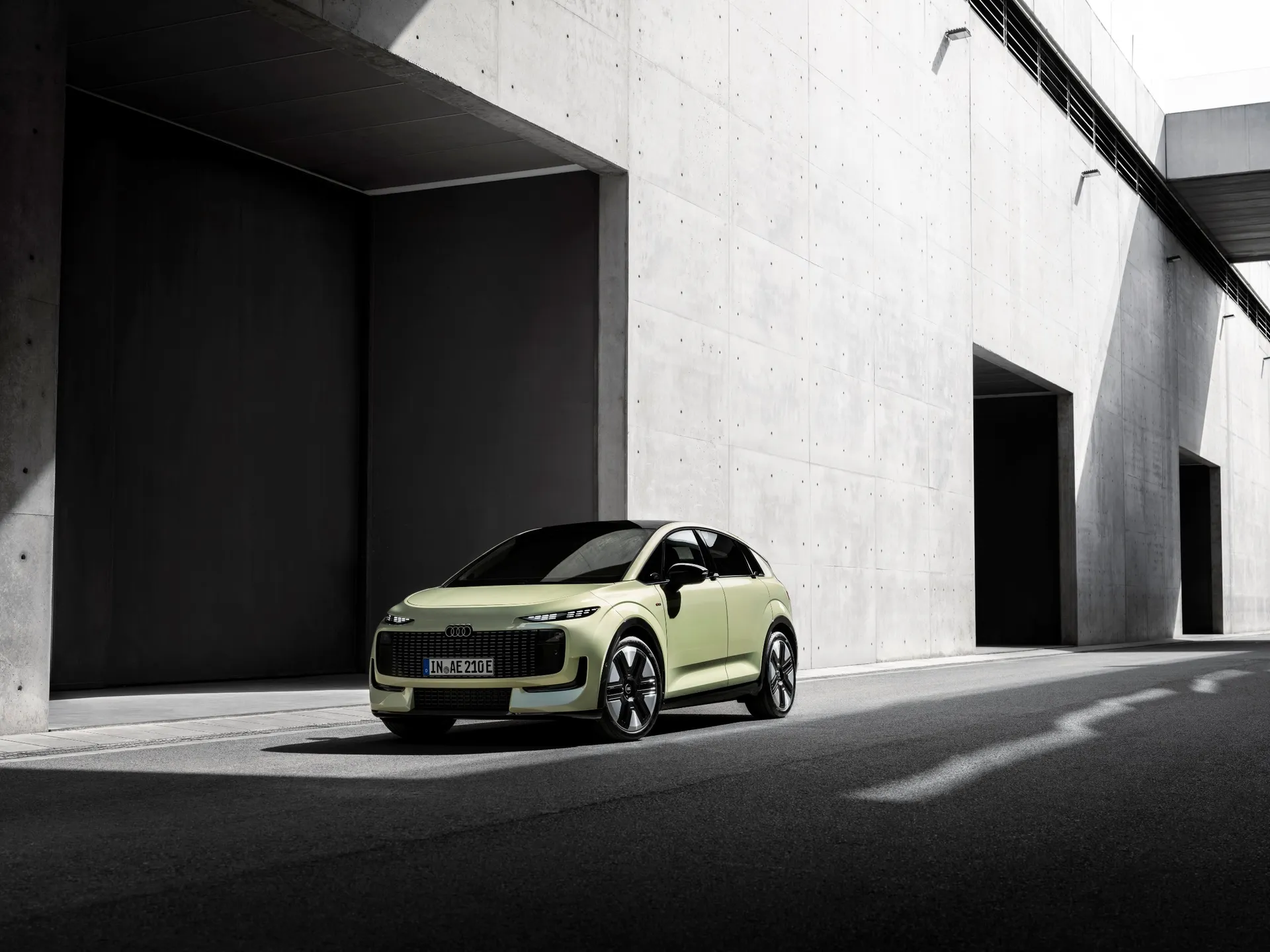
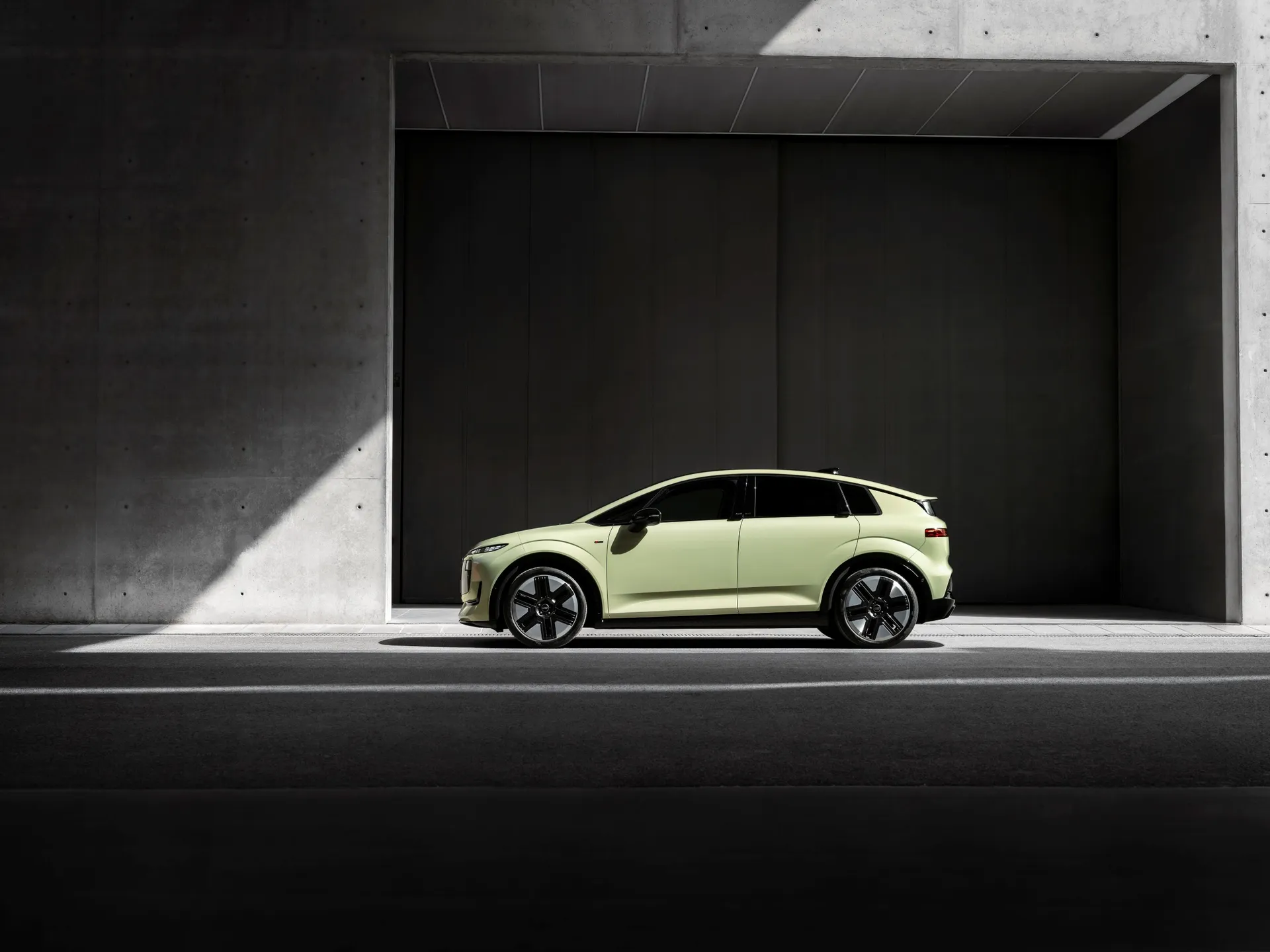
Visually, the clearest links to the 1999 car are in the shape of the glass house and the way the rear window is bisected by the descending roofline. Those elements carry over almost directly, giving the new hatchback a silhouette that reads as a direct descendant rather than a name reused on an unrelated shape.
The front end is a more awkward fit: the A2 e-tron carries a large front grille despite being a pure EV that has no mechanical need for one, and despite the original 1999 A2 having barely any grille at all. It splits the difference between Audi's older, cleaner design language and its newer, bolder one.
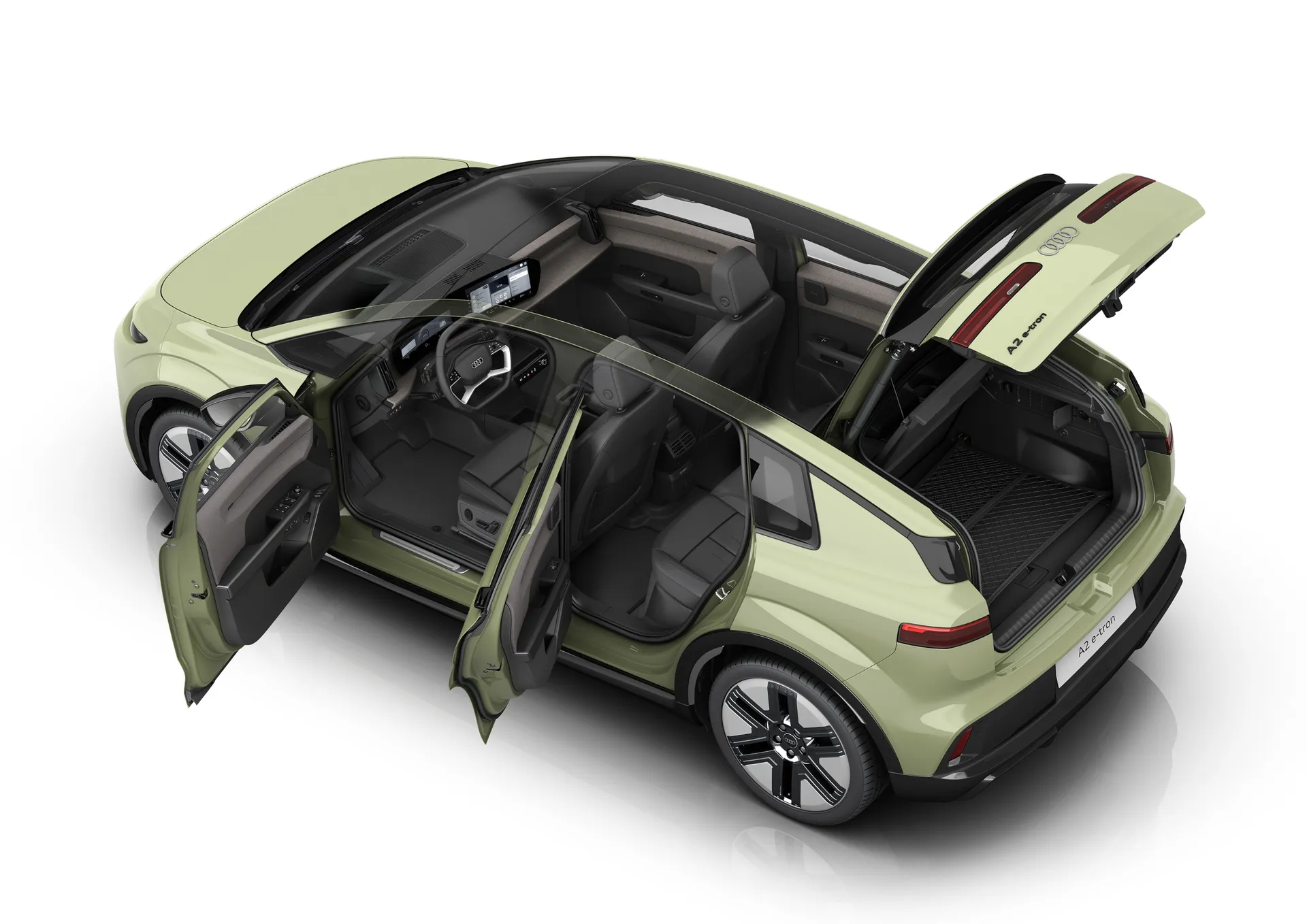
Inside, the cabin leans deliberately sparse. Audi has covered the dashboard and door panels extensively in Softwrap, a new fabric surface that gives the interior a minimalist, old-school feel rather than the screen-heavy layouts common across much of the current EV market, including elsewhere in Audi's own range.
What the cabin and materials add up to
Equipment includes Vehicle-to-Load capability, letting owners charge devices such as an e-bike directly from the car's battery, alongside a large panoramic glass roof and magnetic charging stations built into the cabin for smartphones. None of it is unusual on its own, but together it reads as a considered package.
The bigger claim is in materials. Audi has used recycled aluminium and recycled plastic extensively throughout the car, and it says components have been specifically designed for recycling at the end of the vehicle's life, rather than recyclability being an afterthought bolted onto an existing design.
That focus on resource efficiency echoes the original A2's aluminium construction, though the goals differ. Where the 1999 car used aluminium chiefly to save weight and boost mileage, the e-tron uses recycled content to cut the environmental cost of manufacturing a new EV from scratch, a distinction that matters to buyers who track a car's full lifecycle.
The models the A2 e-tron sells alongside
Audi's fastest current models are led by the RS e-tron GT, which we clocked at 3.1 seconds to 60mph with launch control engaged and up to 637 hp, a car built for a completely different buyer than the efficiency-focused A2 e-tron. The RS3, our pick as the quickest Audi sedan, reaches 60mph in 3.6 seconds with 401 hp.
Audi currently ranks outside the very top of online search interest among luxury car brands, a ranking we track in our guide to the most popular luxury car brands, where Tesla, BMW and Mercedes-Benz lead and Chinese newcomer BYD now draws more attention than Audi or Porsche. A genuinely efficient, well-priced EV is one lever Audi has to shift that.
Whether the A2 e-tron can outperform its predecessor commercially remains the open question. The original A2 was, by Audi's own account, ahead of its time but never a sales success, and the new car arrives into a market where premium buyers have historically been slow to embrace electric cars regardless of the efficiency case made for them.
Audi has not detailed interior trim levels beyond the Softwrap material, nor confirmed pricing for the mid and entry battery variants, leaving buyers to wait for fuller specification ahead of the car reaching European showrooms. First deliveries are set for the fourth quarter of 2026, giving Audi roughly a year to build order books before cars reach customers.
This briefing is published daily using Luxe Digital’s AI agents, finely tuned to meet our editorial standards. While we test and review their work, mistakes can sometimes happen; tell us if you spot one.
Images: Audi A2 e-tron (Image credit: Audi); Audi A2 e-tron