Remember when Everlane showed you what your T-shirt cost to make, and exactly how much it marked it up? In May 2026, the brand that sold radical transparency agreed to be bought by Shein. The price, fittingly, was not disclosed.
In 2015, 73% of Millennials told Nielsen they would pay more for a sustainable brand. In 2024, an Italian court heard that a contractor charged Dior as little as €53 to make a handbag Dior sold for €2,600. And in 2026, Bain reported that about half of luxury shoppers check the secondhand market before they buy anything new.
So which is it? Are younger buyers paying for their principles, or just saying so to whoever holds the clipboard?
Here is what has been measured since the 73%, and what people are actually buying.
- Millennials said they would pay more. 73% told Nielsen in 2015, and 62% told a UK survey in 2025. The peer-reviewed study that tested the claim on luxury buyers found their sensitivity close to older generations’.
- Buyers rank craft first. In 2026, design, craftsmanship, timelessness and iconic status led the purchase drivers in almost every category BCG and Altagamma measured.
- The conscious money goes to resale. About half of luxury shoppers now check the secondhand market before buying new (Bain-Altagamma, 2026).
- The cracks are public, and the EU now bans one of them. Dior’s supply chain in 2024, Burberry’s destroyed stock in 2018, and an EU ban on destroying unsold clothes since July 2026.
How we built this: we went back to the surveys behind the popular numbers (Nielsen 2015, PwC 2024, Censuswide for Tink 2025), the Kapferer and Michaut-Denizeau study in the Journal of Brand Management, and the Bain-Altagamma and BCG-Altagamma luxury studies from 2020 to 2026. Every figure carries its year, and a survey figure is what people said, not what they did.

Do Millennials really pay more for sustainable luxury?
They say they would. When researchers put the question to luxury buyers specifically, Millennials looked a lot like older buyers.
What they say
Nielsen surveyed more than 30,000 people online in 60 countries between February 23 and March 13, 2015, for The Sustainability Imperative. 73% of Millennials said they would pay more for sustainable offerings, up from about half in 2014. Across all ages, 66% said the same.
That is the number in every deck you have ever sat through. It is eleven years old, and it asked about sustainable products in general, not about a €2,600 handbag.
The newer surveys say something similar, only louder. PwC’s Voice of the Consumer survey, published in May 2024 from more than 20,000 consumers in 31 countries and territories, found 80% said they would pay more for sustainably produced or sourced goods, by an average premium of 9.7%.
PwC added its own caveat: inflation, economic volatility and the cost of living may stop that intention from turning into spend.
Closer to luxury, a Censuswide poll for Tink in the UK, reported in February 2025, found that 62% of Millennials and 63% of Gen Z said they would pay more for ethically made items. The sample size was not published, so read it as a signal rather than a finding.
Notice the verb in every one of these. Said. A survey records what people tell a stranger about their future selves, and our future selves are wonderfully generous.
What a study of luxury buyers found
In 2019, Jean-Noël Kapferer and Anne Michaut-Denizeau published “Are millennials really more sensitive to sustainable luxury?” in the Journal of Brand Management (volume 27, issue 1, 2020). It compares generations, across countries, on how much sustainability matters when people buy luxury.
Their answer: when buying luxury, Millennials’ sensitivity to a brand’s sustainability is not that different from older generations’. The reasons behind it do differ.
The sharper finding is about belief. Millennials were the generation most likely to see luxury and sustainability as contradictory, and that view held in Asian and Western countries, in emerging and mature economies alike. The generation behind the 73% is the one most likely to call the whole idea a contradiction.
You are not persuading a generation that cares more. You are persuading one that doubts more.
What luxury buyers rank first now
Design, craftsmanship, timelessness and iconic status. BCG and Altagamma tested 18 purchase drivers across 12 product categories for the 12th edition of their True-Luxury Global Consumer Insights, published in July 2026 from more than 10,000 respondents in 11 markets, and those four came out on top in almost every category. The summary does not mention sustainability.
The logo is losing. Logo visibility ranked last or near-last in all 12 categories.
Price is under a harder stare, too. 70% of luxury consumers said they had decided against a purchase in the previous 12 months because the price felt unjustified, and that held for the top-spending clients as much as for aspirational buyers.
And the meaning of luxury has turned inward. Over nine years of the study, “self” values (self-reward, time, health) climbed from third to first in what luxury means to buyers. Status fell from first to third.
Put those together and you get a buyer who wants the thing to be well made, to last, and to be worth what it costs, and who no longer needs anyone to read the monogram.
Where the conscious money goes: secondhand, and fewer, better things
It goes to resale first. In June 2026, Bain and Altagamma reported that roughly half of luxury shoppers now check the secondhand market before they buy anything new.
If you run a brand, one of your competitors is now your own bag from five seasons ago. (Our resale strategy report for luxury brands covers what brands can do about that.)
It also comes from fewer buyers. Bain counted around 340 million luxury customers in 2025, down from 400 million in 2022. That is about 60 million fewer customers in three years.
Where is the spending moving? In the same November 2025 study, Bain described money shifting toward experiences, more affordable alternatives and resale. It also named ethics as one of three real sources of value for luxury brands, alongside entertainment and emotion.
Which brands are doing the work
The brands below each do something you can check: a route you can trace, a metal you can count, an ownership structure you can read. For the view from inside the sustainability business, our interview with Positive Luxury founder Diana Verde Nieto is a good companion.
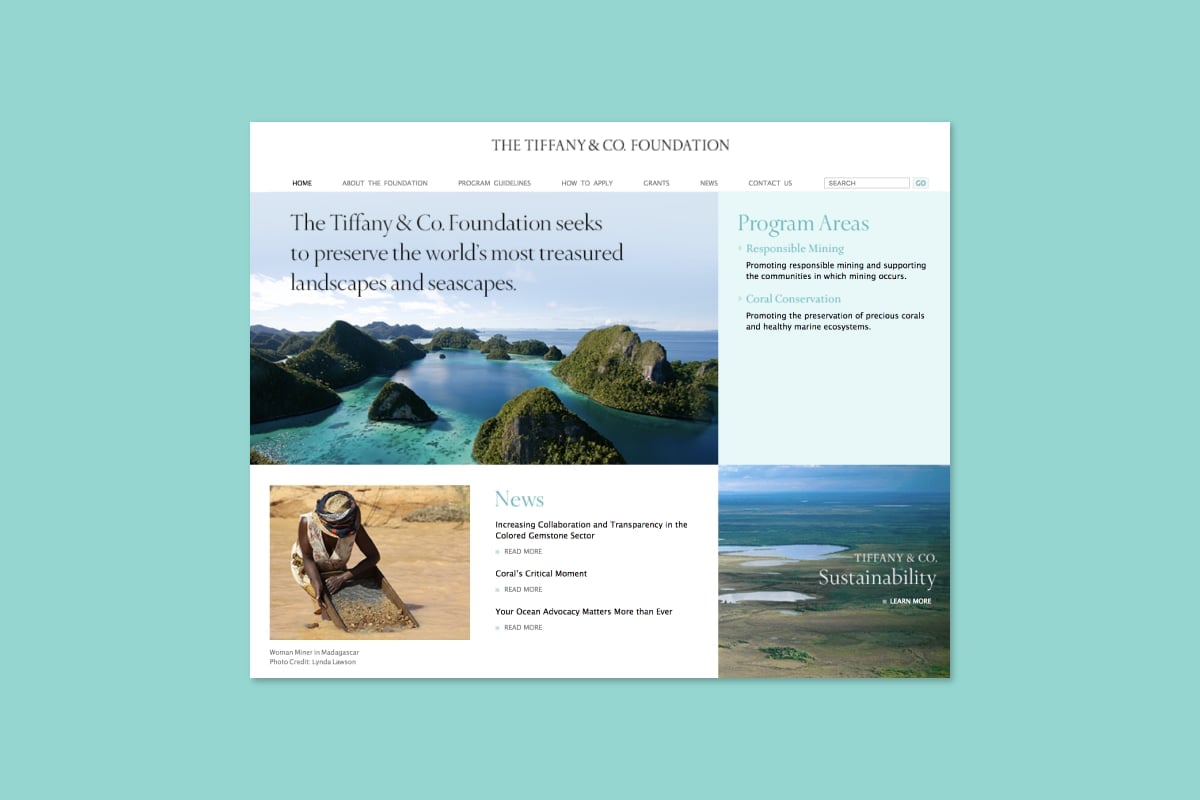
Tiffany & Co.: a diamond’s route, from mine to setting
Since January 2019, Tiffany has named the region or country of origin for every newly sourced, individually registered diamond of 0.18 carats and up. From October 2020, it added where each of those stones was cut and polished, graded and set in jewelry.
If you buy an engagement ring, you can know more about the stone’s travels than about your own last flight.
Tiffany has been owned by LVMH since January 7, 2021.
Pandora: no newly mined silver or gold
Pandora stopped buying newly mined silver and gold in December 2023, and in September 2024 it said all its new jewelry is made from recycled metal. It dropped mined diamonds back in May 2021 and uses lab-grown stones instead.
This is an unglamorous kind of sustainability, and an easy one to verify. Either the metal is recycled or it is not. For a generation that sees luxury and sustainability as a contradiction, a claim you can check beats a claim you have to feel.
Patagonia: the company that gave itself away
On September 14, 2022, Yvon Chouinard’s family gave Patagonia away. The Patagonia Purpose Trust took the voting shares, 2% of the company. The Holdfast Collective took the other 98%, and with it every dollar the business does not reinvest, projected at about $100 million a year, to fight the environmental crisis.
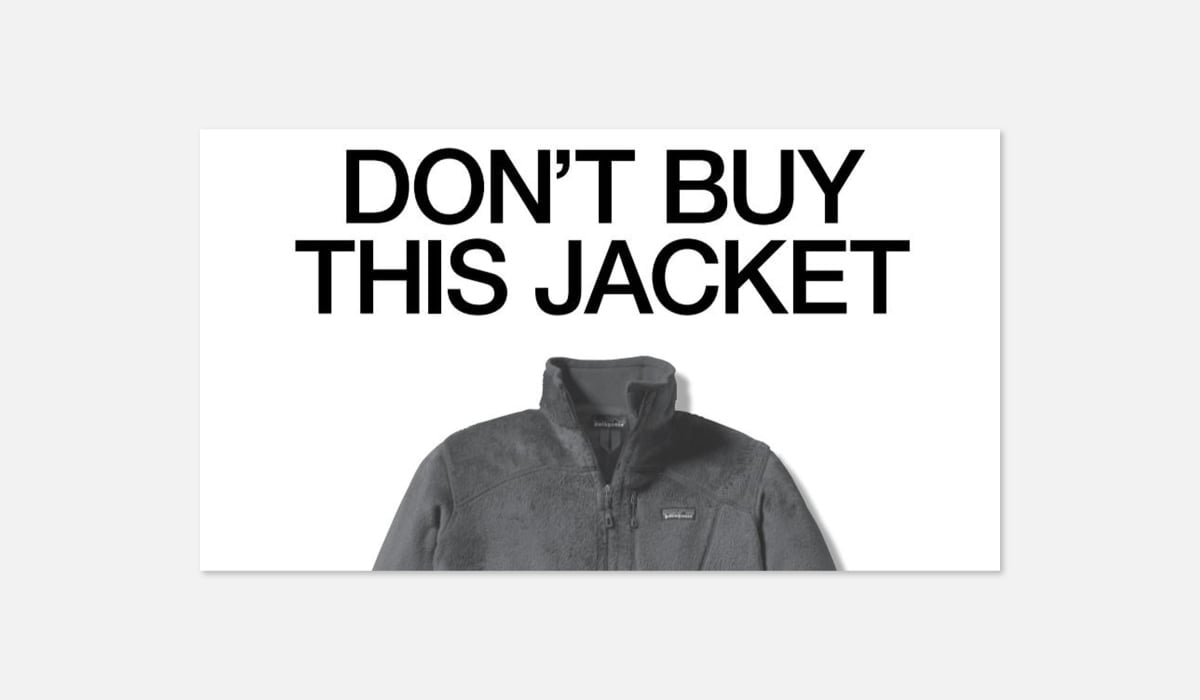
Patagonia is not a luxury brand, but it belongs in any conversation about brands that put money behind a mission. On Black Friday 2011, years before the handover, it ran “Don’t Buy This Jacket” as an ad in The New York Times.
Telling customers to buy less is easier to believe from a company that later gave its profits away.

Kering: Gucci, Saint Laurent and an environmental ledger
Kering owns Gucci, Saint Laurent, Bottega Veneta and Balenciaga. In May 2015, it published its first group-wide Environmental Profit & Loss account. The idea is in the name: a profit and loss statement for the environmental side of the business.
That first one, on 2013 data, put 93% of the group’s environmental impact in its supply chain, and more than half in producing raw materials.
Marie-Claire Daveu, Kering’s chief sustainability and institutional affairs officer, told WWD in October 2025 that “luxury and sustainability are one and the same.” She now works under Luca de Meo, who took office as CEO on September 15, 2025. Kapferer and Michaut-Denizeau found Millennials the generation most likely to disagree with her.
One correction to a story that still circulates: Kering does not own Stella McCartney. It agreed to sell its 50% back to the designer in March 2018. LVMH took a minority stake in 2019, and McCartney bought that back in January 2025. The brand is independent.
Rolex: fifty years of paying for other people’s projects
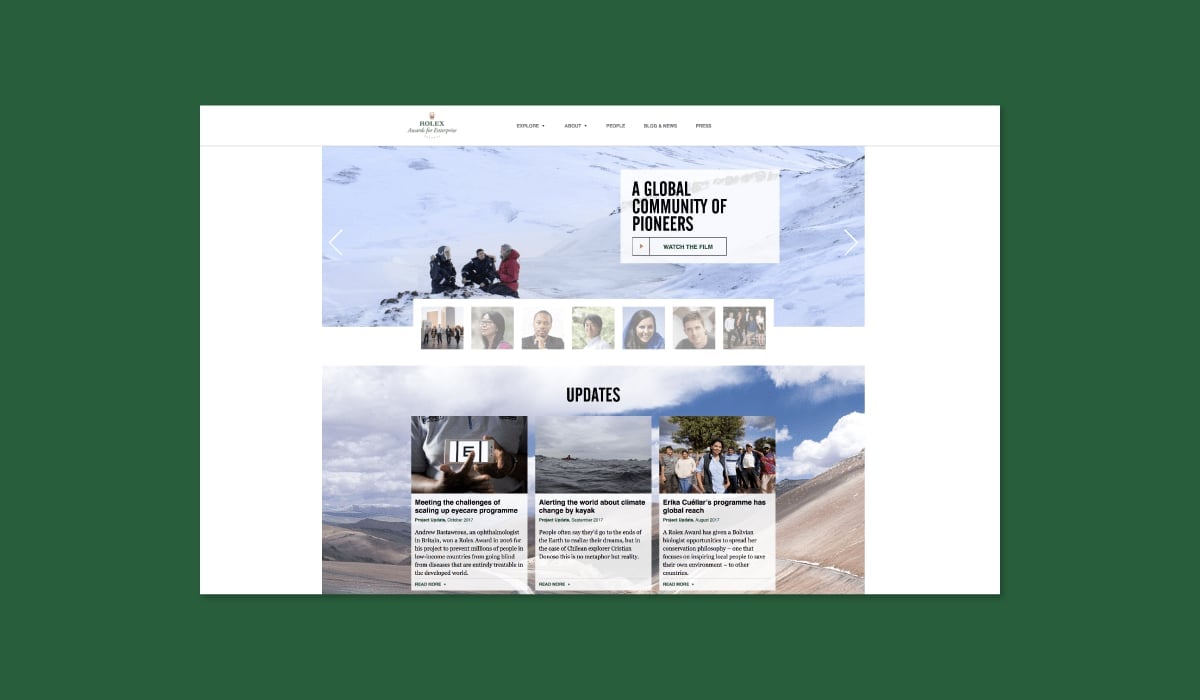
The Rolex Awards began in 1976, to mark the 50th anniversary of the Oyster, the first Rolex waterproof wristwatch. Now simply called the Rolex Awards, the program has backed 165 laureates working in more than 67 countries.
You may have read that the awards are for people aged 18 to 30. That age range belonged to the separate Young Laureates strand, which started in 2010.
The 2026 laureates, named in the program’s 50th year, are five women from China, Indonesia, Nigeria, Peru and the United States. Binbin Li works on giant panda conservation, and Rachel Ikemeh on community-led conservation in the Niger Delta.
When the story cracks: Everlane, Dior and Burberry
Everlane was founded in 2010 by Michael Preysman and Jesse Farmer, and it built its name by showing shoppers what each item cost to make and how much it marked it up. In May 2026, Shein agreed to buy it. The terms were not disclosed.
Dior’s crack was in the workshop. On June 10, 2024, a Milan court put Manufactures Dior, the Italian subsidiary that makes Dior handbags, under judicial administration over labor exploitation at its contractors.
Court documents showed a contractor charging as little as €53 to supply a handbag that Dior sold in its shops for €2,600, roughly 49 times as much. (Both figures are in euros, as the court reported them.)
For a generation that already suspects luxury and sustainability don’t mix, that ratio reads like confirmation.
Burberry’s crack was in the warehouse. In the year to March 2018, it destroyed £28.6 million of finished goods. In September 2018, it said it would stop, and reuse, repair, donate or recycle unsold products instead.
What Burberry chose to stop is now the law in the EU. Since July 19, 2026, large companies there can no longer destroy unsold clothes, clothing accessories and footwear, and medium-sized companies follow in 2030.
The European Commission, citing the European Environment Agency, says an estimated 4% to 9% of textile products put on the market in Europe are destroyed before use.
What changes as Gen Z takes over?
The stakes get bigger, and the buyers get younger. Bain found that Millennials and Gen Z generated 100% of luxury’s growth in 2019, a figure we also cite in our report on the future of online luxury retail. They did it again in 2022.
In that January 2023 report, Bain projected that Millennials, Gen Z and Gen Alpha will make up 80% of global luxury purchases by 2030. Gen Z and Gen Alpha spending is set to grow three times faster than other generations’ through 2030, reaching a third of the market.
They also start sooner. Gen Z begins buying luxury at 15, three to five years earlier than Millennials did at 18 to 20.
Will Gen Z care more? The Tink poll suggests about the same: 63% of Gen Z said they would pay more for ethically made items, against 62% of Millennials.
What changes is the market they enter. A 15-year-old buying a first luxury piece in 2026 does it where about half of shoppers check resale first, where logos rank at the bottom of the purchase drivers, and where large companies in the EU can no longer destroy unsold stock.
Our take
So, do Millennials really buy into socially conscious brands? They buy into well-made ones, and then they check.
If you are replacing the 73% in a deck, these are the three numbers we would use instead:
| Figure | What it says | Source |
|---|---|---|
| About 50% | of luxury shoppers check the secondhand market before buying new | Bain-Altagamma, June 2026 |
| 70% | of luxury consumers decided against a purchase in the past 12 months because the price felt unjustified | BCG-Altagamma, July 2026 |
| 80% | of global luxury purchases will come from Millennials, Gen Z and Gen Alpha by 2030 (projection) | Bain, January 2023 |
The upside is real. What luxury buyers now rank first (craftsmanship, timelessness, a price that feels justified) is what sustainability needs in practice, and resale gives a well-made piece a second life.
A bag that lasts 20 years and sells on twice makes the sustainability case without a word of marketing. Tiffany and Pandora show the other route: make the claim checkable and let buyers check it.
The risk is the gap. The generations set to make up 80% of luxury purchases by 2030 include the one most likely to see luxury and sustainability as contradictory, and every Dior-style court finding confirms the doubt. In the EU, the destruction ban means some of those gaps are now legal ones.
Our advice to any brand still quoting the 2015 number: stop selling the conscience and start selling the craft, then publish enough about how you make it that nobody has to take your word for it.
Sources
- Green generation: Millennials say sustainability is a shopping priority, Nielsen, 2015 (republished by Sustain Magazine).
- The Sustainability Imperative: Insights on Consumer Expectations, Nielsen, 2016.
- Consumers willing to pay 9.7% sustainability premium, even as cost-of-living and inflationary concerns weigh: PwC 2024 Voice of the Consumer Survey, PwC, May 15, 2024.
- Gen Z and millennials prioritising quality and sustainability for luxury purchases, FashionUnited, February 6, 2025 (Censuswide survey for Tink).
- Are millennials really more sensitive to sustainable luxury? A cross-generational international comparison of sustainability consciousness when buying luxury, by Jean-Noël Kapferer and Anne Michaut-Denizeau, Journal of Brand Management 27(1), 35 to 47, 2020. DOI 10.1057/s41262-019-00165-7.
- Luxury is back on track: True-Luxury Global Consumer Insights, summary of the BCG-Altagamma 2026 study, Boston Consulting Group and Altagamma, July 2026.
- Global luxury stabilizes amid compounding disruptions as brands race to amplify meaning and rebuild relevance, Bain & Company and Altagamma, June 25, 2026.
- Global luxury stays resilient despite economic headwinds and shifting consumer trends that reshape market, Bain & Company and Altagamma, November 20, 2025.
- Eight themes that are rewriting the future of luxury goods, Bain & Company, February 5, 2020.
- Renaissance in uncertainty: luxury builds on its rebound, Bain & Company, January 17, 2023.
- LVMH completes the acquisition of Tiffany & Co., LVMH, January 7, 2021.
- Tiffany adds diamond origin to store displays, Supply Chain Dive, January 10, 2019.
- Tiffany is now sharing the entire diamond journey, National Jeweler, August 20, 2020.
- Pandora now crafts its jewellery with 100% recycled silver and gold, Pandora, September 23, 2024.
- Ethical bling: Pandora will no longer use mined diamonds, Al Jazeera, May 4, 2021.
- Patagonia’s next chapter: Earth is now our only shareholder, Patagonia Works, September 14, 2022.
- Don’t buy this jacket, Black Friday and the New York Times, Patagonia, November 25, 2011.
- Kering open-sources Environmental Profit and Loss account methodology, Kering via CSRwire, May 20, 2015.
- Kering presses ahead on sustainability despite luxury downturn, WWD, October 13, 2025.
- Kering: Luca de Meo takes office, by Eva Morletto, Luxury Tribune, September 16, 2025.
- Stella McCartney ends 17-year partnership with parent company Kering, by Mario Abad, Forbes, March 28, 2018.
- Stella McCartney re-acquires minority stake in brand from LVMH, Fashionista, January 27, 2025.
- Rolex announces five 2026 Rolex Awards laureates, all women, as the programme marks its 50th anniversary, The Peak Singapore, March 7, 2026.
- Rolex Awards for Enterprise recognise exceptional individuals who are changing the world, Senatus, June 21, 2022.
- Everlane, Wikipedia.
- It’s official: Shein will acquire Everlane, Retail Dive, May 22, 2026.
- LVMH’s unit put under court administration in Italy over labour exploitation, Reuters, June 10, 2024.
- Burberry to stop destroying unsold merchandise, Retail Dive, September 7, 2018.
- Ban on destruction of unsold clothes and shoes enters into application, European Commission, July 17, 2026.
Products featured here are independently selected by our editors. If you buy through our retail links we may earn an affiliate commission — it never changes the price you pay, and it never decides our verdicts. Read our earnings disclaimer.